Robert Holmes à Court, a prominent figure in Australian business during the booming 1980s, played a significant role in shaping the area now known as Hidden Valley Resort. His flagship company, The Bell Group, spanned various industries, making him Australia’s first billionaire. Just before the stock market crash of October 1987, his companies reached a valuation exceeding $2 billion.
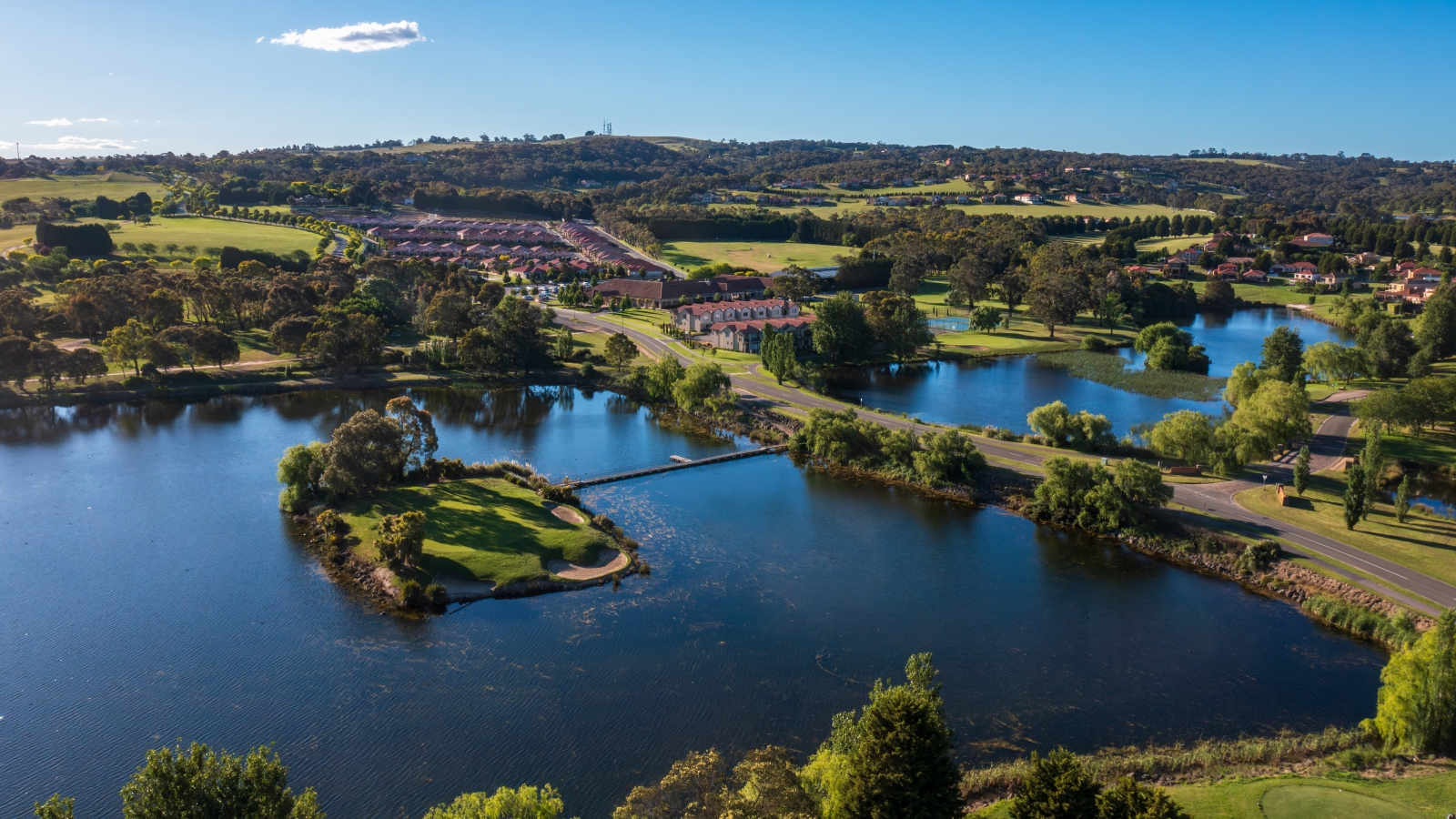
However, Holmes à Court's legacy extends beyond corporate success. His passion for racehorses led him to acquire a 1000-hectare property near Wallan, approximately 60 kilometers north of Melbourne. Named after his family's company, Heytesbury, he transformed the landscape by creating 10 man-made lakes and planting 17,000 trees while also constructing a state-of-the-art equestrian facility. Notably, the Heytesbury Estate-stabled Black Knight won the Melbourne Cup within two years of its establishment.
Sadly, Holmes à Court passed away from a heart attack in 1990 at the young age of 52, leading his wife, Janet, to take over the management of their businesses and property. By 1993, part of the property made way for 650 residential lots. Subsequently, in 1997, the remainder of Heytesbury was sold to a Malaysian billionaire developer, Land and General Berhad.

With new ownership came a vision to transform the estate into Hidden Valley, a Tuscan-inspired community. The redesign included clusters of terracotta-roofed villas positioned on rolling hills, providing breathtaking views of the golf course and luxury amenities. Melbourne-based Pacific Coast Design, led by renowned course architect Phil Ryan, was tasked with the course layout, benefiting from the insights of PGA Tour winner Craig Parry, who assisted in the project before its opening in 2002.
In a significant development, the resort and golf course were acquired by Arcadia Group, a retirement living developer, in 2013. They outlined plans for a $346 million investment, promising to enhance the resort’s offerings, including a country club and aged-care facility. Craig Parry was invited back in 2015 to provide recommendations on upgrades, citing that the course was “a little rundown, which is always disappointing.”
“There was not much money that had been spent on maintenance over the previous few years,” said Parry, reflecting on the course's condition.

While significant renovations were not executed after his assessment, the Arcadia Group committed to improving the course's presentation and playability, alongside the construction of a new clubhouse—an investment amounting to $1 million.
Today, Hidden Valley is run by Golf Services Management, notable for managing other prestigious courses such as St Andrews Beach and Growling Frog. Visitors can now enjoy a lively atmosphere featuring luxurious accommodations, a restaurant, an indoor swimming pool, and diverse recreation options including lawn bowls and tennis.
The stunning golf course, which spans 6,498 meters from the tips, meanders through the picturesque terrain, showcasing beautifully manicured Santa Ana couch fairways and smooth bentgrass greens—making it arguably the best it has looked in two decades. Players are greeted by striking features like two-metre-high guardian lion statues at the 1st and 10th tees and flourishing cypress pine trees lining most holes, a nod to Holmes à Court's original landscaping vision.
“Nearly every approach shot on the front nine, as well as several on the back nine, are played towards a flag that has a curtain of cypress pines providing a woody backdrop,” recalled Parry, emphasizing the unique character these botanical features bring to the golfing experience.

As Hidden Valley Resort continues to develop and refine its offerings, it stands as a unique destination where rich history and exceptional golfing converge. Visitors looking for an unforgettable golfing experience, complemented by modern luxury and natural beauty, will find Hidden Valley's charm impossible to resist.