Courses
45 venues
Augusta National Golf Club
Augusta, Georgia, United States
Augusta National Golf Club stands as golf's most revered cathedral, a masterpiece of design and tradition that has hosted the Masters Tournament since 1934. Founded by legendary amateur golfer Bobby Jones and investment banker Clifford Roberts, the club opened in 1933 on a property steeped in Southern history. The 365-acre site was originally the home of indigo plantation owner Dennis Redmond, whose antebellum mansion, built in 1854, still serves as the clubhouse today. Later, Belgian horticulturist Baron Louis Berckmans transformed the land into Fruitland Nurseries, establishing the botanical foundation that gives each hole its distinctive floral name. Jones partnered with renowned course architect Dr. Alister MacKenzie to create their vision of an inland links inspired by the Old Course at St. Andrews. MacKenzie, fresh from his triumphs at Cypress Point and Pasatiempo, brought his artistic flair for bunker design and strategic course architecture. Their collaboration emphasized wide fairways with precisely placed hazards that challenged expert players while remaining playable for amateurs. As Jones famously stated, they wanted to 'make bogeys easy if frankly sought, pars readily obtainable by standard good play, and birdies—except on par 5s—dearly bought.' The original design featured remarkably few bunkers—only 22 initially—with the primary challenge coming from MacKenzie's brilliantly contoured greens and surrounds. The course opened with the nines reversed from today's layout, but this was changed after the inaugural tournament. Augusta National has undergone continuous evolution, earning Charles Price's description as 'never the most revolutionary golf-course design in America, but certainly the most evolutionary.' Today's Augusta National stretches 7,545 yards from the championship tees, playing to a par of 72. The course features Bermuda grass fairways with Bentgrass greens, maintained to perfection for the Masters each April. The humid subtropical climate of Georgia provides mild winters but can create challenging conditions during tournament week, particularly the swirling winds that make club selection treacherous. The course's most famous stretch is Amen Corner, comprising holes 11, 12, and 13. This pivotal section, named by golf writer Herbert Warren Wind in 1958, has decided countless Masters championships. The par-3 12th hole, Golden Bell, exemplifies Augusta's deceptive challenges—at just 155 yards, it appears simple but has claimed more dreams than perhaps any hole in golf. Rae's Creek fronts the green, while bunkers and swirling winds create havoc for even the world's best players. Augusta National's par-5s offer unique risk-reward opportunities that define Masters drama. The 13th hole, Azalea, presents a classic risk-reward scenario where players must decide whether to challenge Rae's Creek for a chance at eagle. The 15th, Firethorn, features a large pond protecting the green, creating similar drama late in the round when tournaments often hang in the balance. Significant changes occurred in the early 2000s as Augusta National responded to increased driving distances, particularly the 'Tiger Woods effect.' The club lengthened several holes and added new tee boxes, pushing the course beyond 7,000 yards for the first time. However, Hurricane Helene in September 2024 created unexpected changes, downing over 1,000 trees and creating a more open feel to certain areas of the course. What truly sets Augusta National apart is its exclusivity and attention to detail. The course closes each May and doesn't reopen until October, allowing the grounds crew to achieve perfection. The iconic azaleas, dogwoods, and other flowering plants create a stunning backdrop during Masters week, though this botanical paradise is carefully timed to peak during the tournament's early April dates. The Masters has produced golf's most memorable moments on these hallowed grounds. Tiger Woods' record-setting 12-stroke victory in 1997 at age 21 announced the arrival of a new era. Jack Nicklaus's emotional sixth Masters victory in 1986 at age 46 remains one of sport's greatest comebacks. More recently, Woods' 2019 triumph after 11 years without a major championship created another iconic Augusta moment. Augusta National represents the pinnacle of American golf course design and tournament golf. Its combination of strategic architecture, impeccable conditioning, rich history, and dramatic moments has created a venue that transcends the game itself. The course continues to evolve while maintaining the fundamental design principles that Bobby Jones and Alister MacKenzie established nearly a century ago.
Ballybunion Golf Club (Old)
Ballybunion, County Kerry, Ireland
Ballybunion Golf Club (Old) stands as one of Ireland's most revered links courses, perched dramatically on the rugged coastline of County Kerry where the Shannon River meets the Atlantic Ocean. Founded in 1893 by local businessmen who recognized the golfing potential of the spectacular duneland, the course has evolved through various design iterations to become what many consider the finest links experience in the world. The course's early development involved several architects, with Lionel Hewson designing the initial 9 holes in 1906, followed by Reginald Beale adding another 9 in 1927. However, it was Tom Simpson's transformative redesign in 1937 that created the masterpiece layout that exists today. Simpson's philosophy of working with the natural landscape rather than against it is evident throughout the course, where each hole seems to emerge organically from the towering dunes and rolling terrain. A pivotal moment in the course's history came in 1971 when the clubhouse was relocated to the southern end of the property. This seemingly simple move had profound consequences for the golf course, transforming what were once anticlimactic back-to-back par-5s into the current 4th and 5th holes, while creating a spectacular new finish through the towering dunes near where the Shannon meets the sea. The relocation elevated Ballybunion from merely great to truly extraordinary. The course gained international recognition when Tom Watson first visited in 1981 and provided effusive praise that put Ballybunion on the world golf map. Watson's endorsement was no casual comment from a tourist—he became so enamored with the course that he was made an honorary member and later suggested modest design changes in the 1990s. His influence extended beyond mere promotion; the par-3 7th hole is now known as 'Watson's' in his honor. Ballybunion's links terrain is characterized by towering sand dunes that create dramatic elevation changes throughout the round. The course features classic links fescue grasses that produce firm, fast-running conditions, while the coastal location ensures that wind is always a significant factor. The Atlantic maritime climate brings variable conditions that can change rapidly, making course management and shot selection crucial skills for any golfer attempting to master these links. The course stretches 6,802 yards from the championship tees and plays to a par of 71. Its layout takes full advantage of the natural duneland, with fairways that tumble and rise through valleys between massive sandy hills. Deep pot bunkers, positioned both strategically and naturally, guard key areas and can destroy a score as quickly as the ever-present wind. The greens, built into natural plateaus and hollows in the dunes, require precise approach shots and careful reading of the coastal breezes. Notable tournaments have graced these links, including the Palmer Cup in 2000, which brought international collegiate golfers to experience the course's challenges. The venue has also hosted various Irish championships and continues to attract golf pilgrims from around the world seeking an authentic links experience. More recent design work by Martin Hawtree in 2011 and Graeme Webster in 2015 added new tees atop dunes on several holes, providing additional length and strategic options while maintaining the course's classic character. These modifications demonstrate the course's ability to evolve while preserving its essential links DNA. What makes Ballybunion truly unique is its combination of spectacular natural beauty and demanding golf. The views across the Atlantic are breathtaking, particularly from the elevated tees that Simpson and later architects positioned throughout the dunes. The course offers a pure links experience where the golfer must work with the natural elements—wind, firm turf, and undulating terrain—rather than overpower them. The cultural impact of Ballybunion extends beyond golf. Former U.S. President Bill Clinton's visit to the course and subsequent statue erected in the town of Ballybunion speaks to the course's international significance. This recognition helped cement Ballybunion's status not just as a great golf course, but as a cultural destination that represents the best of Irish links golf. Ballybunion Old Course consistently ranks among the world's top courses and is regularly featured in 'best of' lists by major golf publications. Golf Digest has included it in their World's 100 Greatest courses, while it maintains its status as one of Ireland's most essential golf experiences. The course represents links golf in its purest form—a test of skill, strategy, and mental fortitude set against one of the most spectacular natural backdrops in golf.
Bethpage Black
Farmingdale, New York, United States
Bethpage Black stands as one of America's most iconic public golf courses, a testament to both democratic access and championship-level golf. Located at Bethpage State Park in Farmingdale, New York, this municipal masterpiece represents the rare intersection of affordability and world-class golf architecture. The course's origins trace back to the Great Depression era, emerging from one of the most ambitious public works projects in golf history. The story begins in 1912 when railroad executive Benjamin Franklin Yoakum acquired 1,368 acres and hired Devereux Emmet to design what became the Lenox Hills Country Club in 1923 (now the Green Course). Following Yoakum's death in 1929, the visionary urban planner Robert Moses - simultaneously holding numerous powerful positions including Chair of the New York State Council of Parks - proposed establishing the Bethpage Park Authority in 1933. Moses' ambitious project transformed the former private estate into a public golf haven, employing 1,800 workers during the Depression through the Works Progress Administration. The Black Course opened in 1936, designed by Joseph H. Burbeck with assistance from the legendary A.W. Tillinghast, though some debate exists over the precise attribution of design credit. The subtle angles and protective cross bunkers characteristic of Tillinghast's celebrated work are evident throughout the layout. At 7,468 yards from the championship tees, Bethpage Black is a formidable test that earned its reputation through an infamous warning sign placed in the early 1980s: 'WARNING The Black Course Is An Extremely Difficult Course Which We Recommend Only For Highly Skilled Golfers.' This ominous greeting at the first tee has become one of golf's most recognizable landmarks, symbolizing the challenge that awaits. The course achieved international prominence in 2002 when it became the first public course to host a U.S. Open, breaking a 102-year streak of major championships held exclusively at private clubs. Tiger Woods' commanding victory that year, coupled with the course's punishing 7.5-stroke scoring average, established Bethpage Black as a legitimate major championship venue. The passionate New York gallery, camping overnight in parking lots for tee times and creating an electric atmosphere, became as much a part of the story as the golf itself. Bethpage Black's layout is characterized by its sheer length, strategic bunkering, and demanding approach shots. The course features bentgrass greens (specifically poa annua) with ryegrass and poa annua fairways, maintained to championship standards year-round. At approximately 125 feet above sea level, the relatively flat Long Island terrain is transformed through clever routing and strategic hazard placement into one of America's most challenging tests. The course underwent a significant restoration led by Rees Jones prior to the 2002 U.S. Open, ensuring it could handle the demands of modern professional golf while maintaining its original character. This renovation proved successful, as evidenced by the course's continued selection for major championships. Rankings consistently recognize Bethpage Black's excellence and difficulty. Golf Digest ranked it No. 26 overall among America's greatest courses, No. 6 in New York State, No. 6 among America's 50 toughest courses, and No. 5 among America's greatest public courses in 2008. More recently, Golf Advisor crowned it the No. 1 toughest course in America in 2020, while Golfweek ranks it as the No. 1 public-access course in New York and No. 8 nationally. What makes Bethpage Black truly unique extends beyond its challenging design. As a state-operated facility, it remains remarkably accessible, with green fees a fraction of what comparable private venues charge. The democratic nature of the course - where everyday golfers can test themselves on the same layout that humbled the world's best players - represents a rare opportunity in modern championship golf. The course's maritime temperate climate creates seasonal variations that add another layer of complexity. The Long Island location subjects players to coastal winds and weather patterns that can dramatically affect playing conditions, particularly during major championships held in summer months. Bethpage Black sits within a complex of five courses at Bethpage State Park - the others being Red, Blue, Green, and Yellow - making it part of one of America's premier public golf destinations. This context reinforces its role not just as a championship venue but as an accessible facility serving the greater New York metropolitan area. The course continues to evolve, recently hosting the 2019 PGA Championship and selected for the 2025 Ryder Cup, cementing its status as one of America's premier championship venues. Its combination of challenging architecture, democratic access, historical significance, and passionate fan base makes Bethpage Black a singular destination in world golf - a place where the sport's highest levels of competition meet its most fundamental values of accessibility and fair play.

Cabot Cliffs
Inverness, Nova Scotia, Canada
Perched dramatically along the rugged coastline of Cape Breton Island in Nova Scotia, Cabot Cliffs represents one of the most significant golf course developments in Canadian history. Designed by the acclaimed architectural duo of Bill Coore and Ben Crenshaw, the course opened in 2015 as the sister layout to the already celebrated Cabot Links, creating what many consider to be Canada's premier golf destination. The story of Cabot Cliffs begins with an unlikely pairing between Rodney MacDonald, the former Premier of Nova Scotia, and entrepreneur Ben Cowan-Dewar, business partner of renowned golf developer Mike Keiser. Their chance meeting in Toronto fifteen years prior to the course's opening set in motion what would become one of the most ambitious golf projects in North America. Cowan-Dewar, who had founded Golf Travel Impresarios at age 19 and harbored dreams of building a golf course since constructing a small hole on his family's farm at age 12, acquired 40 parcels of land on the northwest tip of Nova Scotia to realize his vision. What sets Cabot Cliffs apart is its extraordinary topographical diversity across three distinct landscapes. Ron Whitten of Golf Digest described the course as 'the second coming of Cypress Point,' while architect Bill Coore himself gushed that the property had 'more variety in terms of its natural holes, without doing anything to them, than any site we've had.' The course seamlessly transitions from Lahinch-like sand dunes in the south to Pebble Beach-type ocean cliffs in the north, with stretches reminiscent of the Scottish Highlands woven throughout. The routing showcases this diversity brilliantly, with holes 4-6 running along a tidal wash and beach that evoke the British Isles, while the back-to-back par-5 7th and 8th slash into and out of a rolling pine forest that could be mistaken for a Rocky Mountain vista. The drop-shot par-3 9th, backdropped by the pulsing surf of the Gulf of St. Lawrence, would not look out of place on the Monterey Peninsula. Cabot Cliffs features an unusual routing with six par-5s, including three within a four-hole stretch, and six par-3s, plus an additional one-shot bye-hole beside the fourth. This unconventional par-72 layout stretches 6,764 yards from the tips, playing across fescue turf that provides the firm-and-fast conditions essential to links golf. The coastal maritime climate brings strong, variable winds that can dramatically alter playing conditions from hole to hole. The signature hole is undoubtedly the par-3 16th, which has become one of golf's most photographed holes. The teeing area sits literally on the edge of an 80-foot cliff overlooking the Gulf of St. Lawrence, with the two-tiered green positioned on an isthmus of land jutting into the gulf, bracketed by cliffs front and rear. The right-side lower tier measures only 13 feet deep, demanding precision in the constantly changing coastal winds. The strategic play is to the left side, as balls will release right with room behind the green from that angle. The course's acclaim was immediate and overwhelming. Golf Digest named it the best new course of 2015, with the publication's panel of over 1,200 low-handicap golfers selecting Cabot Cliffs as a runaway winner by five points over runner-up Trump Golf Links at Ferry Point. The course was immediately ranked among the world's best upon opening and now holds a position on Golf Digest's World's 100 Greatest Golf Courses list. Score Magazine's panel of eighty golfers ranked Cabot Cliffs as Canada's number one golf course in 2016, a position it has maintained through 2020 - remarkable for a course that didn't exist during the 2014 rankings. Golf writers have compared it favorably to the world's greatest public access courses, including Pebble Beach, Pacific Dunes, Royal Dornoch, and Royal County Down. The course has attracted professional golfers from around the world, with LPGA Tour star Brooke Henderson, winner of 13 LPGA titles including the 2016 KPMG Women's PGA Championship, recently playing the course and describing it as 'so amazing and beautiful.' A local priest even incorporated the ninth hole into a sermon, calling it 'the closest place to heaven.' What makes Cabot Cliffs truly exceptional is how it balances dramatic scenery with strategic golf. While less accomplished players find it thoroughly enjoyable and playable, stronger golfers discover subtle design features worthy of extensive study. The fescue turf allows some tee shots to roll seemingly forever, but errant shots that miss greens face the same fate, creating risk-reward scenarios throughout the round. The course represents the pinnacle of naturalistic golf architecture, where Coore and Crenshaw's minimalist philosophy allowed the spectacular landscape to dictate the routing. Holes away from the ocean, including the 3rd, 4th, 7th, 8th, 11th, 13th, and 14th, are considered among the most memorable on the property, proving that great golf architecture transcends scenic beauty alone. Cabot Cliffs stands as a testament to what's possible when visionary developers, world-class architects, and extraordinary land converge. It has elevated Canadian golf onto the world stage and established Cape Breton as a bucket-list destination for golfers worldwide.
Cabot Links
Inverness, Nova Scotia, Canada
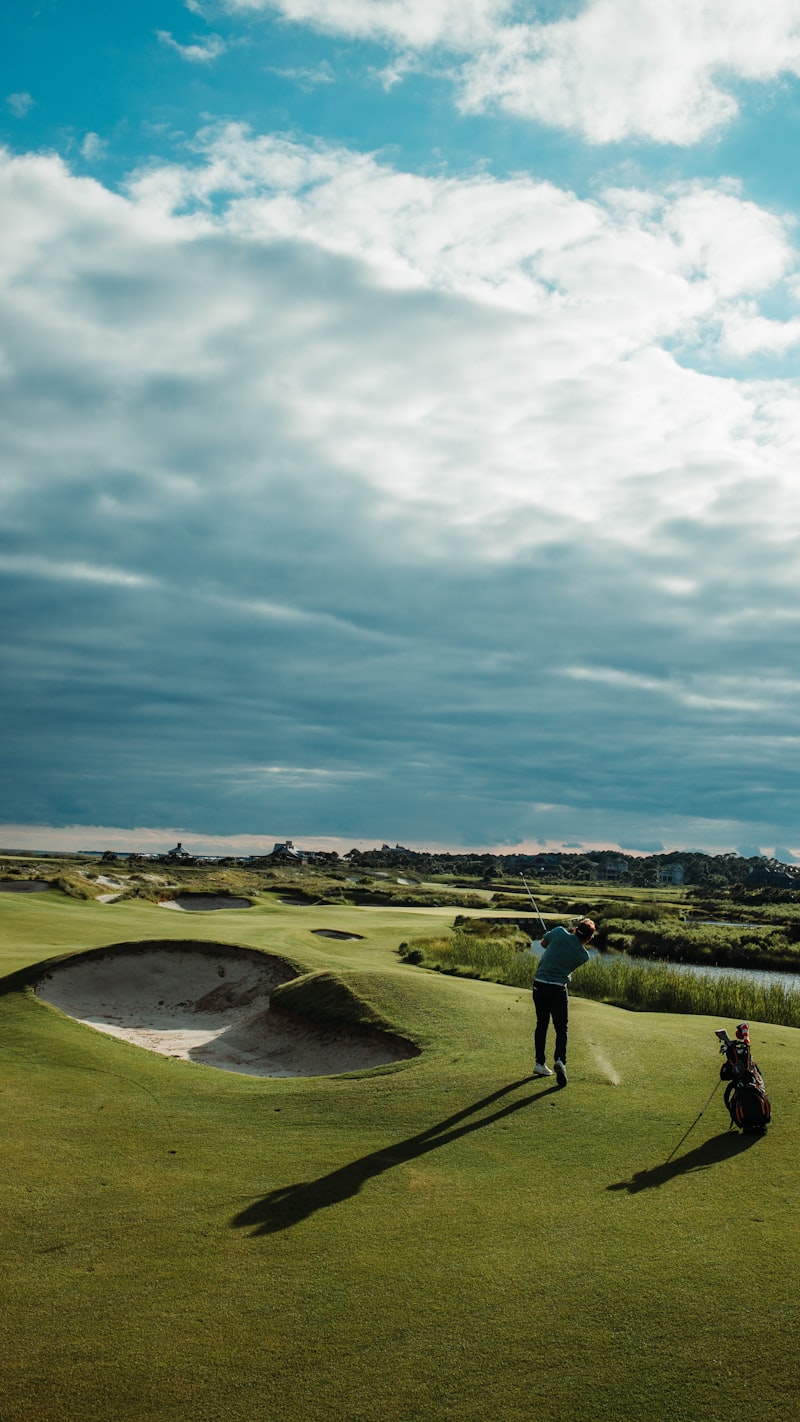
Cabot Links stands as a remarkable achievement in modern golf course development, representing Canada's first true links course since opening in 2012. Located on the rugged coastline of Inverness, Nova Scotia, along the Gulf of Saint Lawrence, this extraordinary course was built on a former coal mine staging area, transforming industrial land into one of North America's most celebrated golf destinations. The vision of Toronto-born entrepreneur Ben Cowan-Dewar, who founded the upmarket golf travel company GolfTi, Cabot Links became reality through the financial backing of Mike Keiser, the mastermind behind Oregon's acclaimed Bandon Dunes resort. This partnership brought together Cowan-Dewar's passion for golf course development with Keiser's proven expertise in creating world-class links golf experiences. Alberta native Rod Whitman designed the course, creating an authentic links experience that embraces golf's Scottish origins. The course stretches across sandy coastal terrain between the former mining town of Inverness and the Gulf of Saint Lawrence, offering golfers an immersive experience in one of Cape Breton Island's most spectacular settings. Construction and development began in the late 2000s, with a soft opening featuring 10 holes in 2011 before the full 18-hole course debuted in 2012. As one of only 246 true links courses worldwide, Cabot Links occupies that exclusive less-than-1% category of courses built on authentic links land. The course features the firm, sandy soil and coastal location that defines genuine links golf, situated on stretches of land that farmers once deemed useless due to the sandy conditions. This terrain, combined with the maritime climate and constant coastal winds, creates the challenging conditions that make links golf unique. The fescue grasslands provide the firm, fast-running surfaces essential to links golf, encouraging the bump-and-run shots and ground game that harken back to golf's origins. The course's location subjects it to strong coastal winds typical of seaside links courses, requiring golfers to play shots closer to the ground and master the strategic elements that make links golf so captivating. Among the course's most celebrated holes is the par-4 6th, a dogleg-left that curves around a tidal yacht basin. Originally planned as the closing hole in early routing designs, this postcard-perfect hole has become one of the most scenic in Canadian golf, showcasing the course's spectacular coastal setting and serving as a signature example of how the routing takes advantage of the dramatic landscape. Cabot Links quickly gained international recognition, earning inclusion among the World's 100 Greatest Golf Courses and sparking a golf tourism boom throughout Cape Breton Island. The course's success helped revitalize the local economy in Inverness, which had declined after the coal mines closed, bringing new life to this coastal community. The resort features comprehensive amenities including a 60-room hotel, three onsite restaurants, a pro shop, and gift shop. The success of Cabot Links paved the way for the opening of sister course Cabot Cliffs in July 2015, designed by the acclaimed team of Bill Coore and Ben Crenshaw. This second course, which had its grand opening in June 2016, further elevated the destination's profile and is considered by many to be among the world's top courses. Unlike many resort destinations that isolate visitors, Cabot Links' location creates a more communal experience. Situated right between the town of Inverness and the coastline, golfers can engage with the local community and experience the authentic maritime culture of Nova Scotia, earning the destination comparisons to the traditional links golf experience found in Scotland and Ireland. The course plays to a par of 72 over 6,860 yards from the championship tees, though multiple tee options accommodate golfers of varying skill levels. The coastal maritime climate brings variable winds and weather conditions typical of seaside links courses, adding an extra dimension of challenge and strategy to every round. Cabot Links represents more than just an exceptional golf course; it stands as a testament to visionary development that respects the game's traditions while creating something entirely new. By transforming a former industrial site into a world-class golf destination, the course demonstrates how thoughtful development can revitalize communities while providing golfers with an authentic links experience previously unavailable in North America.
Cape Kidnappers Golf Course
Hawke's Bay, New Zealand
Cape Kidnappers Golf Course stands as one of the most visually spectacular and architecturally significant golf courses in the world, perched dramatically on clifftops more than 150 meters above Hawke's Bay on New Zealand's North Island. Designed by renowned American architect Tom Doak and opened during the 2004-2005 season, the course was immediately hailed as a modern masterpiece and represents Doak's first overseas project. The course was developed by American hedge fund billionaire Julian Robertson, who amassed a 6,000-acre parcel on the Cape Kidnappers peninsula as a sister property to his earlier Kauri Cliffs development. The peninsula itself carries historical significance, named by Captain James Cook on October 15, 1769, following a misunderstanding between his crew and local Maori over a Tahitian boy aboard Cook's vessel. What sets Cape Kidnappers apart is its unique geological setting on a peninsula extending 10 kilometers into the South Pacific. Unlike traditional links terrain with rolling sand dunes, the land tilts toward the sea as a series of ridges jutting toward the cliff edges, creating what Doak describes as terrain unlike anywhere else in golf. The course sits approximately 140 meters above sea level, with some holes featuring drops of over 400 feet to the Pacific Ocean below. The most famous hole is the par-5 15th, nicknamed 'Pirate's Plank,' which plays down a finger of ridge to a cliff-edge green. This signature hole exemplifies the course's dramatic character, where approach shots can literally be pulled 'off the very end of the earth,' taking nearly 10 seconds of hang time to reach the ocean 500 feet below, according to designer Tom Doak. Doak's architectural philosophy at Cape Kidnappers melded heathland and links features to create what he considers one of his finest works. The course demands seaside golf skills with firm, fast surfaces and often windy conditions where trajectory control becomes paramount. Players navigate shots over native tea trees and play cautiously along deep ravines carved by manuka and kanuka trees. The course underwent significant renovations during the COVID-19 pandemic to mark its 20th anniversary. Under Doak's direct supervision, every fairway and putting surface was completely regrassed to restore the bounce and roll characteristics essential to the design's bold features. Additional improvements included strategic trimming of native vegetation and expert camouflaging of new cart paths. Cape Kidnappers operates within Cape Sanctuary, the largest privately owned wildlife restoration project of its kind in New Zealand. The 6,000-acre working sheep and cattle station is protected by over 10 kilometers of predator-proof fencing, creating a haven for New Zealand's native flora and fauna. Golfers experience play surrounded by rare and endangered bird life inhabiting the tree-clad ravines. The course consistently ranks among the world's top 50 golf courses and is routinely included in global top 100 lists. Doak himself acknowledges that people have difficulty classifying Cape Kidnappers because it's so different and distinct from anything else in golf. The combination of scale, setting, and architectural merit creates what may always stand alone in the golf world. Cape Kidnappers operates as an exclusive resort course with seasonal green fees ranging from NZ$450 to NZ$950 for international visitors. The course sees limited play with approximately 6,000 rounds annually, contributing to its immaculate conditioning. The facility includes driving ranges facing the ocean and operates in conjunction with the luxury Rosewood Cape Kidnappers resort. The course's reputation extends beyond its clifftop spectacle. While the coastal holes provide the iconic imagery that made Cape Kidnappers famous through aerial photography, the inland holes offer equally compelling golf through engaging terrain changes and ravines that create superior shot values and strategic interest.
Carnoustie Golf Links
Carnoustie, Angus, Scotland
Carnoustie Golf Links stands as one of golf's most formidable examinations, earning its reputation as 'Golf's Greatest Test' through centuries of challenging the world's finest players. Located on Scotland's North Sea coast in Angus, this legendary links has been humbling golfers since the 16th century, with the first recorded mention of 'gowff' appearing in parish records in 1560. The course's lineage traces back to Sir Robert Maule, a local landowner who was described as being 'given to leicherie' and other sports such as 'hawking, hunting and the gawf' in the late 15th century. Formally established in 1842, Carnoustie Golf Club became the world's oldest artisan club and the 10th oldest golf club globally. The Championship Course evolved through the hands of golf's greatest architects. Allan Robertson, acknowledged as the first golf professional and the greatest golfer of his time, initially laid out a 10-hole course around 1842. Tom Morris Senior extended it to 18 holes in 1867, creating a 4,565-yard layout. The course reached its modern form in 1926 when James Braid was brought in to oversee sweeping changes that prepared it to host The Open Championship. The course's character is defined by its unforgiving nature and strategic complexity. The North Sea winds create constantly changing conditions, while deep pot bunkers and the meandering Barry Burn punish wayward shots. Jockie's Burn adds another water hazard, coming into play on four of the first six holes. The terrain features classic links characteristics with undulating fairways, thick rough, and greens that demand precise approach play. Since hosting its first Open Championship in 1931, Carnoustie has welcomed eight Championships, producing memorable moments and champions. Tommy Armour claimed the inaugural Open victory, followed by Henry Cotton in 1937. Ben Hogan's triumph in 1953 during his only Open Championship appearance cemented both his legend and the course's reputation. Gary Player conquered the links in 1968, followed by Tom Watson in 1975. Padraig Harrington captured the 2007 Championship in a playoff, and Francesco Molinari claimed victory in 2018. The course's finishing holes represent golf's most challenging closing stretch. The 16th, a 250-yard par-three, features slopes that make holding the green notoriously difficult. The 17th demands precision with its 'island' fairway and long iron approach to a well-bunkered green. The 18th hole, stretching 444 yards, presents one of golf's toughest tee shots, with the Barry Burn claiming anything significantly off-center. This hole witnessed Jean Van de Velde's infamous meltdown in 1999, when the Frenchman needed only a double-bogey six to win but carded seven and lost in a playoff. Tommy Fleetwood holds the course record with a remarkable 63 shot during the 2017 Open, demonstrating that even Golf's Greatest Test can yield to exceptional play. The Championship Course consistently ranks among the world's top 50 courses and was voted the World's Best Golf Course in 2019. Its conditioning has reached world-class standards under careful stewardship, ensuring it remains not only challenging but pristine. The course's unique character lies in its ability to demand strategic thinking on every shot while immersing players in Scotland's raw coastal beauty, creating an unforgettable golfing journey from the first tee to the final putt.
Cypress Point Club
Pebble Beach, California, United States
Cypress Point Club stands as one of golf's most revered and exclusive destinations, a private sanctuary perched on the dramatic coastline of Pebble Beach, California. Founded in 1928 through the vision of Marion Hollins, former National Women's Golf Champion, and Samuel Morse of Del Monte Properties Company, the club was conceived as an intimate retreat for golf devotees in what Morse described as 'the most unique and beautiful setting imaginable.' The course officially opened for its first round on August 11, 1928, with the George Washington Smith-designed clubhouse following two years later on September 20, 1930. Designed by the legendary Alister MacKenzie in collaboration with Robert Hunter, Cypress Point represents MacKenzie at the height of his considerable powers. The Scottish architect, fresh from his revolutionary work at Augusta National, was given arguably the most spectacular piece of golf real estate ever developed. The 6,536-yard layout showcases MacKenzie's genius for working with natural terrain, as the course seamlessly transitions from coastal dunes through the enchanting Del Monte forest before emerging onto the rocky Pacific coastline for a breathtaking finish. The course's routing is masterful in its variety and flow. The front nine ventures into the mystical Monterey cypress and pine forest, where towering trees create cathedral-like corridors and dappled sunlight filters through the canopy. Players navigate through this sylvan setting on holes carved naturally into the landscape, with strategic bunkering and subtle green complexes that reward precision and course management. MacKenzie boldly broke conventional design rules by incorporating back-to-back par-5s on both the front and back nines, creating unique strategic challenges that set Cypress Point apart from traditional layouts. The signature hole, and arguably the most famous par-3 in golf, is the 16th—a 233-yard oceanside masterpiece that Golf Digest named America's Greatest Hole in 2024. This hole epitomizes heroic golf design, with both tee and green perched precariously close to the cliff-crashing Pacific. The hole demands a 230-yard carry over churning ocean waters to reach a peninsula green guarded by strategic bunkers and native ice plant. Into the prevailing wind, the direct route becomes nearly impossible, forcing players to consider bail-out strategies while being seduced by the dramatic all-or-nothing shot. The 17th hole continues the oceanside drama as another spectacular par-4 that hugs the coastline, where the Pacific Ocean creates an unforgettable backdrop while coastal winds add significant challenge to club selection and shot execution. The small greens throughout the course require pinpoint accuracy, leaving little margin for error in approach shots. Cypress Point's exclusivity is legendary—the club maintains just 250 members, making it one of the most selective golf clubs in the world. Non-members can only play by invitation, and even then, such invitations are extraordinarily rare. This exclusivity has preserved the course's pristine condition and intimate atmosphere, maintaining what members describe as a refreshingly unpretentious West Coast vibe despite its status as golfing holy ground. From 1947 to 1990, Cypress Point served as one of the venues for the PGA Tour's Bing Crosby Pro-Am (later the AT&T Pebble Beach Pro-Am), bringing the course into living rooms across America and cementing its reputation among golf's elite venues. The tournament featured memorable moments from legends like Ben Hogan, Byron Nelson, and Tom Watson, who created magic along the clifftop holes that define the course's character. The course record of 63 is shared by several players, including the great Ben Hogan and Jim Langley, among others—a testament to how even the world's finest golfers are challenged by MacKenzie's strategic design and the course's demanding conditions. More recently, Texas sophomore Kramer Hickok equaled this mark during a practice round for the 2018 Stanford Classic. Weather plays a crucial role in the Cypress Point experience. The coastal Pacific climate brings significant wind influence that can transform the course from benign to brutal within hours. Morning fog often shrouds the layout in mystery, while afternoon winds can make club selection a constantly shifting puzzle. The course's position on the Monterey Peninsula at 80 feet of elevation exposes it to the full force of Pacific weather systems. Cypress Point consistently ranks among the world's finest courses, holding the #2 position on GOLF Magazine's Top 100 World Rankings and #3 on Golf Digest's America's 100 Greatest. Top100GolfCourses.com has ranked it #1 in the United States, recognition that speaks to both its architectural brilliance and the power of its incomparable setting. What makes Cypress Point truly unique is how MacKenzie's genius design philosophy merged perfectly with an extraordinary piece of land. The course feels more like nature's own creation than a man-made construct, with each hole flowing naturally into the landscape. The diverse routing—from forest cathedral to windswept dunes to dramatic oceanside cliffs—creates an almost spiritual golf experience that has moved players and architects for nearly a century. It remains not just a golf course, but a masterpiece where the greatest golf architecture meets the most spectacular coastal scenery in the world.
Emirates Golf Club (Majlis)
Dubai, United Arab Emirates
The Majlis Course at Emirates Golf Club stands as a pioneering achievement in Middle Eastern golf, marking the region's entry into championship-level golf when it opened in 1988 as the first grass golf course in the Middle East. Designed by American architect Karl Litten, this par-72 layout stretching 7,301 yards was carved from natural desert dunes on the outskirts of Dubai, transforming an arid landscape into lush fairways that would become the foundation of the UAE's golf tourism industry. The course derives its name from the Arabic word for 'meeting place,' inspired by the distinctive Bedouin tent-style clubhouse that remains an iconic architectural landmark. Known affectionately as the 'Grand Dame' of UAE golf, the Majlis Course has earned global recognition as the long-standing host of the Dubai Desert Classic, which began just one year after the course opened in 1989. This European Tour event has attracted golfing legends including Tiger Woods, who claimed three victories here, Ernie Els with three wins, and Seve Ballesteros, cementing the course's reputation on the international stage. The layout winds through indigenous desert flora and fauna, incorporating seven natural fresh and saltwater lakes that serve as both water hazards and stunning visual elements. These strategically placed lakes, combined with the challenging bunkering and undulating greens, create a demanding test for golfers of all abilities. The course is renowned for its immaculate conditioning and features some of the fastest greens on the DP World Tour circuit, demanding precision and strategic play from professionals and amateurs alike. The signature 8th hole has become one of the most photographed and recognizable holes in championship golf, featuring a demanding dogleg par-4 played toward the dramatic Dubai skyline. This hole epitomizes the course's unique character, blending natural desert beauty with the modern architectural marvels of one of the world's most dynamic cities. The tee shot requires a carry of at least 240 yards just to reach the fairway, while the approach plays sharply uphill to a sloping green, creating both visual drama and strategic complexity. The course record of 61 is held by Ernie Els, achieved on January 27, 1994, during one of his three Dubai Desert Classic victories. This remarkable score stands as testament to both the quality of the layout and the high standard of professional golf it has consistently attracted over more than three decades. The Majlis Course operates in Dubai's hot desert climate, with scorching temperatures that initially made the concept of a grass golf course seem impossible. However, innovative irrigation and maintenance techniques have created and sustained the lush playing conditions that golfers experience today. The course layout takes full advantage of its desert setting, with tall dunes framing the perimeter while the sprawling city has grown to encircle the course, creating spectacular urban backdrops on many holes. What makes the Majlis Course truly unique is its role as a trailblazer in regional golf development. When construction began, the idea of maintaining grass fairways and greens in the Middle Eastern desert was considered nearly impossible, yet the vision became reality through ambitious engineering and unwavering commitment to excellence. The course set the standard for golf in the Gulf region and paved the way for numerous world-class developments that followed. The facility features world-class practice amenities, including a state-of-the-art swing analysis studio, a nine-hole par-three academy course, short-game areas, practice putting greens, and a fully floodlit driving range. These facilities reflect the club's commitment to golf development and education in the region. Beyond its tournament pedigree, the Majlis Course has become a cultural landmark in Dubai, representing the emirate's transformation from desert outpost to global destination. The contrast between the natural desert landscape and the modern city skyline visible from many holes captures the essence of Dubai's remarkable development story. The course continues to challenge and inspire golfers from around the world, maintaining its position as one of the Middle East's most prestigious and recognizable golf venues.

Fancourt Links
George, Western Cape, South Africa
The Links at Fancourt stands as one of golf's most remarkable transformation stories, rising from the flat expanse of a former airfield to become South Africa's premier championship golf course. Located in George along the scenic Garden Route of the Western Cape, this Gary Player masterpiece opened in 2000 as the crown jewel of the Fancourt Estate, set against the dramatic backdrop of the Outeniqua Mountains. Player himself has declared The Links his greatest achievement as a course designer, a bold statement from the man who has created over 400 courses worldwide. The transformation took 20 months and required Player's design team to spend extensive time studying the classic links courses of Scotland and Ireland to recreate their finest elements. Working alongside course designer Phil Jacobs and estate owner Dr. Hasso Plattner, Player sculpted the former George Airport into an undulating, windswept terrain that captures the essence of British Isles golf. The par-73, 7,579-yard layout stretches across dune-style landscape with wildly undulating fairways, deep pot bunkers, and links-style greens of various shapes and elevations. Despite being called a links course, it's technically not a true links as the subsoil is clay rather than sand, but the design philosophy and playing characteristics authentically recreate the links experience. The course features dramatic elevation changes, unconventional holes, and strategic challenges that test even the world's best players. The Links gained international prominence when it hosted the 2003 Presidents Cup, delivering one of golf's most dramatic finishes. The tournament ended in a historic tie between Gary Player's International team and Jack Nicklaus's United States team after Tiger Woods and Ernie Els halved their playoff match in gathering darkness. This moment elevated Fancourt's profile globally and demonstrated the course's championship credentials. Beyond the Presidents Cup, The Links has hosted several prestigious tournaments including the 2005 South African Airways Open and the first Women's World Cup of Golf. The course has welcomed global golfing legends including John Bland, Justin Rose, Retief Goosen, Branden Grace, and Ernie Els, all drawn to its unique challenges and exceptional conditioning. The course's exclusivity adds to its mystique - The Links operates as a private club restricted to members and their invited guests, with only limited tee times available to guests of the Fancourt Hotel and Manor House who meet specific reservation requirements. This exclusivity maintains the course's pristine condition and upholds the traditions of the game, including the mandatory use of expert caddies who are considered among the world's best. Rankings have consistently recognized The Links' excellence. Golf Digest South Africa ranks it as the country's number one golf course, while Golf Digest US placed it 38th on their list of the world's 100 greatest golf courses, comparing 464 courses from 18 countries. The course contrasts starkly with Fancourt's other parkland courses, The Montagu and Outeniqua, with its open fairways and links-style challenges. Environmental stewardship plays a crucial role in The Links' identity. The course has been a Certified Audubon Cooperative Sanctuary for over 20 years, recognizing its commitment to wildlife and habitat management, chemical use reduction, water conservation, and environmental education. Bordered by grasslands and wetlands, the course serves as a wildlife reserve, supporting local ecosystems while providing world-class golf. The Garden Route climate presents its own challenges, with potential for strong winds that can dramatically alter playing conditions. The course's elevated inland location, combined with its mountain backdrop, creates a unique microclimate that adds another strategic element to the golfing experience. Several holes have gained particular recognition for their design excellence. The par-three second hole, known as 'Lang Drop,' plays steeply downhill over 200 meters to a target surrounded by bunkers. The third hole, aptly named 'Calamity,' presents a formidable 429-meter par-four with a stone-walled burn protecting the green. The risk-reward sixth hole offers power players a chance to attack a tiny green, while the more conservative approach leaves a delicate wedge shot to an intimidating target. The course's facilities reflect its world-class status, featuring a luxurious clubhouse with private locker rooms, Roman bath, Jacuzzis, outdoor pool, steam and sauna rooms, gym, and billiard room. The Links Lodge provides elegant dining and meeting spaces, while comprehensive practice facilities include a full-length driving range and short-game areas. What makes The Links truly unique is its successful recreation of links golf in an unlikely setting. Player's vision transformed a flat, featureless airfield into a course that convincingly evokes Scotland or Ireland, complete with the strategic thinking and shot-making demands of traditional links golf. The course's ability to challenge the world's best players while maintaining environmental sensitivity has created a lasting legacy that cements its position among golf's elite destinations.
Hirono Golf Club
Shijimi, Hyogo, Japan
Hirono Golf Club stands as Japan's most revered golf course and arguably the finest example of Charles Hugh Alison's architectural genius in Asia. Located in the rolling hills of Miki, Hyogo Prefecture, this masterpiece emerged from a fortuitous discovery in spring 1930 when four members of Maiko Country Club—Shosuke Itani, Seiichi Takahata, Iwazo Suzuki, and Chozo Ito—stumbled upon the perfect site for their dream 18-hole course. The course's creation story reads like golf folklore. When the legendary Charles Hugh Alison arrived in Japan on January 10, 1931, he was initially commissioned to design Tokyo Golf Club's relocation. However, the four visionary founders convinced him to visit their proposed site. Impressed by the natural terrain, Alison famously locked himself in a room at the Oriental Hotel for just three days to complete the entire design—a testament to both his genius and the land's inherent golf course potential. Construction began on February 20, 1931, under the meticulous supervision of Chozo Ito, who had learned golf while studying in England in 1914 and was instrumental in founding the Japan Golf Association in 1924. The course was completed on May 16, 1932, with a grand opening ceremony on June 19, 1932, featuring His Imperial Highness Prince Asaka hitting the ceremonial first ball. The opening tournament was won by two-time Japan Amateur champion Shiro Akaboshi with a score of 77. Hirono's layout is a masterclass in strategic golf course design, carved through dense woodland with each hole completely isolated by towering mature pines, creating what many describe as the 'Pine Valley of Japan.' The front nine features flatter terrain with demanding par-4s that test accuracy and course management. The back nine introduces moderate elevation changes and showcases Alison's most dramatic and beautiful holes, including the exotic, jungle-like 12th hole that plays over water with its recent 40-yard extension. The course's signature feature is its collection of deep 'Alison bunkers'—cavernous hazards often as deep as a player's height that surround virtually every green. These bunkers, combined with small, elevated greens and strategic water hazards, create a premium on precision over power. The bentgrass greens, pioneered in Japan through the efforts of Ito and Takahata, are notoriously fast and undulating, making even regulation approach shots challenging. Hirono has welcomed golf royalty throughout its history. Gene Sarazen played the course on October 31, 1937, just two years after completing his Career Grand Slam. Walter Hagen and Joe Kirkwood Sr. visited on April 23, 1938, with Hagen having already captured 11 major championships. These visits cemented Hirono's international reputation during golf's golden age. The course underwent comprehensive restoration between 2018-2019 by renowned architects Martin Ebert and Tom Mackenzie, who have worked on multiple Open Championship venues. This meticulous restoration preserved Alison's original vision while updating the course for modern championship play, including the dramatic enhancement of the 12th hole with new Alison-style bunkers guarding a redesigned green. Consistently ranked as Japan's number one golf course across multiple international ranking systems, Hirono has recently climbed to 14th in the world rankings. The course measures 7,169 yards from the championship tees but plays much longer due to its strategic design, elevation changes, and the constant threat of those menacing bunkers. The temperate Japanese climate allows for year-round play, though the course is particularly stunning during cherry blossom season and autumn when the surrounding pines create a cathedral-like atmosphere. What makes Hirono truly special is its perfect marriage of strategic design and natural beauty. Every hole presents unique challenges and character, from demanding long par-4s that require precise positioning to dramatic par-3s played over ravines to elevated greens. The course demands not just skill but intelligent course management, as one wayward shot into an Alison bunker can quickly derail a round. This combination of beauty, strategy, and tradition has made Hirono Golf Club not just Japan's greatest course, but one of the world's most respected golfing venues.
Kauri Cliffs Golf Course
Matauri Bay, Northland, New Zealand
Kauri Cliffs Golf Course stands as one of the most visually stunning and influential golf developments of the modern era, dramatically reshaping New Zealand's golf landscape when it opened for play on November 1, 1999. Located in Matauri Bay in New Zealand's Northland region, approximately 160 kilometers north of Auckland, this clifftop masterpiece was the vision of American financier Julian Robertson, who sought to create a world-class golf destination on one of the planet's most spectacular coastal settings. The course was designed by David Harman of Golf Course Consultants in Orlando, Florida, a choice that initially seemed unconventional given Harman's background was primarily in golf course construction rather than design. However, Robertson's selection proved inspired, as Harman dedicated two full years to the design process and made an extraordinary 42 visits from Florida during construction to ensure every detail met his exacting standards. Tragically, Harman died of cancer in 2007 at age 51, making Kauri Cliffs his lasting legacy in golf course architecture. Set on over 6,000 acres of rolling farmland that culminates in dramatic cliffs rising hundreds of feet above the Pacific Ocean, Kauri Cliffs offers one of golf's most breathtaking natural amphitheaters. The course measures 7,139 yards from the championship tees and plays to a par of 72, with five different tee options to accommodate golfers of all skill levels. What makes the layout truly exceptional is that fifteen of the eighteen holes offer views of the Pacific Ocean, with six holes played directly alongside cliffs that plunge dramatically to the sea below. The course's influence extends far beyond its stunning aesthetics. Prior to Kauri Cliffs, New Zealand golf was primarily associated with Sir Bob Charles and the links at Paraparaumu Beach. Robertson's creation of both the golf course and the elegant Rosewood Kauri Cliffs lodge established a new template for luxury remote golf resorts that has been replicated worldwide throughout the 21st century. The success of Kauri Cliffs directly paved the way for its sister course Cape Kidnappers and countless other boutique, super-upscale golf resorts in remote locations globally. Harman's routing cleverly alternates between the spectacular clifftop holes and beautiful inland sections that wind through marsh, forest, and farmland, ensuring that even the three non-ocean holes provide compelling golf. The architect took full advantage of the property's dramatic elevation changes, with both nines featuring significant contours and the cliffs rising more than 50 meters above the beach below. The course offers sweeping views over the Cavalli Islands to the South Pacific beyond, creating what many consider among the most beautiful golf experiences on earth. The golf complex includes world-class practice facilities with a driving range, putting and chipping greens, a fully stocked golf shop, and elegant locker rooms for both men and women. Premium rental clubs are available for traveling golfers. The course is maintained as part of a working 4,000-acre farm, with the golf course occupying only a small portion of the total property, allowing it to maintain its authentic New Zealand pastoral character. Kauri Cliffs achieved Golf Digest Top 100 status in 2003 and currently ranks #37 in the world among Golf Digest's Top 100 Greatest Golf Courses. Located in what New Zealanders call the country's 'winterless north,' the subtropical climate allows for year-round play, making it an ideal destination for international golfers seeking to escape harsh winters. The course's impact on luxury golf tourism cannot be overstated. It proved definitively that golfers would travel vast distances to experience exceptional golf in remote, pristine locations when paired with accommodations and service that matched the setting's grandeur. This formula has since become the gold standard for destination golf resorts worldwide, establishing New Zealand as what many aficionados now consider the premier luxury golf destination on Earth. The seventh hole stands as perhaps the course's most iconic, a par-3 where golfers face the Pacific Ocean to their right and a deep, tree-filled gorge protecting the target. The fourteenth hole, another memorable par-3, plays downhill toward the water with the green protected by deep bunkers and severe drop-offs. The routing builds dramatically throughout the round, with the most spectacular clifftop holes strategically placed to create crescendo moments that showcase the property's natural magnificence. Kauri Cliffs represents more than just exceptional golf architecture; it embodies a successful marriage of stunning natural beauty, thoughtful design, and luxury hospitality that has influenced resort golf development across the globe. Nearly 25 years after opening, it continues to set the standard for what a world-class golf destination can achieve when vision, resources, and natural beauty align perfectly.
Kiawah Island (Ocean Course)
Kiawah Island, South Carolina, United States
The Ocean Course at Kiawah Island stands as one of Pete Dye's most formidable masterpieces, a brutal 7,876-yard examination that has earned the maximum slope rating of 155 from the USGA. Located on a barrier island off the South Carolina coast, this par-72 layout was specifically designed for the 1991 Ryder Cup, forever etched in golf history as the site of the "War by the Shore." The course's origin story begins not in South Carolina, but with Dye's previous work and the vision of Kiawah Island's developers who sought to create a championship venue worthy of hosting major competitions. Originally planned to sit behind the dunes, the entire layout was elevated at the suggestion of Alice Dye, Pete's wife, to provide unobstructed views of the Atlantic Ocean from every hole. This decision proved transformative, creating what would become the most seaside holes in the Northern Hemisphere. Ten holes directly hug the Atlantic Ocean, while the remaining eight run parallel to those oceanfront stretches, ensuring that the relentless coastal winds play a factor on every shot. The course rating of 79.1 represents the highest in the United States according to the USGA, a testament to the unforgiving nature of Dye's design. When the PGA Championship visited in 2012, players faced one of the most difficult single rounds in tournament history, with winds sending the scoring average to 78.1 for one particularly brutal day. The layout presents a dramatic contrast between its front and back nines. The front nine, measuring 3,815 yards, begins inland before gradually introducing players to the coastal elements. The back nine, at 4,061 yards, delivers the full force of the ocean experience, with greens embedded in the dunes and constant exposure to the Atlantic's influence. Notable holes include the 5th, a 207-yard par-3 that serves as an early test, and the finishing stretch that includes the 16th, a mammoth 608-yard par-5, followed by the 223-yard 17th par-3, and concluding with the 505-yard 18th alongside the ocean. The Ocean Course gained instant worldwide recognition through the 1991 Ryder Cup, where an estimated 200 million viewers across 26 countries witnessed one of the most dramatic finishes in the competition's history. The American team ultimately prevailed in matches marked by intense patriotic fervor, with the contest decided on the final putt when Bernhard Langer's miss secured victory for the United States. Thirty years later, the course provided another memorable major championship moment when Phil Mickelson captured the 2021 PGA Championship at age 50, becoming the oldest major champion in golf history. His victory on this unforgiving layout demonstrated both his enduring skill and the course's ability to identify champions who can master its unique challenges. The course demands both length and precision, with its championship tees stretching to nearly 8,000 yards. Environmental factors play a crucial role, as the coastal winds can transform club selections throughout a round. The layout features Dye's signature elements including strategic bunkering and challenging green complexes, but the ocean setting provides a natural beauty that elevates the experience beyond mere difficulty. Access to this world-renowned venue comes at a premium, with green fees reaching approximately $383, and caddies strongly recommended given the course's complexity and wind conditions. The Ocean Course represents not just a golf course but a proving ground where the world's best players face one of the game's ultimate tests in one of its most spectacular settings. A classical cottage-style clubhouse designed by Robert A.M. Stern was completed in 2007, providing an elegant centerpiece that complements the course's grand scale. The facility opened just in time for the Senior PGA Championship that same year, adding another layer to the venue's tournament pedigree. What makes the Ocean Course truly unique is its combination of maximum difficulty with unparalleled scenic beauty, creating a venue where championship golf unfolds against the backdrop of the Atlantic Ocean on every hole.
Kingston Heath Golf Club
Cheltenham, Melbourne, Australia
Kingston Heath Golf Club stands as one of Australia's most revered golf courses, consistently ranked among the top three courses in the country and within the world's top 30. Located in Cheltenham, Victoria, on Melbourne's famous sandbelt, this masterpiece emerged from humble beginnings as the Elsternwick Golf Club in 1909. The club's journey began when a group of influential Melbourne bayside men formed Elsternwick Golf Club in 1908, securing a lease on nearly 100 acres of unremarkable boggy ground. Under the guidance of men like Stanley Dutton Green, William Allard, Percy Oakley, and Agar Wynne, the club flourished with 149 male and 67 lady members by 1913. However, when their lease came under threat, the visionary committee looked south to Melbourne's emerging sandbelt region. In 1923, following the lead of contemporary clubs like Royal Melbourne, Metropolitan, and Yarra Yarra, the committee settled on six adjacent Cheltenham market gardens totaling 127 acres. This relatively flat land featured one major ridgeline and sandy, well-drained soil that proved ideal for golf—a welcome contrast to Elsternwick's swampy conditions. The course design represents a collaboration between Scottish professional Dan Soutar and the legendary Alister MacKenzie. Soutar, a 'man of Carnoustie,' was remarkably chosen for his first major commission in Victoria. He walked the property several times before settling on a picturesque avenue of gum trees near the center, reportedly declaring, 'Here is where we start, an ideal ready-made short hole for the 10th,' then planned the entire course around this natural feature. MacKenzie's influence became evident following his visit to Australia in 1926, when he suggested the bunkering scheme that would become Kingston Heath's signature. Constructed by greenkeeper Mick Morcom, who would later build Royal Melbourne's two courses, these bunkers are long, sinewy, shaggy, gnarly, and windswept—strategically placed to test every aspect of a golfer's game. Many consider MacKenzie's tee-to-green stretch of bunkers on the par-3 15th to set the standard for all sandbelt layouts. The course opened in 1925 at 6,657 yards, making it the longest layout in Australia at the time. Despite its compact footprint—similar to Merion in the United States—Kingston Heath never feels easy. The strategic design ensures that players are constantly faced with difficult decisions, particularly on the short par-4s where tee shots can range from driver to 7-iron depending on risk tolerance. Kingston Heath's championship credentials are impeccable, having hosted seven Men's Australian Opens between 1948-2000, along with seven Australian Match Play Championships. The course gained international attention when Tiger Woods claimed victory at the 2009 Australian Masters, and more recently hosted the 2016 World Cup of Golf. Looking ahead, the course will host the prestigious 2028 Presidents Cup, cementing its status among golf's elite venues. The course's character is shaped by Melbourne's temperate climate, with hot northerly winds in summer and brisk southerly busters creating additional strategic considerations. The sandbelt soil provides excellent drainage and firm playing conditions year-round, while the native ti-tree and scrubland frame many holes in dense vegetation. Recent improvements under the guidance of Mike Cocking of Ogilvy, Cocking & Mead have refined the tournament tees and several bunker and green complexes, while adding a new short course and 19th hole. These enhancements respect the original design philosophy while ensuring the course remains a stern test for modern professionals. What truly sets Kingston Heath apart is its ability to reward strategic thinking over pure power. The closing stretch from the 14th hole provides a particularly stern test, with holes 16-18 ranked among the most difficult on the property. This finishing sequence has destroyed many promising rounds and continues to challenge the world's best players. The course's reputation extends beyond its playing qualities to its pristine conditioning. Members and visitors consistently praise Kingston Heath's presentation, with the course often described as being in immaculate shape for major championships. This attention to detail, combined with the timeless design principles of Soutar and MacKenzie, ensures Kingston Heath remains one of golf's most respected venues and a true test of championship golf.
Lahinch Golf Club
Lahinch, County Clare, Ireland
Lahinch Golf Club stands as one of Ireland's most celebrated links courses, perched dramatically along the Wild Atlantic Way in County Clare. Founded in 1892 by Alexander Shaw, Richard Plummer, and officers from the Black Watch Regiment, the course has evolved through the hands of golf's greatest architects while maintaining its rugged, authentic character. The first game was played on Good Friday, April 15th, 1892, marking the beginning of what Old Tom Morris would later declare 'the finest natural course he had ever seen' when he redesigned the layout in 1894. Morris placed emphasis on the spectacular sandhills terrain, creating legendary holes that remain virtually unchanged today, including the famous blind par-5 Klondyke and the world-renowned Dell hole. The course's defining transformation came in 1927 when Dr. Alister MacKenzie was commissioned to create an 18-hole championship layout entirely within the magnificent dunes. MacKenzie's vision brought all holes to the sandhills side of the Liscannor Road, declaring that 'Lahinch will make the finest and most popular golf course that I, or I believe anyone else, ever constructed.' His signature plateau greens with intricate undulations made putting 'a fine art' and established the strategic brilliance that defines the modern course. Martin Hawtree's 1999 restoration modernized the course while preserving MacKenzie's genius, redesigning 14 greens and adding two spectacular new par-3s deep in the dunes. The work utilized sand dunes closer to the Atlantic Ocean, creating wonderful undulations that have earned consistent rankings in the world's top 50 courses. Lahinch's unique character extends beyond architecture to its famous weather-predicting goats, who seek shelter when Atlantic storms approach, and its intimate connection to the surfing village that shares its name. The course sits at sea level on classic links terrain, where maritime Atlantic climate creates changeable conditions and prevailing winds that demand strategic thinking and shot-making adaptability. The Dell hole remains one of golf's most controversial and beloved features—a blind par-3 where players must hit over a massive dune to a green nestled in a natural amphitheater, with only a white stone marker for guidance. The preceding Klondyke hole offers its own drama, requiring a heroic blind second shot over a 35-foot hill on this strategic short par-5. As a cornerstone venue for Irish amateur golf, Lahinch has regularly hosted the South of Ireland Championship since 1895, attracting golfers from across Britain and Ireland. The course gained international television exposure when it hosted the 2019 Dubai Duty Free Irish Open from July 4-7, introducing Lahinch's dramatic beauty to a global audience. Located on the edge of the UNESCO-recognized Burren National Park and just 10 kilometers from the Cliffs of Moher, Lahinch offers golfers an authentic Irish links experience where natural terrain dictates play. The course runs through awesome dunes and valleys, humps and hollows, with holes changing direction constantly to challenge players with varying wind conditions. The club's rich history includes the construction of the magnificent Golf Links Hotel in 1896, which overlooks the village and course, and the development of the secondary Castle Course in the 1960s and 1970s on the original flatter terrain. Willie MacNamara served as the club's professional and greenkeeper from 1899 to 1927, maintaining the course's reputation for exceptional conditioning. Today, Lahinch Golf Club requires visiting groups to take at least one caddie, preserving the traditional links experience while ensuring proper appreciation of the course's subtle strategies and hidden challenges. The combination of MacKenzie's architectural brilliance, Morris's historic holes, and the raw beauty of the Clare coastline creates what many consider the ultimate Irish golfing pilgrimage.

Le Golf National (Albatros)
Saint-Quentin-en-Yvelines, Paris, France
Le Golf National's Albatros Course stands as France's premier championship venue, located in Saint-Quentin-en-Yvelines, just 18 miles southwest of Paris in the town of Guyancourt. Opened in 1990, this masterpiece was designed by French architect Hubert Chesneau in collaboration with American Robert von Hagge and Pierre Thevenin, creating what many consider the 'stadium course' of European golf. The course occupies a 345-acre parcel owned by the French Golf Federation, situated near the historic Château of Versailles. What makes Le Golf National truly unique is its stadium-style design, capable of accommodating 80,000 spectators—a rarity in European golf. The layout brilliantly combines traditional links characteristics with modern target golf features, creating a strategic masterpiece that demands precision and course management from the world's best players. The Albatros Course underwent extensive renovation in 2015 by European Golf Design, ensuring it remained at the pinnacle of championship golf. The design philosophy centers on strategic shot-making, with water hazards playing a prominent role throughout the layout. Fescue-covered terrain provides the foundation for this challenging test, while the course's undulating fairways and numerous bunkers demand a complete arsenal of shots. Chesneau's thoughtful design gave each hole a symbolic French name reflecting the challenge ahead. From the opening 'En Avant!' (Forward!) to the closing 'La Foule' (The Crowd), these names capture the drama and difficulty that await. The course immediately establishes its strategic demands on the first hole, where water runs down the entire left side of this dogleg-right par-four, setting the tone for the challenges throughout. Le Golf National gained international prominence as the first French venue to host the Ryder Cup in 2018, where Europe dominated Team USA 17.5-10.5 in front of passionate home crowds. The course's amphitheater design proved perfect for golf's most electric team competition, with natural viewing areas and strategic mounding providing exceptional sightlines for spectators. The venue's championship credentials extend far beyond the Ryder Cup. Since 1991, it has served as the annual home of the French Open (Open de France), the oldest national open in continental Europe. The course has also hosted the Eisenhower Trophy and Espirito Santo Trophy in 1994, establishing its reputation as a world-class international venue. In 2024, Le Golf National achieved another historic milestone by hosting Olympic golf for both men's and women's competitions, marking Paris's return to Olympic golf after more than a century. The venue's ability to challenge the world's elite while providing spectacular viewing makes it ideal for golf's biggest events. The course record of 62 has been achieved by four players: Eduardo Romero in 2005, followed by Rasmus Højgaard in 2022, his brother Nicolai Højgaard in 2024, and world number one Scottie Scheffler also in 2024. These low scores demonstrate that while the course demands strategic thinking, aggressive play can be rewarded when executed properly. Strategically, the course features several signature holes that have become legendary in championship golf. The 15th hole, 'Le Juge' (The Judge), forces players to decide how aggressive to be off the tee, leading to a demanding wedge shot toward a kidney-bean-shaped peninsula green. The finishing hole, 'La Foule,' presents a demanding test with bunkers and rough lining the right side while water hugs the entire left side, leading to a massive putting surface capable of dramatic final-hole heroics or disasters. The Continental European climate allows for year-round championship play, while the course's design philosophy emphasizes strategic options over pure length. At 7,331 yards, it provides a thorough examination without relying solely on distance, instead rewarding intelligent course management and precise execution. What truly sets Le Golf National apart is its perfect marriage of championship golf and spectator experience. The course was designed from the ground up to accommodate large galleries, with natural amphitheaters and strategic viewing areas that create an electric atmosphere during major championships. This stadium-style approach has influenced modern course design worldwide and established Le Golf National as the template for future championship venues.

Leopard Creek Country Club
Malelane, Mpumalanga, South Africa
Leopard Creek Country Club stands as one of Africa's most extraordinary golf destinations, uniquely positioned on the banks of the Crocodile River bordering South Africa's legendary Kruger National Park. This championship course represents the vision of billionaire Johann Rupert, chairman of Swiss luxury goods company Richemont, who dreamed of creating an 'African Augusta' in the heart of the South African Lowveld. The course was designed by Gary Player, South Africa's most celebrated golfing export known as the 'Black Knight,' who transformed a tract of virgin bush into a remarkable 18-hole championship layout. Construction took three years, with the course welcoming its first players in 1997. Player's original design underwent significant modifications over the years, including input from Jack Nicklaus, who suggested lowering greens, tees, and bunkers to create a more natural appearance - changes that proved to be a significant improvement to the layout. In 2017, the course underwent a comprehensive overhaul, rebuilding and reshaping Player's original layout while replanting the entire course with indigenous Cynodon and a fine-textured hybrid grass called Barbados. The same year saw the addition of a world-class par-three course and practice facility, which South African golfer Thomas Aiken called 'the best facility of its kind I've seen anywhere in the world.' Leopard Creek quickly established itself among the world's elite courses, earning recognition as one of Golf Digest's World's 100 Greatest Golf Courses. The course epitomizes African golf at its finest, with indigenous bushveld bordering immaculate fairways and greens. Since 2004, it has served as the annual host of the Alfred Dunhill Championship, a DP World Tour event with a €1.5 million purse that attracts the world's best golfers. The tournament has welcomed a stellar roster of champions, with Adam Scott, Justin Rose, and Charl Schwartzel all claiming their first professional victories at Leopard Creek. The course has also hosted legends like Rory McIlroy, Lee Westwood, Louis Oosthuizen, and Branden Grace, cementing its reputation as a world-class championship venue. What truly sets Leopard Creek apart is its unprecedented integration of golf and African wildlife. The course's innovative architectural and landscaping techniques ensure natural protection from animals while maintaining the authentic bushveld environment. Golfers regularly encounter crocodiles sunbathing along the Crocodile River, hippos calling the water hazards home, and elephants, giraffes, buffalo, and various antelope species roaming the fairways during play. This unique blend of championship golf and safari experience creates an atmosphere unmatched anywhere in the world. The 13th hole stands as the course's signature masterpiece - a 465-meter par-five that sweeps downhill with its green perched more than 30 meters above the Crocodile River. The club strategically removed a wall behind this green to provide golfers with panoramic views of the river and the vastness of Kruger National Park beyond, creating one of golf's most spectacular backdrops. Jack Nicklaus particularly praised the par-five 18th hole, which features an island green, and the par-four 9th, with its peninsula green jutting into the same body of water. Playing at Leopard Creek presents unique challenges beyond typical golf hazards. The thorny bush of the Lowveld proves unforgiving to wayward shots, and water comes into play on more than half the course. With families of hippos inhabiting the water hazards and crocodiles in the river system, course management takes on an entirely new dimension. The presence of snakes adds another element players must consider when retrieving errant shots. The course measures 6,000 meters from the club tees, extending to 6,480 meters from the championship Gold tees. While the fairways are relatively generous, precision remains paramount given the challenging natural environment. The bushveld climate and indigenous grass varieties create playing conditions that test golfers' adaptability and course management skills. Leopard Creek's clubhouse represents architectural excellence with its distinctive thatch roof design, housing one of Africa's finest collections of golf memorabilia. The facility provides panoramic views of the course and surrounding wilderness, offering world-class dining and amenities that complement the extraordinary golfing experience. The course's commitment to environmental integration and wildlife conservation sets a global standard for sustainable golf development. Rather than displacing the natural ecosystem, Leopard Creek enhances it, creating a symbiotic relationship between championship golf and African wildlife conservation. This philosophy has made it a model for environmentally conscious course design worldwide. For golfers seeking the ultimate combination of championship-caliber golf and authentic African wilderness experience, Leopard Creek Country Club delivers an unparalleled adventure. Its recognition among the world's top courses, combined with its role as a DP World Tour venue and its unique wildlife encounters, establishes it as a bucket-list destination that offers something truly impossible to find anywhere else on Earth.
Marco Simone Golf & Country Club
Guidonia Montecelio, Rome, Italy
Marco Simone Golf & Country Club stands as one of Europe's most historically significant golf venues, situated in the rolling countryside of Guidonia Montecelio, just 24 miles east of Rome. The course derives its name from a medieval castle dating back to approximately 1000 AD, originally built as a stone tower that was later expanded by nobleman Simone dei Tebraldo and his son Marco di Simone in the mid-1400s. The property witnessed centuries of aristocratic ownership, even hosting astronomer Galileo Galilei in the 1600s before falling into disrepair during a 17th-century malaria outbreak that drove the wealthy from the countryside. The modern golf course story began in 1978 when Italian fashion designer Laura Biagiotti, known as the 'Queen of Cashmere,' and her husband Gianni Cigna purchased the estate. Biagiotti described the castle restoration as 'a madness that took me and that I followed gently,' transforming the property into a national monument in collaboration with Fine Arts authorities. The original 18-hole championship course opened in 1989, designed by Jim Fazio in partnership with David Mezzacane, along with a 9-hole resort course. Marco Simone gained international prominence when it was selected to host Italy's first-ever Ryder Cup in 2023. In preparation for this historic event, the course underwent a comprehensive redesign and re-routing between 2018 and 2021, orchestrated by European Golf Design in collaboration with Tom Fazio II. This $13 million renovation, involving bulldozers for 2.5 years, completely transformed the layout with match-play competition as the primary focus, creating strategic risk-reward scenarios and pivotal decision points throughout. The championship course now measures 7,268 yards from the tips, playing to a par 72 with a slope rating of 140. The terrain presents one of golf's most physically demanding challenges, with 155 feet of elevation change from the lowest point on the front nine to the highest on the back. Stewart Cink, a U.S. Ryder Cup vice-captain, called it 'probably the most demanding physically of any Cup course I've ever seen,' noting that players would be happy to rest between sessions due to the stamina required. The course features up to nine semi-blind approach shots to elevated greens, a rarity in modern championship golf. Strategically positioned bunkers, water hazards, and undulating putting surfaces create a consistent theme of calculated decision-making. The 16th hole exemplifies this design philosophy as a potentially drivable par-4 of 352 yards, where players must decide whether to attempt a 300-yard carry over a bisecting creek to reach the green or play conservatively with a 200-yard iron short of the centreline fairway bunker. Marco Simone's playing surfaces represent cutting-edge agronomy, featuring Pure Dynasty Paspalum fairways for durability in the Mediterranean climate, Pure Distinction Bent-grass greens for consistent putting, and Tall Fescue rough that penalizes wayward shots. The location 24 miles from the Mediterranean Sea subjects the course to modest prevailing winds, while the warm Mediterranean climate typically receives 31 inches of annual precipitation, though 2023 saw above-average rainfall with 44 inches through August. The course made its European Tour debut at the 2021 DS Automobiles Open, won by Danish player Nicolai Højgaard. Robert MacIntyre captured the 2022 edition, followed by Adrian Meronk's victory in 2023 with a score of 271. The venue had previously hosted the Italian Open in 1994, establishing its credentials as a championship-caliber test. The September 2023 Ryder Cup marked the culmination of Marco Simone's transformation, delivering Europe a dominant home victory in front of passionate Italian crowds. The event represented not just Italy's first Ryder Cup, but a celebration of golf's growth in a country more famous for football and fashion. The castle overlooking the course provided a dramatic backdrop, connecting modern golf with centuries of Italian history. Beyond the championship course, the facility includes the 9-hole Resort Course designed by Jim Fazio and David Mezzacane, measuring 2,060 meters and playing to a par 32. This shorter layout serves as an introduction to the property while maintaining the same high maintenance standards. The elegant clubhouse, featuring the 'On the Green' restaurant, provides fine dining with views across the Roman countryside, while the pro shop offers everything from premium golf equipment to branded merchandise commemorating the historic Ryder Cup. What makes Marco Simone unique extends beyond its challenging layout to its seamless blend of ancient history and modern golf architecture. The presence of the restored castle, the fossils in its basement dating back 300,000 years, and the Roman villa remnants create an atmosphere unmatched in championship golf. The course's design philosophy of strategic decision-making, combined with its demanding physical nature and world-class conditioning, establishes Marco Simone as a worthy addition to the pantheon of great Ryder Cup venues, ensuring Italy's place in golf's most prestigious team competition will be remembered for generations.
Merion Golf Club (East)
Ardmore, Pennsylvania, United States
Merion Golf Club's East Course stands as one of America's most revered golf venues, a masterpiece of strategic design packed onto just 126 acres in Ardmore, Pennsylvania. Founded in 1912, this legendary layout has consistently ranked among the nation's top 10 courses and has hosted more USGA tournaments than any other venue in the country. The course emerged from necessity when the revolutionary Haskell rubber-core ball rendered the nearby Haverford course obsolete. Hugh Wilson, a gifted amateur architect, was tasked with creating a new venue on land purchased from the Haverford Development Company. Wilson's design philosophy emphasized strategic placement over raw length, creating a course that rewards precision and punishes wayward shots regardless of distance. Merion's compact routing is a marvel of efficient design, with holes weaving through rolling terrain that features significant elevation changes throughout. The course is famous for its wicker baskets atop flagsticks instead of traditional flags, a distinctive feature patented by superintendent William Flynn in 1915. These baskets have become synonymous with Merion's identity and add to its old-world charm. The East Course plays to a par 70 over 6,946 yards from the championship tees, but its relatively modest length belies its difficulty. The layout features just two par 5s, both appearing within the first four holes, creating a unique rhythm that has been described in thirds as 'Drama, Comedy, and Tragedy.' The opening stretch presents immediate challenges, while the middle section offers opportunities for those who play strategically, before culminating in one of golf's greatest finishing stretches. Merion's architectural character is defined by its punishing rough, strategic bunkering, and multiple grass varieties that create an intentionally 'edgy' playing experience. The course maintains old stoleniferous grasses that introduce grain into the greens, while the rough features ten different grass varieties that create unpredictable lies and challenging recovery shots. The venue's tournament pedigree is unmatched, having hosted five U.S. Opens, six U.S. Amateurs, and USGA events in every decade since opening. The course has witnessed some of golf's most iconic moments, from Bobby Jones completing his Grand Slam on the 11th hole in 1930 to Ben Hogan's legendary 1-iron shot on the 18th during the 1950 U.S. Open. Most recently, Justin Rose captured the 2013 U.S. Open with a one-over-par total, demonstrating that modern equipment cannot overcome Merion's strategic demands. Following the 2013 U.S. Open, renowned architect Gil Hanse completed an extensive two-year renovation that enhanced the course's original character while addressing modern tournament needs. His work particularly focused on restoring the quarry features and bunker complexes that define several of Merion's most memorable holes. What makes Merion unique among championship venues is its ability to test the world's best players without relying on excessive length. The course's narrow fairways, thick rough, and strategically placed hazards create a demanding examination of every aspect of the game. Players must navigate twisting corridors bordered by creeks, out-of-bounds stakes, and unforgiving rough, while the canted greens surrounded by menacing bunkers demand precise approach shots. The East Course's influence on American golf architecture cannot be overstated. Hugh Wilson's maiden design effort created what USGA president Richard S. Tufts called 'a model test of golfing skill and judgment for future architects to copy.' The course proves that great architecture transcends yardage, relying instead on strategic design, natural terrain, and thoughtful hazard placement to create a timeless test of golf.
Muirfield (The Honourable Company)
Gullane, East Lothian, Scotland
Muirfield stands as one of golf's most revered venues, home to The Honourable Company of Edinburgh Golfers, the second oldest golf club in the world. Founded in 1744 on Leith Links, the club holds the unique distinction of having written the original 13 rules of golf, establishing the foundation of the modern game. The club's journey to its current home began in Edinburgh, where members first played at Leith Links before relocating to Musselburgh in 1836. By 1890, overcrowding at Musselburgh prompted another move, and despite having no existing course, no clubhouse, and the nearest train station four miles away, the bold decision was made to establish themselves at Muirfield. Old Tom Morris designed the original course, which opened in May 1891, with the clubhouse completed by December of that year. The course we know today emerged through the vision of Harry Colt, who redesigned Muirfield in 1925 after the club purchased the original leased land and acquired an additional 50 acres. His innovative design departed from traditional links layouts, creating a unique double-loop configuration where the front nine circle clockwise around the property's perimeter while the back nine run counterclockwise on an inner circuit. This revolutionary design ensures golfers face constantly changing wind conditions from the nearby Firth of Forth, as the wind rarely blows from the same direction on consecutive holes. Muirfield's reputation as a supreme test of championship golf is built on its fair but demanding character. The course features approximately 150 bunkers, most of which are visible to the player, embodying the principle that good shots should be rewarded while poor ones are appropriately punished. The layout includes two par-fives and two par-threes in each nine, with relatively flat and visible fairway landing areas throughout most of the course, the 11th hole being a notable exception. The course has hosted 16 Open Championships, beginning with the first 72-hole Open in 1892. These championships have produced some of golf's most memorable moments, including Jack Nicklaus's first Open victory in 1966, Lee Trevino's dramatic back-to-back triumph in 1972 featuring his famous holed chip shot on the 17th, Nick Faldo's methodical victory in 1987 where he shot 18 consecutive pars in the final round, Ernie Els's victory in 2002, and Phil Mickelson's stunning final-round comeback in 2013, overcoming a five-shot deficit with birdies on four of his final six holes. Beyond The Open, Muirfield has hosted 11 Amateur Championships, the Ryder Cup, Walker Cup, and Curtis Cup matches. Most recently, in 2022, the course welcomed its first AIG Women's Open Championship, marking a historic moment as the club had only admitted its first female members in 2019. The coastal Scottish climate brings prevailing westerly winds off the Firth of Forth, creating conditions where completely calm weather is exceptional. This ever-present wind, combined with firm and fast-running conditions typical of links golf, demands adaptability and strategic thinking from every golfer who walks these fairways. What makes Muirfield truly special is not any single spectacular hole or dramatic coastline views, but rather its completeness as a golfing examination. It consistently ranks among the world's leading courses because it presents a balanced, fair, and comprehensive test of every aspect of the game. The course rewards precision, strategy, and mental fortitude while punishing wayward shots appropriately. Many consider 36 holes at Muirfield to represent the finest day of golf available anywhere in the world, a testament to both its design excellence and its storied place in golf history.
New South Wales Golf Club
La Perouse, Sydney, Australia
Perched dramatically on the rugged cliffs of La Perouse peninsula, New South Wales Golf Club stands as one of Australia's most spectacular and challenging golf courses. Located where Captain James Cook first set foot on Australian soil in 1770, this links-style course offers an unparalleled combination of natural beauty, challenging golf, and historical significance. The course was designed by the legendary Dr. Alister MacKenzie and Carnegie Clark in December 1926, opening in 1928. MacKenzie, fresh from his transformative work on courses like Cypress Point, was so moved by the dramatic coastal terrain that he declared the course would 'present more spectacular views than any place I know with the possible exception of the new Cypress Point golf course in California.' The course's unique positioning on a peninsula means it is bounded by water on three sides, with the Pacific Ocean and Tasman Sea on one side and Botany Bay on the other. This exposure creates the quintessential links experience, where wind direction can transform any hole from manageable to extremely difficult. The course features an unusual architectural balance with four par-three holes and four par-five holes, each oriented toward different compass directions - north, south, east, and west - ensuring golfers face varying wind conditions throughout their round. While MacKenzie provided the original routing and vision, much of the course's final character was shaped by Eric Apperly, who completed the architect's plans after MacKenzie departed and later added the world-famous 6th hole in the 1930s. The course and clubhouse were surrendered to the armed services from 1942-1946 during World War II, leading to some deterioration and changes to the original design. Post-war restoration efforts have involved several notable architects, including more recent work by Greg Norman and Tom Doak, who have worked to restore the integrity of MacKenzie's original vision. The course plays to 6,245 meters with a par of 72, featuring bent grass greens and couch fairways that provide excellent playing surfaces year-round. The slope rating of 135 and course rating of 74 reflect the significant challenge posed by both the design and the ever-present coastal winds. The terrain is magnificently wild and exposed, with undulating fairways that flow naturally through hills and valleys leading toward the coastline. Small, challenging greens demand precision approach shots, particularly when the sea breezes are blowing. Two holes stand out as truly world-class: the 5th hole, a dramatic downhill par-five that plunges nearly 100 feet from an elevated fairway to a small green with the Pacific Ocean as backdrop, and the renowned 6th hole, a spectacular par-three played from a rocky outcrop over the Tasman Sea to a small sloping green back on the mainland. The course has hosted numerous professional tournaments, most notably the 2009 Australian Open, which was won by Adam Scott. The venue regularly ranks among the world's top 50 golf courses and is considered one of Australia's finest examples of links golf. The club's position in La Perouse, a suburb of Sydney, makes it accessible to the city while maintaining its wild, natural character. The temperate coastal climate provides year-round playing conditions, though the variable winds from the Tasman Sea ensure that no two rounds are ever quite the same. The course record stands at 64, shared by amateur Scott Arnold (2009) and professional Elliot Boult (1994), testament to the scoring opportunities that exist when conditions align, despite the course's formidable reputation. What makes New South Wales Golf Club truly unique is its seamless integration of world-class golf architecture with one of the most spectacular natural settings in golf, creating an experience that transcends the game itself and connects players to both Australia's golfing heritage and its dramatic coastal landscape.
Oakmont Country Club
Oakmont, Pennsylvania, United States
Oakmont Country Club stands as one of golf's most formidable and historic venues, a 122-year-old masterpiece that has earned the moniker 'The Ultimate Examination of Championship Golf.' Founded in 1903 by steel industrialist Henry Clay Fownes, who owned the Carrie Furnace Company before it was acquired by Carnegie Steel in 1896, Oakmont was built on 200 acres of Pennsylvania farmland using just men, mules, horses, and scrapers. Despite having no previous experience in course design and not discovering golf until his 40s, Fownes created what would become known as the 'Sistine Chapel of golf' and 'Hades on the Hulton.' The course was designated a National Historic Landmark in 1987, cementing its place in American golf history. Fownes' philosophy was brutally simple: every imperfect shot should be punished. As he sat on his clubhouse porch watching members play, he noticed that wayward shots into the rough went unpunished, so he began adding sand bunkers filled with sand dredged from the Allegheny River. His son, William Clark 'W.C.' Fownes Jr., continued this punitive tradition after his father's death, adding even more bunkers and famously declaring, 'Let the clumsy, the spineless, the alibi artist stand aside. A shot poorly played should be a shot irrevocably lost.' Oakmont's reputation as golf's ultimate test is built on its distinctive characteristics: narrow fairways, lightning-fast greens, and strategically placed bunkers that create what the USGA calls 'a brute with a capital B.' The course features the famous Church Pew bunkers, most notably on the third hole, which have become iconic symbols of Oakmont's penal design philosophy. W.C. Fownes Jr. would test green speeds by dropping balls from the back of greens to see if they would roll off the front, establishing a tradition of maintaining some of the fastest putting surfaces in golf. As the most prolific major championship venue in America, Oakmont has hosted a record 10 U.S. Opens, more than any other course, along with multiple PGA Championships, U.S. Women's Opens, and U.S. Amateurs - 21 national championships in total. The course has been conquered only by golf's greatest champions, with 10 of its 20 major championship winners earning induction into the Hall of Fame. Ben Hogan, Jack Nicklaus, Johnny Miller, Ernie Els, and Dustin Johnson have all claimed U.S. Open victories here, while Gene Sarazen and Sam Snead won PGA Championships on these demanding grounds. The course's difficulty is legendary, with Phil Mickelson calling it 'the hardest golf course we've ever played' ahead of the 2016 U.S. Open. In that championship, only four players out of 312 finished under par for the week, despite heavy rain and storms softening the course in the early rounds. This level of difficulty is consistent with Oakmont's history - in the 2007 U.S. Open, the course proved so challenging that even Tiger Woods, near the peak of his powers, carded his only double-bogey of the championship on the third hole during the final round. Oakmont's layout is a links-style design that demands precision and rewards only the most skillful play. The course stretches 7,255 yards from the championship tees, playing to a par of 71. Its greens are not only fast but severely contoured, with slopes that make two-putting from above the hole a significant challenge. The rough is notoriously thick and penal, though the club maintains 'Hogan Walks' - mowed paths from tees to fairways that were first created after Ben Hogan's pants were soaked to his knees from the wet rough during his 1953 U.S. Open victory. The third hole's Church Pews bunker complex represents the epitome of Oakmont's strategic design, forcing players to navigate between the famous left-side hazard and cavernous bunkers on the right while approaching an elevated green that demands a high, soft shot with controlled spin. The fourth hole plays along the opposite side of the Church Pews, creating a risk-reward opportunity for longer hitters who can reach the green in two but must commit to a blind second shot. Beyond its physical challenges, Oakmont serves as a repository of golf history. The clubhouse and grounds contain artifacts and memories from over a century of championship golf, while the course itself has been carefully maintained to preserve Fownes' original vision of penal golf architecture. The club's respect for tradition extends to its presentation, with the course setup for major championships designed to test every aspect of a player's game while remaining true to the founder's philosophy that golf should be a demanding examination of skill and mental fortitude.
Pebble Beach Golf Links
Pebble Beach, California, United States
Pebble Beach Golf Links stands as one of golf's most iconic and visually stunning venues, perched dramatically along California's rugged Monterey Peninsula coastline. Officially opened on February 22, 1919, the course was initially known as Del Monte's Second Course, serving as an adjunct to the famous Hotel Del Monte. The visionary behind this masterpiece was Samuel Finley Brown Morse, a 29-year-old Yale football captain tasked with liquidating the Pacific Improvement Company's holdings. Rather than dividing the prime oceanfront property into residential lots, Morse convinced his board to create an unmatched golf course right on the coastline. The original design came from amateur golfers Jack Neville and Douglas Grant, who created an ingenious figure-8 routing that maximized the spectacular ocean views. Working with minimal budget constraints, the course was designed for free by these amateurs, with the company's existing maintenance staff providing construction labor. The original plan even called for the course to be maintained by sheep to minimize operational costs. The course stretches along Carmel Bay, offering golfers a coastal Mediterranean climate characterized by ocean winds and fog that can dramatically alter playing conditions. The terrain varies from dramatic clifftop holes to more inland parkland settings, creating a diverse and challenging test of golf. The layout has undergone various refinements since opening, most notably the transformation of the 18th hole from what was initially criticized as 'a woefully poor finishing hole' into what many consider the world's most celebrated par five. In 1920, English architect Herbert Fowler made significant changes to the 18th hole, adding a new tee behind the 17th green set into fill placed atop rocks in the sea. This modification not only added 35 yards to the hole but dramatically increased the drama quotient, requiring tee shots to carry an ocean cove. The hole evolved from its original 325-379 yards as a par four to become the iconic par five finishing hole that defines championship golf at Pebble Beach today. Pebble Beach has established itself as one of golf's premier championship venues, hosting 15 major championships since Bobby Jones introduced the golfing world to Pebble Beach at the 1929 U.S. Amateur. The course is the only venue to host USGA championships in back-to-back years more than once and has nine future USGA championships committed, including the 2027 U.S. Open. The 2023 U.S. Women's Open marked Pebble Beach's 14th USGA Championship and the first of four committed U.S. Women's Opens. The course has witnessed some of golf's most memorable moments, from Tom Watson's legendary chip-in on the 17th hole to defeat Jack Nicklaus in the 1982 U.S. Open, to Tiger Woods' record-setting 15-stroke victory in the 2000 U.S. Open. The venue has also hosted PGA Championships, with Lanny Wadkins claiming victory in 1977, and continues to be the home of the annual AT&T Pebble Beach Pro-Am. What makes Pebble Beach truly unique is its combination of natural beauty and strategic challenge. The course features 113 bunkers and water comes into play on five holes, with the Pacific Ocean serving as both scenic backdrop and strategic hazard. The course is irrigated with reclaimed water, and players are strictly prohibited from intentionally hitting golf balls into the Monterey Bay National Marine Sanctuary that borders the course. The routing showcases remarkable variety, from the short par-3 7th hole that plays just 109 yards but requires precision over ocean inlet rocks, to the demanding par-5 14th that can stretch to 580 yards. The closing stretch along the coastline, particularly holes 17 and 18, provides one of golf's most dramatic and challenging finishes, where championships are won and lost against the backdrop of the Pacific Ocean.
Pinehurst No. 2
Pinehurst, North Carolina, United States
Nestled in the rolling sandhills of North Carolina, Pinehurst No. 2 stands as one of America's most revered golf courses and a true pilgrimage site for golf enthusiasts. Opened in 1907, this masterpiece was designed by legendary Scottish architect Donald Ross, who called it 'the fairest test of championship golf I have ever designed.' Ross was associated with the course for nearly half a century, continually refining and improving the layout until his death in 1948. The course's origins trace back to the late 1890s when Pinehurst Resort began as a cattle ranch with rudimentary golf holes carved out for visiting guests. Visionary hotelier James Walker Tufts recognized the potential for a dedicated championship golf course and enlisted the talents of young Donald Ross in 1900. After beginning with Pinehurst No. 1, Ross set his sights on crafting what would become his masterpiece. Pinehurst No. 2 has served as the site of more single golf championships than any other course in America, including four U.S. Open Championships, one U.S. Women's Open, three U.S. Amateur Championships, one PGA Championship, and the Ryder Cup. The course gained particular prominence when it hosted back-to-back men's and women's U.S. Open Championships in 2014, marking the first time this had ever been accomplished. The U.S. Open returned again in 2024 for the 124th championship. The course is renowned for its crowned, undulating greens - often described as inverted saucers or bowls - which are among the most complex and widely celebrated in the world. These domed putting surfaces are the signature feature of Ross's design philosophy, where shots landing near the edges are likely to roll off into challenging collection areas. This design demands precision and rewards strategic thinking over brute force, embodying Ross's belief in providing golfers with strategic choices. A dramatic transformation occurred between 2010 and 2011 when golf course architects Bill Coore and Ben Crenshaw undertook a comprehensive restoration to return the course to Ross's original vision. The project was inspired by an aerial photograph from Christmas Day 1943 that showed how the course looked after continual refinement by Ross himself. During this restoration, 40 acres of irrigated turf were removed and replaced with natural sandy areas dotted with native plants like wiregrass, blue toadflax, and pineweed. This change reduced water usage by approximately 50 percent while restoring the course's original character and strategic demands. The course sits in the unique Carolina Sandhills environment, providing firm and fast conditions year-round. The climate allows for Bermuda grass fairways and greens, with ultradwarf bermudagrass now used on the putting surfaces as of recent years. The natural sandy soil and native vegetation create a distinctive aesthetic that sets Pinehurst No. 2 apart from other championship venues. Several holes have gained particular fame through championship play. The opening hole serves as what Ross believed should be a 'friendly handshake,' offering plenty of room to drive but providing a glimpse of challenges to come through its restored sandy wiregrass areas around the green. The second hole remains one of the most difficult, capable of playing over 500 yards during championship setups. The third hole gained fame during Payne Stewart's memorable 1999 U.S. Open victory, where he made three birdies in four rounds on this strategically demanding par-4. The course has been the stage for numerous legendary moments in golf history. Perhaps none is more iconic than Payne Stewart's dramatic putt to win the 1999 U.S. Open, a moment forever etched in golf lore. Martin Kaymer's wire-to-wire victory in the 2014 U.S. Open added another chapter to the course's rich championship history. Ben Hogan served as Ryder Cup captain here in 1951, adding to the course's prestigious tournament resume. What makes Pinehurst No. 2 truly unique is its rare combination of accessibility for average golfers while remaining relentlessly challenging for the world's best players. The course demands the full range of golf skills - power, precision, mental fortitude, shot-shaping, short-game wizardry, and steely putting. The absence of traditional water hazards or thick rough means that the challenge comes from the subtle strategic demands and the famous crowned greens that have humbled champions for over a century. Today, Pinehurst No. 2 continues to rank among the top courses in America, with its timeless design philosophy and strategic demands ensuring its place as a true test of championship golf that has remained relevant across more than a century of the game's evolution.
Pine Valley Golf Club
Pine Valley, New Jersey, United States
Pine Valley Golf Club stands as perhaps the most revered and mysterious golf course in the world, consistently ranked #1 globally for decades. Located in the Pine Barrens of southern New Jersey near Clementon, this 184-acre masterpiece emerged from the vision of Philadelphia hotelier George Arthur Crump, who founded the club in 1913 with a group of passionate golfers seeking the ultimate test of the game. Crump's ambitious project began on a remote, sandy site covered in dense forests and marshland. He sold his hotel business to dedicate himself entirely to the course, spending years clearing woodland and draining marshes to create his architectural vision. The construction proved enormously challenging, requiring strategic land shaping to create the rugged, unforgiving terrain that defines Pine Valley today. Tragically, Crump died in 1918 before seeing his masterpiece completed, but his peers honored his legacy by finishing the final holes according to his plans. The course officially opened in 1919 after six years of intensive construction. While Crump designed the course himself, he sought input from golf's greatest architects of the Golden Age, including Harry Colt, A.W. Tillinghast, and Hugh Wilson, who contributed ideas to refine the layout. This collaboration resulted in a design that masterfully blends penal, heroic, and strategic elements within individual holes - a revolutionary concept that influenced modern course architecture. Pine Valley's design philosophy centers on penal architecture, where hazards and challenges are severe and unforgiving. The course features cavernous bunkers that have become legendary, vast sandy waste areas including the famous 'Hell's Half Acre' on the 7th hole, and greens perched on elevated plateaus surrounded by treacherous recovery areas. The terrain consists of rolling sandy soil dotted with Scotch broom, mountain laurel, hawthorn, and poverty grass, creating a unique ecosystem that's both beautiful and intimidating. The course stretches over varied yardages depending on tee selection, with championship tees measuring over 7,000 yards at a par of 70. Every hole demands precision and strategic thinking, with forced carries over sandy wastes and perfectly positioned hazards that punish errant shots severely. The routing showcases remarkable variety, from demanding long par 4s to strategic shorter holes that tempt aggressive play. Pine Valley's exclusivity is as legendary as its design. With approximately 1,000 members and no more than 130 golfers on course daily, it maintains an air of mystery that's rare in modern golf. There's no website, no social media presence - just word-of-mouth reputation built over a century. The club has no public access; you must be a member or invited guest, and you simply cannot buy your way in. The course has hosted prestigious amateur events, including Walker Cup Matches in 1936 and 1985, nearly 50 years apart. The annual Crump Cup Tournament, named after the founder, offers one of the few opportunities for amateur golfers to experience this extraordinary course. These events have showcased Pine Valley's ability to challenge the world's best amateur players while maintaining its intimate, private atmosphere. What makes Pine Valley unique extends beyond its design to its cultural impact on golf. Arnold Palmer once declared it the finest course he ever played. Robert Trent Jones proclaimed it possesses more classic holes than any other course in the world. Jack Nicklaus famously stopped to play Pine Valley during his honeymoon in 1960, shooting 74 while his new bride Barbara was driven around the perimeter to catch glimpses of her husband playing. The course's reputation grew through such personal endorsements from golf's greatest figures. The natural setting contributes significantly to Pine Valley's character. Located along the old Reading Railroad line between Philadelphia and Atlantic City, the course sits in splendid isolation, accessible only by a quiet dead-end road leading to a modest wooden hut that serves as the entrance. This understated approach belies the golfing treasure beyond, where every hole presents a unique challenge requiring careful strategy and precise execution. Pine Valley's influence on golf course architecture cannot be overstated. Its successful integration of natural terrain with strategic design elements established principles that continue to influence modern course construction. The course proves that greatness doesn't require ocean views or mountain vistas - just masterful use of natural landscape to create an unforgettable golfing experience that has captivated players for over a century.
Riviera Country Club
Pacific Palisades, California, United States
Riviera Country Club stands as one of America's most revered golf courses, tucked away in Pacific Palisades, California, just off the bustling Sunset Boulevard. Opened in 1926 and officially inaugurated in June 1927, this masterpiece was designed by George C. Thomas Jr., one of the most respected architects of the Philadelphia School of Architecture. After creating Whitemarsh Valley Country Club in his hometown, Thomas brought his talents to California, where he designed courses for Los Angeles's three preeminent country clubs: Riviera, Los Angeles Country Club, and Bel-Air. The course sits in a small canyon on what Thomas himself called a relatively unpromising site—a mostly flat property where he and construction supervisor William P. Bell moved very little dirt yet found extraordinary natural hole concepts. This understated setting belies the course's reputation, as it lacks the dramatic ocean vistas of Pebble Beach but compensates with strategic brilliance and architectural sophistication. Since its inception, Riviera has been a fixture in tournament golf, serving as the annual venue for what began as the Los Angeles Open in 1929 and is now known as the Genesis Invitational, the closing event of the PGA Tour's West Coast swing. The course has earned the nickname 'Hogan's Alley' after Ben Hogan's remarkable success here, winning three times in 1942, 1947, and 1948, including the 1948 U.S. Open. Riviera has hosted numerous major championships, including the 1983 PGA Championship won by Hal Sutton and the 1995 PGA Championship claimed by Steve Elkington. The course also hosted the 1998 U.S. Senior Open Championship and the 2017 U.S. Amateur. Looking ahead, Riviera will serve as the golf venue for the 2028 Summer Olympics and will host the U.S. Women's Open as part of its centennial celebration. The course plays to 7,322 yards at par 71 and features Kikuyu turf throughout. The Mediterranean climate brings ocean breezes from the Pacific, creating challenging wind conditions that significantly impact play. The design showcases Thomas's mastery of strategic golf architecture, with every hole presenting multiple options and consequences. Riviera's signature holes include the famous par-3 6th, renowned for its bunker positioned directly in the middle of the green, making it one of the most unusual and photographed holes in professional golf. The par-4 10th hole was once called 'the greatest short par four in championship golf' by Jack Nicklaus, epitomizing risk-reward strategic design. The 12th hole stands as the course's most difficult, featuring a tight driving area with eucalyptus trees on the right, bunkers protecting the green, and a gorge fronting the putting surface. The course's architectural integrity has been carefully maintained through the decades. Bill Coore and Ben Crenshaw worked on the bunkers in the early 1990s, and Tom Fazio more recently gave the bunkers and the barranca on the 8th hole a facelift. Early photographs show that Thomas and Bell created a naturalized and rugged aesthetic that has evolved over time while preserving the design's strategic elements. One of golf's most intriguing storylines involves Tiger Woods and Riviera. Despite hosting his tournament (the Genesis Invitational) and making his first PGA Tour start here as a 16-year-old amateur in 1992, Woods has never won at Riviera, despite multiple attempts over his illustrious career. The course's difficulty lies not just in its length but in its precision requirements. The bunkering is deeper and more penal than television cameras can adequately capture, and mishit shots result in genuine penalties. The course tests all aspects of a player's game, from accuracy off the tee to precise approach shots into often narrow, well-protected greens. Riviera's clubhouse overlooks the dramatic 18th hole, creating a natural amphitheater setting that provides one of golf's most spectacular finishing holes. This theatrical element, combined with the course's proximity to Hollywood and its history of celebrity membership, has earned it recognition as a 'Hollywood stage for the game.' As Riviera approaches its centennial in 2026, it continues to evolve while honoring Thomas's original vision. The course remains a favorite among PGA Tour players—a 2019 Golf.com survey found that 20% of tour professionals named Riviera as their favorite course, the highest percentage in the survey. This testament to the course's enduring appeal among the world's best players underscores its position as not just a great golf course, but a true masterpiece of strategic design that continues to challenge and inspire golfers nearly a century after its creation.
Royal Birkdale Golf Club
Southport, Merseyside, England
Royal Birkdale Golf Club stands as one of England's most celebrated championship links, perched among magnificent sand dunes on the Southport coastline of Merseyside. Established on July 30, 1889, the club has evolved from humble beginnings to become a cornerstone of British golf, hosting The Open Championship ten times and earning its place among the world's elite courses. The club's journey began with a modest 9-hole course in the Shaw Hills behind Bedford Road, welcoming its first players in October 1889. However, recognizing golf's lasting appeal and the strategic advantage of the coastal location, the club relocated to the Birkdale Hills in 1894 before finding its permanent home at the present site in 1897. George Lowe, the professional at nearby Royal Lytham & St Annes, laid out the original 18-hole design that would form the foundation of today's championship test. The transformation into a world-class venue began in earnest when the Southport Corporation purchased the land in 1931, leasing it back to the club with the understanding that significant improvements would elevate the course to championship standard. F.G. Hawtree and his partner, five-time Open Champion J.H. Taylor, were commissioned to redesign the layout, routing the holes along the flatter strips between the towering dunes that remain one of Birkdale's defining characteristics. Royal status was bestowed upon the club in 1951 when King George VI decreed it should 'henceforth be known as The Royal Birkdale Golf Club.' This royal recognition preceded by just three years the club's first Open Championship in 1954, won by Peter Thomson, who would claim victory again at Birkdale in 1965. The course architecture represents a masterful blend of strategic design and natural beauty. Fred Hawtree Jr. added length and created the superb par-three 12th in the 1960s, while his son Martin undertook the significant task of rebuilding all 18 greens after the 1991 Open. Despite these evolutionary changes, the routing essentially follows Hawtree and Taylor's original vision of utilizing the natural contours between the magnificent dunes. Royal Birkdale's links turf and firm, bouncy fairways create conditions that reward inventive shot-making and punish wayward play. The maritime climate brings variable wind conditions typical of the Irish Sea coastal location, with persistent breezes that can transform club selection from science to educated guesswork. The course plays at 7,170 yards from the championship tees with a par of 70, presenting a stern but fair test for golfers at every level. The club's tournament pedigree extends far beyond The Open Championship. Royal Birkdale has hosted the Women's British Open six times, most recently in 2014, along with two memorable Ryder Cups in 1965 and 1969. The 1969 Ryder Cup is particularly remembered for the famous 'concession' incident, adding to the course's rich tapestry of golf history. Other prestigious events have included the Walker Cup, Curtis Cup, and multiple Amateur Championships. Among the course's most celebrated moments is Arnold Palmer's legendary 6-iron shot from the blackberry bushes beside the 15th hole during his 1961 Open Championship victory, a feat now commemorated with a plaque and painting. More recently, the course witnessed Branden Grace's historic 62 in the third round of the 2017 Open Championship, the first score of 62 in major championship history. The iconic Art Deco clubhouse, designed by local architect George E. Tonge and constructed in 1935, serves as the perfect complement to the championship links. The building underwent a meticulous refurbishment in 2020, preserving its architectural heritage while providing modern amenities for members and visitors. Royal Birkdale's enduring appeal lies in its combination of natural beauty, strategic design, and championship pedigree. The course demands precision and rewards creativity, with each hole presenting unique challenges shaped by the prevailing winds and firm playing conditions. Recent course improvements have enhanced playability while maintaining the character that has tested champions for over seven decades. The club is scheduled to host The Open Championship once again in 2026, ensuring Royal Birkdale's continued place at the pinnacle of world golf.
Royal County Down Golf Club
Newcastle, County Down, Northern Ireland
Royal County Down Golf Club stands as one of golf's most revered links courses, consistently ranked among the top three golf courses in the world. Located in Newcastle, County Down, Northern Ireland, the course occupies a breathtaking setting where the Mountains of Mourne cascade toward Dundrum Bay, with the imposing Slieve Donard rising 2,790 feet directly behind the clubhouse. The club was founded in 1889 by a group of influential business and professional men from Belfast, though there is evidence that a rudimentary form of golf was being played by townsfolk on the rabbit warren at Newcastle even before then. The development was spurred by the arrival of the Belfast & County Down Railway and Newcastle's emergence as a desirable Victorian seaside resort. George L. Baillie, a Scottish schoolteacher, was primarily responsible for the original nine-hole layout that opened on March 23, 1889. Almost immediately, the newly-formed council commissioned Old Tom Morris to travel from St. Andrews for the modest sum of four pounds to inspect the course and advise on expanding to eighteen holes. Morris spent two days at Royal County Down in July 1889, with three new holes added immediately and six more between autumn 1889 and spring 1890. By July 1890, the full eighteen-hole course was ready for play. The course underwent its most important evolutionary phase between 1900 and 1913 under George Combe, who served as Captain in 1896 and Convenor of the Green from 1900 to 1913. During this period, famous golfers including James Braid, J.H. Taylor, Harry Vardon, and Ben Sayers visited and made recommendations that were largely adopted. The club received its royal designation in 1908 from King Edward VII, joining the exclusive ranks of royal golf clubs throughout the British Isles. Royal County Down is situated within the Murlough Nature Reserve, one of the world's most naturally beautiful links settings. The course stretches along the shores of Dundrum Bay, zigzagging back and forth to provide different vistas from virtually every hole. The fairways roll and tumble through dunes shaped by wind and tide over millennia, threading their way through impressive sand dunes surrounded by purple heather and golden gorse. The course is renowned for its 'bearded' bunkers featuring overhanging lips of marram, red fescue, and heather. The greens are notoriously fast and many are domed, rejecting shots lacking conviction. This creates a true test of any player's command of the traditional bump and run, the preferred method for playing links golf. The narrowest ribbons of fairways demand precision, as straying from the prescribed path leads to punishing encounters with the natural rough. At 7,186 yards from the championship tees playing to a par of 71, the course presents a stern challenge that has largely resisted modernization. The layout splits with a front nine of 3,579 yards and a back nine of 3,607 yards. Royal County Down's character is defined by blind shots that demand faith rather than certainty, with players trusting lines painted on stone markers rather than relying on clear sight lines. The course experiences a temperate maritime climate with frequent winds from the Irish Sea, adding an unpredictable element that can transform even well-struck shots. The links grasses, including native marram and red fescue, provide firm, fast-running conditions that reward strategic thinking and shot-making creativity. The 9th hole stands as perhaps the most photographed hole in world golf—a 486-yard par 4 played from one side of a huge mound down to a fairway 60 feet below and 260 yards from the tee. The second shot plays over two bunkers to a raised green, creating one of golf's most dramatic and challenging par 4s. The 4th hole, known as 'Bobby Locke,' stretches 229 yards and ranks among the world's great par 3s, requiring a carry over vast wasteland of gorse and heather to reach a green protected by deep bunkers. While Royal County Down has not hosted major championships, it has welcomed significant amateur competitions including the Walker Cup in 2007. The course record of 66 was set by Ireland's first golfing superstar, Jimmy Bruen, in 1939—a record that has stood for over eight decades, testament to the course's enduring challenge. Royal County Down holds special significance as the home course where Rory McIlroy developed his game, with the future major champion honing his skills on these demanding links. The course's influence on one of golf's biggest stars has only added to its mystique and reputation. What makes Royal County Down truly unique is its raw, elemental character—this is not manicured perfection but ancient linkland where the landscape itself serves as the architect's most powerful weapon. The course represents golf in its most natural form, where players must adapt to conditions rather than expect conditions to accommodate them. The combination of stunning mountain and coastal vistas, challenging golf, and rich history creates an experience that consistently ranks Royal County Down among golf's most essential destinations.
Royal Dornoch Golf Club
Dornoch, Highlands, Scotland
Royal Dornoch Golf Club stands as one of golf's most revered links courses, perched dramatically along the north shore of the Dornoch Firth in the Scottish Highlands. With over 400 years of golfing history, it represents one of the oldest documented golf sites in the world, with the earliest written evidence dating to 1616 when Sir Robert Gordon claimed expenses for golf clubs and balls while tutoring his nephew, the 13th Earl of Sutherland. The modern club was formally established in 1877 as a nine-hole layout by local citizens Alexander McHardy and Dr. John Gunn. The course transformed in 1886 when Old Tom Morris was invited to extend it to 18 holes, creating a 5,285-yard championship test. Much of the current design philosophy stems from Morris's work, refined over two decades by the influential John Sutherland, who served as secretary from 1883 and became known as the 'father of golf' at Dornoch. The course's royal designation came in 1906 when King Edward VII bestowed the honor through the influence of the Duchess of Sutherland. This recognition came at a crucial time as the club sought to establish itself as a championship venue, extending the course to 6,005 yards to meet Open Championship standards. Royal Dornoch's influence on golf architecture is immeasurable, primarily through Donald Ross, who was born in Dornoch in 1877 and served as the club's professional and greenkeeper from 1894. Ross emigrated to America in 1899, where he became one of golf's most prolific architects, designing over 400 courses including Pinehurst No. 2, Oakland Hills, East Lake, and Seminole. The design principles he learned at Royal Dornoch—elevated greens, strategic bunkering, and natural contours—became hallmarks of his American masterpieces. The Championship Course today measures 6,799 yards from the championship tees and plays to a par of 70. The layout showcases classic links characteristics with undulating fairways, strategically placed bunkers, and greens that utilize the natural topography. The course rating of 73 and slope rating of 136 reflect its demanding nature, requiring precise shot-making and strategic thinking. World War II brought significant changes when an airfield was constructed across the links, destroying several original holes. Post-war restoration was undertaken by 1920 Open Champion George Duncan, who redesigned the current 6th through 11th holes over newly acquired land. This period established the modern routing that exists today. The course is renowned for its collection of world-class par-3s, particularly the 6th hole 'Whinny Brae,' considered among the finest short holes in golf. When the gorse is in bloom, it creates a spectacular visual backdrop, though the tabletop green presents a fearsome target where long is dead and right is dead. The 12th hole 'Sutherland' honors John Sutherland's contributions to the club and course design. Royal Dornoch's tournament history includes the British Amateur Championship in 1985 and the Scottish Amateur in 1993, 2000, 2012, and 2023. The Women's and Men's Senior Amateur championships were held there in 2022, and the Curtis Cup is scheduled for 2028. The club's most prestigious annual event remains the Carnegie Shield, presented by steel magnate Andrew Carnegie in 1901, now considered one of amateur golf's most coveted trophies. The course's remote Highland location, 58 degrees north latitude, creates a unique golfing environment with long summer days and dramatic weather changes. The Highland coastal climate can shift rapidly from calm to stormy, adding an element of unpredictability that tests players' adaptability. The natural links turf provides firm, fast conditions that reward strategic play and punish wayward shots. Modern recognition has elevated Royal Dornoch's status among the world's elite courses. Golf Digest ranked it #2 on their 2024 list of Top 100 International courses, ahead of any Scottish course including St. Andrews. Golfscape named it the #1 course in the world, while David Brice called it the 'king of Scottish links courses.' Despite this acclaim, Royal Dornoch has never hosted professional major championships, largely due to its remote location and infrastructure limitations. The course's mystical aura stems from its combination of ancient golfing heritage, stunning natural beauty, and challenging design. The elevated 5th tee provides panoramic views of the Dornoch Firth and surrounding highlands, while the routing takes full advantage of the natural linksland. Tom Watson, an honorary member, famously declared that Royal Dornoch provided more fun than any course in his life, encapsulating the joy and challenge that defines this Highland masterpiece. Royal Dornoch represents the purest form of links golf, where natural elements dictate play and strategic thinking trumps raw power. Its influence on golf architecture through Donald Ross, combined with its ancient heritage and world-class design, establishes it as one of golf's most significant and beloved courses.
Royal Liverpool (Hoylake)
Hoylake, Wirral, England
Royal Liverpool Golf Club, known as Hoylake, stands as one of England's most prestigious and historically significant golf courses. Founded in 1869 on what was originally the racecourse of the Liverpool Hunt Club, this venerable links course earned its Royal designation just two years later in 1871 through the patronage of Prince Arthur, the Duke of Connaught, one of Queen Victoria's sons. Located in Hoylake on the Wirral Peninsula in Merseyside, England, the course sits on sandy dunes deposited where the River Dee meets the River Mersey, creating the classic seaside links terrain that has challenged golfers for over 150 years. The original course was laid out by Robert Chambers and George Morris, the younger brother of the legendary Old Tom Morris. Initially extended to 18 holes in 1871, the course underwent a significant redesign in the early 20th century by renowned golf architect Harry Colt, whose vision largely shaped the layout that exists today. The course has been periodically updated since then, mainly in response to advances in equipment and to maintain its championship standards. Royal Liverpool occupies a unique position in golf history as the birthplace of several important championships. It hosted the inaugural Amateur Championship in 1885 and the first contest between American and British amateurs in 1921, which became the Walker Cup the following year. The club has produced legendary amateur champions, including John Ball, who won eight Amateur Championships and became the first amateur and Englishman to win The Open Championship in 1890, and Harold Hilton, who won The Open twice and remains one of only three amateurs to achieve this feat. As an Open Championship venue, Royal Liverpool has hosted the championship 13 times, most recently in 2023. The course has witnessed some of golf's most memorable moments, including Tiger Woods' strategic masterclass in 2006 when he won without using his driver throughout the championship, and Rory McIlroy's commanding victory in 2014 for his third major title. Bobby Jones captured The Open here in 1930 as part of his legendary Grand Slam year. The course plays as a traditional links layout with fast-running fairways and challenging green complexes. The maritime climate brings prevailing westerly winds from the Irish Sea, though wind direction can vary during summer months, adding strategic complexity. The greens are renowned for their subtle undulations and surrounding run-off areas that demand precise approach shots. Recent modifications have included additional bunkering and a completely redesigned 17th hole, ensuring the course remains a stern test for modern professionals while preserving its historic character. What makes Royal Liverpool unique is its combination of rich history, strategic design, and championship pedigree. The course extends between the towns of Hoylake and West Kirby, with views across to the hills of Wales visible from several holes, including the ninth tee which overlooks the River Mersey. The stately clubhouse, built in 1895 as one of the first buildings dedicated solely to golf, serves as a museum of the game with trophy cabinets displaying artifacts from over 150 years of championship golf. This blend of sporting heritage, architectural excellence, and natural beauty makes Royal Liverpool one of golf's most revered venues.
Royal Melbourne Golf Club (West)
Black Rock, Melbourne, Australia
Royal Melbourne Golf Club's West Course stands as Australia's crown jewel and one of the world's finest golf courses, consistently ranked among the global top 10. Located in Black Rock, a suburb of Melbourne, the course sits on the renowned Melbourne Sandbelt, a stretch of sandy soil south of the city that has become one of golf's premier destinations. The club's history traces back to 1891 when it was founded as the Melbourne Golf Club, making it Australia's oldest continually existing golf club. The founding president was politician Sir James MacBain, with businessman John Munro Bruce serving as the first captain. The club received its royal prefix in 1895, becoming one of the earliest courses with royal designation worldwide. Like many great clubs, Royal Melbourne had to relocate to survive. Increasing urbanization forced the club from its original Caulfield location to Sandringham in 1898, before finally settling at its current Black Rock home in the mid-1920s. This final move proved transformative, positioning the club on the sandy, rolling terrain that would become the foundation for one of golf's architectural masterpieces. The West Course was completed in 1931 under the exacting standards of legendary architect Dr. Alister MacKenzie, the same visionary behind Augusta National and Cypress Point. MacKenzie arrived by ship in October 1926 and was immediately thrilled with the sandy, rolling terrain, finding it ideal for growing turf and easy to shape with horse-drawn equipment. Within just a few weeks, MacKenzie had crafted his masterpiece routing, though he departed before the course was fully completed. The actual construction was overseen by Alex Russell, the 1924 Australian Open champion and club member, working alongside head greenkeeper Mick Morcom. Russell's collaboration with MacKenzie proved invaluable, as he understood both the architect's vision and the local conditions. MacKenzie himself considered Royal Melbourne among his finest work, ranking it alongside Augusta National and Cypress Point. The West Course exemplifies MacKenzie's design philosophy through its strategic challenges and natural integration with the landscape. His 1926 routing fits snugly into the contours of the rolling sandbelt land, with greens that are miniature versions of the surrounding topography. The course features crisp bunkering with vertical edges a foot or more tall that chew into fairways and putting surfaces, creating both visual drama and strategic challenge. What sets Royal Melbourne apart is its emphasis on angles over distance. Most holes feature doglegs where position trumps power, and angle into the pin becomes everything. The generous fairways accommodate players of all skill levels, but the firm, fast conditions demand precision and creativity. The greens are perhaps the course's signature feature, large and beautifully contoured, built to accommodate approaches from multiple angles while becoming progressively more difficult the further tee shots stray from the ideal line. The course's natural beauty stems from its dramatic undulations and rugged appearance. The rough areas around tees and bunkers feature native grasses that naturally frame each hole without distracting from strategic play. For decades, the greens have consistently provided Australia's finest putting surfaces, maintaining their character through the country's variable climate. Royal Melbourne's tournament pedigree is exceptional. The club has hosted multiple Presidents Cups (1998, 2011, 2019), along with prestigious events including the Australian Open, World Cup, and Bicentennial Classic. For these major tournaments, the club utilizes its innovative Composite Course format, created for the 1959 Canada Cup. This unique layout combines 12 holes from MacKenzie's West Course with six from Russell's East Course, creating what many consider a tournament masterpiece. The West Course has remained largely unchanged due to the club being landlocked, which has limited significant lengthening over the decades. This preservation of MacKenzie's original intent contributes to its timeless appeal and continued relevance in modern golf. The course challenges scratch golfers while remaining fair to higher handicappers, embodying MacKenzie's belief that great golf courses should test players of all abilities. Royal Melbourne's influence extends far beyond its own fairways. The course has inspired generations of golf course architects worldwide, with its strategic design principles and natural aesthetic becoming templates for modern course construction. The successful integration of firm, fast conditions with strategic bunkering and thoughtful green complexes represents the gold standard in golf course design. Today, Royal Melbourne West continues to attract golfers from around the world seeking to experience one of the game's architectural treasures. Its combination of historical significance, design excellence, and natural beauty creates an unforgettable golfing experience that captures the essence of strategic golf in one of the world's most beautiful settings.
Royal Portrush Golf Club (Dunluce)
Portrush, County Antrim, Northern Ireland
Royal Portrush Golf Club's Dunluce Links stands as one of the world's most challenging and historically significant championship golf courses, perched dramatically on the rugged coastline of County Antrim, Northern Ireland. Named after the haunting ruins of Dunluce Castle that crown a basalt cliff between Portrush and Portballintrae, this legendary links course has been testing golfers since 1888 and holds the unique distinction of being the only venue outside Great Britain to host The Open Championship. The club's origins trace back to 1888 when it began as a modest 9-hole layout before expanding to 18 holes in 1889. Royal patronage was granted in 1895, cementing its prestigious status. The course as we know it today took shape in 1929 when the legendary architect Harry Colt laid out the magnificent Dunluce Links, creating a masterpiece that would endure for nearly a century. Colt's design philosophy, which emphasized working with natural features while applying links playing characteristics, is evident throughout the layout's dramatic routing across towering sand hills and clifftop terrain. The course gained international prominence in 1951 when it became the first venue outside mainland Britain to host The Open Championship, won by Max Faulkner in a historic moment for Irish golf. However, it would be 68 years before The Open returned, finally coming back in 2019 after a major redesign project led by Martin Ebert. Between 2015 and 2017, the course underwent extensive modifications in preparation for The Open's return, including the construction of five new greens, eight new tee boxes, ten new bunkers, and most significantly, the creation of two entirely new holes – the 7th and 8th – on land that was previously part of the Valley Links. The result is a par-72 layout stretching 7,344 yards that provides a fair yet demanding test for the world's best golfers while offering breathtaking views of the Atlantic Ocean. The course's signature characteristics include substantial sand hills, dramatic changes in elevation from sea level clifftops to rolling dunes, and the ever-present influence of strong coastal winds that can transform playing conditions dramatically. The fescue grasses that carpet the fairways and rough areas provide the authentic links experience that has made British and Irish golf courses legendary. Among the course's most celebrated holes is the opening stretch, beginning with 'Hughie's,' a 416-yard par-4 that immediately presents strategic decisions as players typically opt for a three-wood or long iron to avoid the left-side fairway bunker. The second hole, 'Giant's Grave,' is a substantial 572-yard par-5 that challenges longer hitters to decide whether to take on cross bunkers with their second shot. The short par-3 3rd, 'Islay,' at 174 yards appears deceptively simple but features a crowned putting surface where everything breaks in from the right side. Perhaps the most demanding hole on the front nine is the 4th, 'Fred Daly's,' a 479-yard par-4 that players describe as 'a real Par 4 1/2' due to its length and the precision required to drive right of the large bunker to have any chance of reaching the green in regulation. The strategic 5th hole, 'White Rocks,' rewards brave players who can carry their tee shot over mounds to the right of the white stone marker, setting up a much shorter approach to a green with spectacular coastal backdrop. The new holes created for The Open's return have become instant classics. The 7th, 'Curran Point,' is a genuine three-shot par-5 of 590 yards that winds through wild dunes terrain, while the 8th, 'Dunluce,' sharing its name with the course itself, demands absolute precision from the tee where left must be avoided at all costs. Royal Portrush has been the stage for numerous memorable championships beyond The Open. It has hosted the Irish Open four times, including 1930, 1937, 1947, and most recently in 2012 – the first time the event had been held in Northern Ireland since 1953. The course has also welcomed three Amateur Championships, nine British Ladies' Amateur Championships, and six Senior British Opens, establishing it as one of the most championship-tested venues in world golf. The course's global reputation is reflected in various rankings, with Golf World placing it fourth in their list of 'The 100 greatest courses in the British Isles' in 1996, while Golf Magazine ranked it 16th in their Top 100 Courses in the World for 2023-2024. Golf Digest has consistently ranked it as the fourth-best course outside the United States. The maritime climate presents an ever-changing challenge, with strong coastal winds and variable weather conditions that can shift dramatically throughout a round. The course sits at sea level along the dramatic Antrim coast, where the interplay of wind, weather, and spectacular natural terrain creates playing conditions that demand both strategic thinking and shotmaking precision. Royal Portrush continues to evolve while maintaining its historic character, with The Open set to return again in 2025, ensuring its place among golf's most revered championship venues.
Royal St George's Golf Club
Sandwich, Kent, England
Royal St George's Golf Club stands as one of England's most historic and challenging championship venues, carved into the dramatic dunescape of Sandwich, Kent. Founded in 1887 by Dr William Laidlaw Purves, this links course holds the distinction of being the first venue outside Scotland to host The Open Championship, breaking Scottish dominance when it staged the tournament in 1894. That inaugural English Open saw J.H. Taylor become the first English professional to claim the Claret Jug, winning with the highest score in Open history as brutal weather conditions prevented any player from breaking 80. The victory marked the beginning of the Great Triumvirate era, as Taylor, Harry Vardon, and James Braid would go on to dominate the championship for the next two decades. Purves designed the course according to Victorian principles of fairness - rewarding well-struck shots with good lies while punishing poor shots with strategic hazards. His philosophy featured an innovative flag system with red flags marking scratch player targets and blue flags showing safer refuge areas for lesser players. This design created a risk-reward dynamic that gave superior driving a greater advantage than perhaps any other course of its era. The layout has endured largely unchanged since its creation, though it received modifications from H.S. Colt in 1914 and more recent updates from Martin Ebert in 2010. At 7,204 yards playing to par 70, Royal St George's presents a formidable test characterized by thick rough, strategic bunkering, and greens that slope away from players. The course sits in the coastal dunes along the English Channel, where maritime winds create constantly changing conditions that can transform the challenge dramatically from day to day. The opening hole epitomizes the course's demanding nature, widely regarded as one of the toughest championship starts in golf. Players must carry 250 yards over a deep swale known as 'The Kitchen' to reach the safer left side of the fairway, then navigate approach shots to a green protected by three bunkers and sloping away from the player. The hole has produced some of championship golf's most memorable disasters, including Jerry Kelly's 11 in 1993 and Tiger Woods' triple bogey start in 2003. The par-5 fourth hole features the iconic 'Himalaya' bunker system - massive dunes that once stood as tall as a six-story building before erosion necessitated stabilization with 93 railroad ties along their edges over the past two decades. These towering hazards create a dramatic visual and strategic element unique in championship golf. Royal St George's has proven to be the most unpredictable venue in The Open rotation, producing both legendary champions and shocking upsets. Harry Vardon and Walter Hagen each captured two Open titles here, while Bobby Locke began his dominant run of three championships in four years with his 1949 victory. Yet the course has equally favored unlikely champions, from Ben Curtis's stunning 396-1 outsider victory in 2003 to Darren Clarke's emotional triumph in 2011. Most recently, Collin Morikawa claimed his second major championship here in 2021. The unpredictable nature stems from the course's ability to kick balls in mysterious directions, with mounds and contours that can either save or doom shots in ways that often seem random. The par-3 third hole exemplifies the course's quirky character, featuring no bunkers but surrounded by mounds that deflect balls in unpredictable directions onto a two-tiered putting surface. It stands as one of only two bunkerless par-3s in The Open rotation. The coastal location subjects players to the vagaries of English Channel weather, with wind conditions that can shift dramatically and make club selection a constantly evolving puzzle. The links terrain features the classic firm, fast-running conditions that reward creativity and shot-making while punishing overly aggressive play. Having hosted The Open Championship fifteen times since 1894, Royal St George's has established itself as a crucial part of golf's championship heritage despite often lengthy gaps between hosting duties. Its combination of historic significance, architectural integrity, and championship pedigree places it among the world's most respected golf venues, continuing to test the world's best players much as it did when Taylor first lifted the Claret Jug on English soil over a century ago.
Royal Troon Golf Club
Troon, Ayrshire, Scotland
Royal Troon Golf Club stands as one of Scotland's most revered championship venues, perched dramatically along the windswept Ayrshire coast overlooking the Firth of Clyde. Founded in 1878 by a group of local golf enthusiasts, the club began modestly with just five or six holes crafted by Charles Hunter, who had trained under the legendary Old Tom Morris at nearby Prestwick. The course quickly expanded under the guidance of the club's first professional, George Strath, who extended it to 12 holes and then 18 by 1884. The course's evolution continued under Willie Fernie, the 1883 Open Champion who became Troon's professional in 1887. Fernie was instrumental in creating some of the course's most famous features, including the legendary 'Postage Stamp' 8th hole in 1909 and the formidable 'Railway' 11th hole. Further refinements came from five-time Open Champion James Braid prior to the club hosting its first Open Championship in 1923. The club's prestige was formally recognized in 1978 when Queen Elizabeth II granted it Royal status during its centennial year, transforming Troon Golf Club into Royal Troon Golf Club. This honor cemented its position among the elite venues in world golf. Royal Troon has hosted The Open Championship nine times previously, with the 2024 edition marking its tenth hosting of golf's oldest major. The tournament first came to Troon in 1923 when Arthur Havers claimed victory, and has since crowned champions including Arnold Palmer (1962), Tom Weiskopf (1973), Tom Watson (1982), Mark Calcavecchia (1989), Justin Leonard (1997), Todd Hamilton (2004), and Henrik Stenson (2016). The course layout follows a classic out-and-back routing, stretching 7,385 yards as a par-71 for championship play. The opening stretch provides the most scoring opportunities, as players typically have the prevailing wind at their backs for the first six holes. The middle section, holes 7-12, dramatically increases the challenge, featuring a series of demanding two-shot holes that test even the world's best players. The notorious 11th hole, a brutal 490-yard par-4 running parallel to the railway line with out-of-bounds along the right side, was rated the most difficult hole during the 1997 Open Championship. Royal Troon is famous for housing both extremes of championship golf - the longest hole in Open Championship history and the shortest. The par-5 6th hole, 'Turnberry,' stretches an intimidating 601 yards (recently lengthened to 623 yards for the 2024 Open), while the diminutive 8th hole, the 'Postage Stamp,' measures just 123 yards but features one of the smallest greens in championship golf at merely 35 square meters. The course's character is defined by its authentic links terrain, carved from the natural dunes between the shoreline and former farmland. The challenging layout takes full advantage of the unpredictable coastal weather, with winds that can shift direction and intensity throughout a round. The temperate Scottish climate brings additional elements of difficulty through potential rain, mist, and rapidly changing conditions that have provided some of the most dramatic moments in Open Championship history. What makes Royal Troon unique among championship venues is its reputation for being perhaps the fairest and most straightforward test on The Open rota. Unlike some links courses that can appear quirky or mysterious, Royal Troon presents its challenges honestly and directly. The course demands precision, course management, and mental fortitude rather than relying on hidden dangers or unusual bounces. The venue has been the site of numerous historic moments, including Henrik Stenson's record-breaking performance in 2016 when he shot a final-round 63 to set the Open Championship scoring record at 20-under-par 264. Gene Sarazen provided another magical moment when he holed-in-one on the famous Postage Stamp at age 71. Todd Hamilton's surprise victory in 2004 demonstrated how the course can level the playing field between seasoned champions and lesser-known competitors. Modern Royal Troon operates as a 45-hole private club, with the championship Old Course complemented by the Portland Course and Craigend Course. The club has evolved with the times while maintaining its traditional values - notably beginning to admit women as members in 2016, the same year it hosted its most recent Open Championship. In 2020, Royal Troon hosted its first Women's Open Championship, marking another milestone in the club's progressive history. The club sits at the heart of Scotland's golf coast, positioned within a 21-mile stretch of exceptional links courses including Prestwick, Western Gailes, and Turnberry. This concentration of championship-quality golf in the region reinforces Royal Troon's place in the game's most sacred geography, where the sport's traditions continue to flourish along the rugged Scottish coastline.
Shinnecock Hills Golf Club
Southampton, New York, United States
Shinnecock Hills Golf Club stands as one of America's most storied golfing institutions, founded in 1891 in Southampton, New York, making it the oldest incorporated golf club in the United States. Perched on the windswept terrain between Peconic Bay and the Atlantic Ocean, this links-style course embodies the rugged beauty and strategic challenges that define championship golf at its finest. The club's rich history is intertwined with the very foundations of American golf. As one of the five charter members that formed the United States Golf Association in 1894, Shinnecock Hills helped establish the organizational structure that governs the game today. The original twelve-hole course was designed by Willie Davis and built with the assistance of 150 members of the nearby Shinnecock Indian Nation, whose heritage is honored in the club's logo featuring a Native American chief. The clubhouse, completed in 1892 and designed by the prestigious architectural firm of McKim, Mead & White, is widely recognized as the first golf clubhouse built in America. The course has undergone several significant redesigns that reflect the evolution of American golf architecture. Willie Dunn expanded Davis's original design to 18 holes by 1895, creating a layout that hosted the second-ever U.S. Open in 1896. During World War I, the legendary Charles Blair Macdonald and Seth Raynor modernized the course, introducing template holes based on famous British links designs. However, the masterpiece that exists today was crafted by William Flynn and built by Dick Wilson of Toomey and Flynn, opening for the 1931 season. Flynn's design is considered the pinnacle of strategic golf architecture, utilizing the natural topography of the Shinnecock Hills to create what Herbert Warren Wind described as 'an unbroken succession of superior holes.' The course stretches across rolling terrain with elevations ranging from 20 to 90 feet above sea level, offering panoramic vistas that rival any course in the world. The ever-present Atlantic coastal winds add another dimension to the challenge, requiring players to make constant adjustments to their strategy. The fescue grass surfaces create firm, fast-playing conditions that reward precision and punish wayward shots. Flynn's sophisticated bunkering and green complexes offer multiple strategic options, with vast fairways that narrow at critical landing areas and greens surrounded by intricate short-game challenges. The course's links characteristics are authentic rather than manufactured, with the natural undulations and sandy soil providing the foundation for true seaside golf. Shinnecock Hills has hosted five U.S. Opens, with the most recent being Brooks Koepka's victory in 2018. The 2004 U.S. Open won by Retief Goosen was particularly memorable for its controversy, as extremely difficult course conditions, particularly on the 7th green during Sunday's final round, drew criticism for being unplayable. This experience led to significant course improvements and a commitment from both the club and USGA to better preparation for future championships. Following the 1995 U.S. Open, the club embarked on a comprehensive restoration project under longtime green chairman Charles Stevenson. This effort focused on returning the course to Flynn's original vision by removing trees that had encroached over the decades, expanding fairways to their intended widths, and restoring the strategic elements that made the design so brilliant. A 2013 renovation by Bill Coore and Ben Crenshaw further refined these restoration efforts. The club's progressive nature was evident from its inception, being among the first American golf clubs to admit women members. It hosted the U.S. Women's Amateur in 1900 and continues this tradition of inclusivity today. Other notable championships include the Walker Cup in 1977, and the club is scheduled to host the U.S. Open again in 2026 and 2036, along with the U.S. Women's Open in 2036. In recognition of its historical significance, Shinnecock Hills was added to the National Register of Historic Places in 2000. The course is routinely ranked among the greatest golf courses in the world, consistently appearing in top-10 lists by major golf publications. What sets Shinnecock apart is its authenticity – this is American links golf at its purest, where the marriage of outstanding architecture, natural beauty, and rich history creates an unparalleled golfing experience that has challenged and inspired players for over 130 years.
St Andrews (Old Course)
St Andrews, Fife, Scotland
The Old Course at St Andrews stands as the oldest golf course in the world and the undisputed Home of Golf. Golf has been played on this sacred links land for over 600 years, with records showing play as early as 1400 AD and formal documentation from 1552 when Archbishop John Hamilton granted townspeople the right to play on the links. Originally known simply as the 'golfing grounds' of St Andrews, the course didn't acquire its current name until the New Course opened in 1895. The layout evolved naturally through centuries of play, shaped by the narrow path that cut through gorse bushes and the practical needs of early golfers. The course originally featured 22 holes - 11 out and 11 back - but in 1764, the St Andrews Golfers' Society (later the Royal and Ancient Golf Club) decided some holes were too short and combined them, creating the 18-hole standard that golf courses worldwide follow today. The Old Course faced existential threats in the 18th century when the town fell on hard times and the land was used for rabbit farming. Salvation came in 1821 when James Cheape of Strathtyrum bought the links and preserved them for golf, earning him the title 'The Saviour of St Andrews Links.' Royal endorsement followed in 1834 when King William IV became patron of the St Andrews Society of Golfers, granting it Royal status. The course's unique design features seven double-greens, numbered holes that add up to 18, born from the original narrow path through gorse bushes. When golf boomed in the 19th century and golfers found themselves playing to the same holes from different directions, the solution was to place two cups on shared greens - white flags for outward holes, red flags for inward holes. Only the 1st, 9th, 17th, and 18th holes have their own greens. The Old Course boasts golf's widest fairway, a remarkable 129 yards wide combining the 1st and 18th holes. This iconic opening presents one of the game's most famous tee shots, played from in front of The R&A clubhouse. Yet even this vast target has claimed victims, most famously Ian Baker-Finch's infamous hook out of bounds in 1990. The links features 112 bunkers, many bearing names steeped in history - Hell Bunker, the Coffins, the Spectacles, and the Road Hole Bunker among them. These pot bunkers, combined with the course's strategic bunkering, gorse, burns, and massive greens (some measuring nearly 100 yards deep), create challenges that change dramatically with wind direction and pin positions. The Old Course has hosted The Open Championship 30 times, beginning in 1873. Legendary champions here include Jack Nicklaus, who won in 1970 and 1978 before his emotional farewell on the Swilcan Bridge in 2005, and Tiger Woods, who captured the Claret Jug in 2000 and 2005. Bobby Jones, initially frustrated by the course, later called it the greatest golf course in the world after winning The Open here in 1927. The course is owned by Fife Council and operated by St Andrews Links Trust, maintaining its status as a public course over common land held in trust under an act of Parliament. This accessibility ensures that golfers from around the world can experience the same challenges faced by champions, while on Sundays the course opens to the public as a park, allowing non-golfers to stroll the historic links. St Andrews Links has grown into Europe's largest golf complex with seven courses, but the Old Course remains the crown jewel. Its influence on golf course architecture worldwide cannot be overstated, with designers both drawing inspiration from and reacting against its naturally evolved principles. The course record stands at 61, shared by Ross Fisher (2017) and Tyrrell Hatton (2024), testament to how modern equipment and conditioning have evolved while the essential character remains unchanged.
Sunningdale Golf Club (Old)
Sunningdale, Surrey, England
Sunningdale Golf Club's Old Course stands as one of England's most revered inland golf courses, a masterpiece of heathland design that has captivated golfers for over a century. Located 25 miles southwest of London in Sunningdale, Berkshire, this prestigious layout opened in 1901 as the original design of Willie Park Jr., before being refined and elevated to greatness by Harry Colt, the club's first secretary who would go on to become one of golf's most influential architects. The course embodies the quintessential characteristics of England's celebrated heathland belt, featuring sandy soil underfoot, elegant stands of pine and silver birch trees, expanses of heather that shift from rusty brown to purple with the seasons, and strategic touches of gorse and rhododendron. This natural canvas provided the perfect foundation for Park and Colt's vision, creating a layout that feels both wild and refined, challenging yet fair. Colt's influence on the Old Course cannot be overstated. His refinements during the first decade of the 20th century established principles of heathland golf design that would influence courses worldwide. The routing takes advantage of the property's natural elevation changes, most notably from the course's highest point at the 10th tee, which Peter Dobereiner famously declared would justify a pilgrimage by golf enthusiasts for its magnificence alone. The course gained legendary status on a single day in 1926 when Bobby Jones played what many consider the greatest round in golf history. During qualifying for the Open Championship, Jones carded a 66 that comprised exactly 33 shots from tee to green and 33 putts - a performance so flawless that Bernard Darwin described it as 'incredible and indecent.' This round has become part of golf folklore and cemented Sunningdale's reputation as a venue where greatness could be achieved. The layout's character is perhaps best captured from the 4th green and adjacent 5th tee, where the full splendor of Sunningdale unfolds below. Emerald fairways of the 5th and 6th stretch out amidst dark green wooded oceans, with heather, silver sand bunkers, and the historic pond on the 5th completing a picture that epitomizes heathland golf. The 5th hole holds particular historical significance, featuring what is believed to be golf's first man-made water hazard. This 419-yard dogleg right allows bold players to flirt with the trees on the left, while the pond to the right of the fairway adds both strategic interest and historical importance to the hole. The Pine Valley-influenced 6th hole represents heathland design at its finest, requiring a drive to an island fairway surrounded by heather, followed by an approach over sand and scrub to a slightly raised and devilishly contoured green. In contrast, the 7th offers a more traditional links-style challenge, demanding a high tee shot over a sandy hill to find a beautiful S-shaped valley fairway, with the approach typically played from a sloping lie to a narrow plateau green defended by bunkers and mounds. The dramatic 10th hole, stretching 475 yards, provides one of golf's most celebrated tee shots. From the course's highest elevation, players tumble spectacularly downhill to a fairway that appears narrower than its actual generous width, creating both visual intimidation and strategic interest. Sunningdale has served as host to numerous prestigious events throughout its history, including the British Masters, Walker Cup, Women's British Open, and The Senior Open Championship. From 2004 to 2013, it was home to Europe's International Final Qualifying tournament for The Open Championship, with both the Old and New courses providing the ultimate test for aspiring Open competitors. The course plays to a par of 70 over 6,627 yards from the championship tees, with a course rating of 72 and slope rating of 139 from the blues. The temperate oceanic climate of the region provides ideal growing conditions for the course's mix of grasses, while the sandy, well-draining heathland soil ensures excellent playing conditions throughout the year. What truly distinguishes Sunningdale Old Course is its sense of place and cultural significance. Unlike many modern layouts built in isolation, Sunningdale exists as an integral part of its community, embodying the British approach to golf as a way of life rather than mere luxury. The course's design philosophy of working with natural terrain rather than against it has influenced generations of golf architects worldwide. The current course record stands at 62, achieved by multiple players including Nick Faldo, Shane Lowry, and Stephen Dodd, demonstrating that even in the modern era, the course rewards exceptional play while maintaining its challenge and character. This balance between tradition and timeless design principles ensures that Sunningdale Golf Club's Old Course remains not just a monument to golf's golden age, but a living, breathing testament to the enduring appeal of thoughtful, natural golf course architecture.

Teeth of the Dog
La Romana, Dominican Republic
Teeth of the Dog at Casa de Campo in La Romana, Dominican Republic, stands as Pete Dye's crowning achievement and the Caribbean's most celebrated golf course. Immediately dubbed 'The Jewel of the Caribbean' upon its opening in 1971, this masterpiece has maintained its position among the world's top 100 golf courses for over five decades, currently ranked as the #39 course globally and #1 in the Caribbean. The course's genesis began in the late 1960s when Alvaro Carta, fleeing communist Cuba, envisioned transforming a rugged Dominican coastline into a world-class golf destination while serving as chief executive for the South Porto Rico Sugar Company. With backing from Gulf + Western, Carta enlisted Pete Dye to create something extraordinary from the unforgiving coral and limestone terrain. Construction commenced in 1969 and required an extraordinary 18-month effort involving 300 Dominican workers armed only with sledgehammers, pickaxes, chisels, and oxen-led carriages. This labor-intensive process, conducted entirely by hand, saw crews methodically pulverize the coral-strewn property one stone at a time. The course's name derives from the jagged coral 'teeth' formations that line the Caribbean shore, which Dye incorporated into his design philosophy. The layout showcases Dye's revolutionary design approach, featuring his signature elements of railroad ties, strategic bunkering, and psychological challenges. Twelve holes offer stunning ocean views, while seven holes—known as 'The Heaven Seven'—are dramatically perched on the rocky Caribbean shoreline. These oceanside holes represent some of the most breathtaking golf holes in the world, where the azure Caribbean provides both beauty and intimidation. Dye's personal connection to Teeth of the Dog ran deep. He considered it his finest design and loved the course so much that he built his home alongside the 7th fairway. When the legendary architect passed away in 2020, his ashes were interred near the 8th green, forever linking him to his masterpiece. This gesture speaks to the profound relationship between architect and creation that defined Dye's career. After more than half a century of hosting golfers from around the world, Teeth of the Dog underwent a comprehensive restoration beginning in January 2025. Led by Jerry Pate Design—with Pate being the 1976 U.S. Open champion who won as a 22-year-old rookie—the year-long project required over half a million man-hours to complete. The renovation stripped and replanted the entire course with Pure Dynasty Paspalum, a grass variety specifically designed for optimal performance in warm climates. The restoration was meticulous in scope: all 70 tee boxes were completely rebuilt using 679 cubic meters of sand, every green was reconstructed with subtle changes to size, shape, and undulation to improve accessibility for average golfers, and all 127 bunkers were redesigned to enhance playability. The 14 fairways received sand-capping before seeding, utilizing 4,487 cubic meters of sand, while new cart paths required an equal amount of concrete. Five new stone retaining walls were constructed to protect the course from ocean erosion while preserving the dramatic coastal character. The course reopened on December 7, 2025—almost 55 years to the day after its original opening—with enhanced conditioning and refined playability while maintaining Dye's original design integrity. The restoration extended the course to 7,312 yards from the back tees, ensuring it remains relevant for modern golf while preserving its historic character. Teeth of the Dog's influence extends far beyond its physical boundaries. As the first of five courses at Casa de Campo, it established the standard for Caribbean resort golf and demonstrated how challenging, world-class golf could be created in tropical paradise settings. The course embodies Dye's philosophy of offering strategic options rather than forced carries—while intimidating in appearance, multiple routes to each green provide risk-reward choices for players of all skill levels. The tropical climate offers year-round playability with consistent trade winds and temperatures ranging from the mid-70s to mid-80s Fahrenheit. These conditions, combined with the Pure Dynasty Paspalum playing surfaces, provide optimal playing conditions throughout the year, making it a premier destination for golf travelers seeking both challenge and beauty. Gilles Gagnon, who began as Golf Director at Casa de Campo in 1980 and now serves as Golf Director Emeritus, has become part of the course's fabric. At 77, he continues playing daily rounds, maintains his ability to drive 235 yards, plays just over par, and boasts eight lifetime holes-in-one—a testament to both his skill and the course's enduring appeal. Today, Teeth of the Dog continues Pete Dye's legacy of challenging golfers mentally and physically while rewarding them with unparalleled beauty. The restored course features sharper greens, truer contours, and more breathtaking ocean holes than ever before. Every detail of the renovation honored Dye's original vision while ensuring the course remains a pinnacle of golf architecture for future generations. For golfers seeking to test themselves against one of the world's greatest courses while experiencing the raw beauty of the Caribbean coastline, Teeth of the Dog offers an experience that few courses can match—a true masterpiece where legend rests and legacy lives on.
Torrey Pines (South)
La Jolla, California, United States
Torrey Pines Golf Course (South) stands as one of America's most dramatically situated championship venues, perched atop towering coastal bluffs overlooking the Pacific Ocean in La Jolla, California. This municipal masterpiece has carved out a unique place in golf history as only the second government-owned facility to host a U.S. Open, following Bethpage State Park. The course's origins trace back to the aftermath of World War II, when the land that now hosts world-class golf was Camp Callan, a U.S. Army anti-aircraft artillery training center that operated from 1941 to 1945. The military leased 750 acres of Torrey Pines Mesa from the City of San Diego, with the stipulation that no part of the adjacent Torrey Pines Park would be damaged. After the war, San Diego officials, including Mayor Harley Knox, recognized the recreational potential of these spectacular coastal cliffs. William P. Bell and his son William F. Bell were commissioned to design what would become a 36-hole municipal complex. Construction began in 1955, and the South Course opened for play in 1957. The Bell family was renowned for their golf course architecture, and Torrey Pines represents one of the rare projects where both father and son contributed to the design, with William F. Bell completing much of the layout after his father's death. The course takes its name from the rare and endangered Torrey Pine tree, native to this specific coastal region and scattered throughout the property. These ancient trees, along with the dramatic canyon features that wind through the layout, create a playing experience unlike any other championship venue. Rees Jones undertook a significant redesign in the early 2000s to prepare the course for the 2008 U.S. Open, bringing several coastal canyons into play and toughening the layout for professional competition. His modifications not only made the course worthy of hosting golf's national championship but also enhanced the strategic challenge for everyday players. Jones returned with additional updates in 2018-19 prior to the course hosting its second U.S. Open in 2021. The South Course stretches to 7,698 yards from the championship tees, playing as a par-72 layout that challenges golfers with its combination of length, wind, and strategic hazards. The routing maximizes the spectacular ocean views while incorporating the natural canyon features that define the property. Deep ravines border multiple holes, creating dramatic risk-reward scenarios that have produced countless memorable moments in professional competition. Among the course's most celebrated holes is the par-3 third, a downhill test that plays dramatically over coastal terrain with the Pacific Ocean serving as a stunning backdrop. The hole epitomizes Torrey Pines' ability to combine natural beauty with strategic challenge. The par-4 seventh represents another standout, a long dogleg right that curves around several Torrey pines with fairways bordered by deep canyons on three sides. Two bunkers guard the outside corner, including one added by Jones in 2019 approximately 310 yards from the tee, while the green sits dramatically on a promontory protected by deep bunkering. The finishing hole, an par-5 18th, has become synonymous with tournament drama, featuring a treacherous pond that fronts the green and has decided countless PGA Tour victories. While some architects have questioned the decision not to route the final hole along the oceanfront, the water feature has created its own brand of excitement and anxiety for competitors. Torrey Pines serves as the annual host of the Farmers Insurance Open on the PGA Tour, typically played in late January when marine layer conditions and softer turf create a different challenge than the firm, fast conditions encountered during summer major championships. The course's coastal location subjects it to significant weather variations, with the famous marine layer often blanketing the property in morning fog before burning off to reveal crystal-clear Pacific vistas. The facility's conditioning and character have earned recognition from Golf Digest, ranking 40th among America's 100 Greatest Public Courses and 26th among California's best layouts. The course typically plays to a rating of 79.0 with a slope of 151 during championship setups, reflecting its stern test for even accomplished players. What truly sets Torrey Pines apart is its accessibility as a premier public facility that has hosted golf's most prestigious events. The democratic nature of municipal golf, combined with a setting that rivals any private club in America, creates a unique experience where everyday golfers can test themselves on the same layout that has challenged the world's best players. The course represents the vision of those post-war San Diego officials who believed that spectacular golf experiences should be available to all players, not just the privileged few. The South Course's legacy continues to grow with each major championship and PGA Tour event, cementing its status as one of America's truly special golf venues where natural beauty, strategic design, and championship pedigree converge on the edge of the continent.
TPC Sawgrass (Stadium)
Ponte Vedra Beach, Florida, United States
The Tournament Players Club at TPC Sawgrass stands as one of golf's most revolutionary and iconic venues, forever changing how the sport approaches course design and spectator experience. Located in Ponte Vedra Beach, Florida, this groundbreaking facility opened in 1980 as the first true 'stadium golf course,' designed specifically to host professional tournaments while providing unparalleled viewing opportunities for fans. Conceived by former PGA Tour Commissioner Deane R. Beman, TPC Sawgrass was built on 415 acres of northeastern Florida swampland, purchased for the symbolic sum of $1 through a deal negotiated by Paul and Jerome Fletcher. The original check still hangs prominently in the clubhouse today, a testament to the ambitious vision that transformed marshland into golf's most recognizable venue. Pete Dye, working alongside his wife Alice, created a course that would challenge the world's best players while revolutionizing tournament golf architecture. The innovative 'stadium' concept featured raised mounds of grass surrounding many holes, creating natural amphitheaters that allowed thousands of spectators to follow the action in ways previously impossible in professional golf. This design philosophy would influence course construction for decades to come. The course's debut as host of The Players Championship in 1982 was met with harsh criticism from professional golfers. Ben Crenshaw famously called it 'Star Wars golf, designed by Darth Vader,' while Jack Nicklaus quipped that he'd 'never been very good at stopping a 5-iron on the hood of a car.' J.C. Snead was even more direct, dismissing it as '90 percent horse manure and 10 percent luck.' However, these complaints led to meaningful improvements, with Pete Dye tweaking the design, softening greens, and replacing several bunkers over the following year. The Stadium Course's most famous feature is undoubtedly the 17th hole, a 137-yard par-3 known worldwide as the 'Island Green.' This iconic hole, where approximately 100,000 balls find the water annually, has become synonymous with high-stakes golf and has produced countless memorable moments in professional golf history. The hole exemplifies Dye's philosophy of creating dramatic, television-friendly golf that tests players' nerves as much as their technical skills. At 7,352 yards and playing to a par of 72, the Stadium Course presents a comprehensive test of golf. Built on relatively flat terrain, the course relies on strategic bunkering, water hazards, and Pete Dye's signature railroad ties to create challenge and visual interest. The humid subtropical climate of northeastern Florida, just a mile west of the Atlantic Ocean, provides year-round playing conditions but can present weather challenges during tournament play. The course has undergone several refinements since its opening, including extensive renovations following Jason Day's 2016 victory. These improvements included resurfaced greens, new bunkers, additional water hazards, and a revamped 12th hole that added risk-reward elements for accurate drivers. TPC Sawgrass has established itself as the permanent home of The Players Championship, often referred to as golf's 'fifth major' due to its strong field and substantial prize purse. The tournament, which moved to March in recent years, consistently attracts the world's best players to compete on what many consider one of the most difficult courses in professional golf. The facility serves as more than just a tournament venue; it houses the PGA Tour headquarters and has become a bucket-list destination for amateur golfers worldwide. The course's influence extends beyond golf, having been featured prominently in the Tiger Woods PGA Tour video game series, introducing the venue to millions of virtual players. Few courses have withstood the test of modern equipment advances as well as TPC Sawgrass. Despite significant gains in driving distance among professional golfers, the Stadium Course continues to challenge players through strategic design rather than relying solely on length. The course's emphasis on accuracy, course management, and mental fortitude ensures it remains relevant in the modern game. TPC Sawgrass represents a pivotal moment in golf architecture history, proving that manufactured drama and strategic design could create compelling championship golf. The course's legacy extends far beyond its famous island green, having established the template for stadium-style golf courses worldwide and demonstrating that innovative design could enhance both player challenge and spectator experience. Today, it stands among golf's most recognizable venues, rivaling historic destinations like St. Andrews, Pebble Beach, and Augusta National in terms of global recognition and influence on the sport.
Turnberry (Ailsa Course)
Turnberry, Ayrshire, Scotland
Perched dramatically on Scotland's rugged Ayrshire coast, the Championship Ailsa Course at Trump Turnberry stands as one of golf's most celebrated and visually stunning links courses. Consistently ranked among the world's top ten golf courses, the Ailsa offers sweeping panoramic views across the Firth of Clyde to the iconic Ailsa Craig rock formation and the Isle of Arran beyond. The course's origins trace back to 1901 when it was first laid out by Willie Fernie, the 1883 Open Championship winner and professional at Troon Golf Club. Commissioned by Archibald Kennedy, the 3rd Marquess of Ailsa, the original course measured 6,040 yards and occupied much of the same spectacular coastal terrain as today's layout. Turnberry Golf Club was formally established on April 24, 1902, with Lord Ailsa serving as the first President until his death in 1938. The course quickly attracted a distinguished membership, growing from 128 founding members to 500 by 1906, drawn from across Scotland and beyond. The course's development was intrinsically linked to the Glasgow and South Western Railway Company's ambitious project to build the luxurious Turnberry Station Hotel, which opened in 1906 with Italian marble floors and direct rail access. This railway connection, dubbed 'The Golfers' Line,' transformed Turnberry into an accessible destination for golfers throughout the UK, establishing the Ayrshire coast as Scotland's 'sunshine corner.' Turnberry's golf course endured significant interruption during both World Wars when it was requisitioned by the RAF and converted to an airfield. During World War I, it served for aerial gunnery training, while in World War II from 1941, it became a base for torpedo training, including practice with 'bouncing bombs.' These military uses left the course severely damaged, requiring extensive restoration work. The modern Ailsa Course underwent a spectacular transformation under Martin Ebert's direction in 2016, following Donald Trump's acquisition of the property in 2014 and subsequent £200 million renovation investment. This redesign repositioned several holes closer to the dramatic coastline, creating some of the most breathtaking and challenging seaside holes in golf. The renovation included lowering fairways, relocating greens, and maximizing the coastal setting's natural drama. Further enhancements continued with a £1 million transformation completed in May 2025, focusing particularly on the 7th and 8th holes. The 7th green was moved 50 meters closer to the cliff edge, creating one of golf's most spectacular and daring approach shots. The 8th hole received new tee placements and strategic realignment, while additional refinements were made to the 12th, 13th, 14th, 15th, and 17th holes. The Ailsa Course has hosted four Open Championships, beginning with the 1977 championship that produced golf's most legendary final round. The 'Duel in the Sun' between Tom Watson and Jack Nicklaus saw the two titans battle head-to-head over the final 36 holes, with Watson ultimately prevailing by one stroke. This epic encounter was so memorable that the 18th hole was renamed 'Duel in the Sun' in its honor. Greg Norman claimed victory in the 1986 Open, setting a second-round record of 63, while Nick Price captured the 1994 championship by a single stroke over Jesper Parnevik. The course's most poignant Open moment came in 2009 when 59-year-old Tom Watson, seeking a sixth Open title, lost in a playoff to Stewart Cink after missing a short putt on the 72nd hole. The course's design philosophy embraces the natural linksland terrain, featuring undulating fairways, strategic bunkering, and fast-running conditions that reward precision over power. The layout begins with a challenging opening stretch that battles into the prevailing southwest winds before turning toward the spectacular coastal holes. The middle section provides the course's most dramatic moments, with holes carved along clifftops and around the bay, offering unparalleled views while demanding strategic shot-making. The coastal location subjects players to ever-changing wind conditions, with the prevailing southwest winds significantly influencing play. The course features classic links characteristics including firm, fast-running fairways, pot bunkers, and challenging rough areas that penalize wayward shots. The greens are known for their subtle slopes and the tendency for putts to break toward the sea. Historical elements add to the course's mystique, including 13th-century castle ruins near the 9th hole, marking the birthplace of Robert the Bruce, King of Scotland. The iconic Turnberry Lighthouse, built in 1878 by Robert Stevenson (grandfather of author Robert Louis Stevenson), serves as a dramatic backdrop and navigational landmark throughout the round, now housing a private suite available for hire. What truly distinguishes the Ailsa Course is its seamless integration of championship golf with unparalleled natural beauty. The routing takes full advantage of the dramatic coastal setting while providing strategic variety that challenges golfers of all abilities. From the opening holes that introduce players to the links experience, through the spectacular coastal stretch that defines the course's character, to the challenging finish that leads directly toward the famous Turnberry Hotel, every hole contributes to an unforgettable golfing experience that has rightfully earned its place among the world's greatest courses.

Valderrama Golf Club
Sotogrande, Andalusia, Spain
Real Club Valderrama stands as the undisputed crown jewel of European golf, perched majestically on the hills above Sotogrande in Andalusia, Spain. Often called the 'Augusta of Europe,' this immaculate course has consistently ranked among the world's finest since its transformation in the mid-1980s, earning a permanent place in the World Top 100. The course began life in 1974 as 'Las Aves' (Sotogrande New), designed by legendary American architect Robert Trent Jones Sr. While originally a fine but unremarkable track, Valderrama's destiny changed dramatically when industrialist billionaire Jaime Ortiz-Patiño purchased it in 1984. Recognizing the potential for greatness, Ortiz-Patiño commissioned Jones to return and redesign his own creation, elevating it to heights of golfing excellence previously unseen on continental Europe. The 1985 redesign proved transformative. Jones, drawing on his experience helping redesign Augusta National, made subtle but crucial changes to the layout with professional tournament golf specifically in mind—a rarity on mainland Europe at the time. The result was a course where creativity and skill took precedence over raw power, featuring cork tree forest-lined fairways demanding accurate, shaped shots, complemented by small, elevated greens with harsh slopes that test the world's best players. Valderrama's rise to prominence was swift and decisive. In 1988, it became the home of the Volvo Masters, the European Tour's season finale, hosting the prestigious event 16 times until 2009. Nick Faldo became the first esteemed winner at the redesigned course, followed by a who's who of European golf including Colin Montgomerie, Lee Westwood, Bernhard Langer, Miguel Ángel Jiménez, and Ian Poulter. The course's defining moment came in 1997 when it hosted the 32nd Ryder Cup—the first time the biennial match had ventured outside the United States or United Kingdom to continental Europe. Under the passionate captaincy of Spanish legend Seve Ballesteros, Europe secured a memorable victory on home soil. The event was notable for several reasons: it marked Tiger Woods' Ryder Cup debut, where he managed just 1.5 points from 5 matches, setting the tone for his historically underachieving record in team competition. The decisive moment came when Colin Montgomerie halved his match against Scott Hoch in driving rain, sealing Europe's triumph. The course has continued to host elite professional golf, including the WGC-American Express Championship in 1999 and 2000, where Tiger Woods captured one of his few victories at the venue. More recently, it has been home to the Andalucía Masters, with local hero Sergio García claiming three victories, including a dramatic 2017 triumph decided by a birdie on the infamous 17th hole. In 2023, Valderrama embraced a new era by hosting the inaugural LIV Golf Andalucía tournament. What sets Valderrama apart is its meticulous conditioning and strategic design brilliance. The course maintains the highest standards of greenkeeping in Europe, with fairways that have been described by top professionals and golf writers as among the finest in the world. The narrow, cork tree-lined fairways create visual intimidation from the tee, yet often provide more room than initially perceived—a testament to Jones' psychological course architecture. The greens at Valderrama are legendary for their speed and difficulty, running at tour-standard pace year-round. Small, elevated, and featuring dramatic slopes, they demand precise approach shots and delicate putting touch. The course rewards strategic thinking and shot-shaping ability while severely punishing wayward shots with dense rough and strategically placed cork oak trees. Valderrama's signature hole is the par-5 17th, one of the most controversial and dramatic holes in professional golf. This relatively short par-5 features water guarding the front and left side of the green, and was notably toughened by Seve Ballesteros for the 1997 Ryder Cup. The hole has been the scene of countless memorable moments, including Tiger Woods finding the water multiple times during various tournaments, and serving as the decisive hole in García's 2017 Masters victory. The course sits in a spectacular Mediterranean setting with breathtaking views of the surrounding countryside and distant glimpses of Gibraltar and North Africa. The climate is typically Mediterranean Andalusian, with mild winters and warm, dry summers, allowing for year-round play in pristine conditions. Robert Trent Jones Sr., who had been the most influential figure in course design since the mid-1960s and designed or upgraded more than 500 courses worldwide, claimed Valderrama was one of his finest projects. The course design philosophy emphasizes precision over power, with every bunker, tree, and angle serving a strategic purpose. Following Ortiz-Patiño's death in 2013, King Juan Carlos granted the club the Royal title in 2014, shortly before his abdication, officially designating it as Real Club Valderrama. This recognition cemented its status as Spain's premier golf destination. Today, Valderrama remains an exclusive, private club offering limited tee times to visitors at premium rates. The course maintains its reputation as a stern but fair test, demanding mental toughness and strategic thinking. Its influence on European golf cannot be overstated—it raised the bar for course conditioning, tournament presentation, and strategic design across the continent, earning its place as a true cathedral of the game.
Whistling Straits (Straits)
Haven, Wisconsin, United States
Whistling Straits (Straits Course) stands as one of golf's most remarkable transformations, rising from the flat expanse of an abandoned military site known as Camp Haven to become a world-renowned championship venue along Lake Michigan's dramatic shoreline. Created through the vision of Herb Kohler Jr. and the architectural genius of Pete Dye, this 560-acre masterpiece opened in 1998 after an unprecedented construction project that began in 1995. The collaboration between Kohler's meticulous demands and Dye's chaotic creativity produced something extraordinary. Dye, known for sketching ideas on napkins rather than following formal blueprints, worked alongside Kohler for years walking the Sheboygan shoreline, often arguing over the placement of a single dune or the precise angle of a green. Their partnership resulted in a course that feels as though it has been shaped by centuries of Atlantic winds, despite being entirely man-made. The construction process was nothing short of revolutionary. Workers imported over 13,000 truckloads of sand to cover the native clay base, creating the foundation for the fescue grasses that give the course its shaggy, ancient appearance. The team literally moved mountains, using heavy machinery to push the shoreline inland and create dramatic bluffs that appear to have been crumbling into the lake for centuries. Construction continued through harsh Wisconsin winters, with crews facing sub-zero temperatures and biting winds off the water—conditions that eventually inspired the 'Whistling' name. Engineering this 'natural' look required sophisticated techniques. Engineers graded the clay, installed complex drainage networks, and topped the site with millions of cubic yards of sand that act as a giant filter for the course's 1,000-plus bunkers. To prevent the 80-foot man-made dunes from sliding into Lake Michigan, crews used geotextile fabrics and erosion blankets to reinforce the internal structure while fescue roots established themselves. The Straits Course embodies Pete Dye's revolutionary design philosophy, challenging conventional golf course architecture through asymmetry, optical illusions, and psychological warfare against golfers. His signature elements are everywhere—railroad ties creating dramatic bulkheads for bunkers and tees, pot bunkers inspired by Scottish links courses, and strategic options rather than forced carries. While the course appears intimidating, it typically offers multiple routes to each green with distinct risk-reward profiles. Stretching 7,790 yards from the championship tees, the par-72 layout plays as a true links-style course despite its manufactured origins. The fescue grasses and open, windswept terrain create conditions that demand strategic thinking and precise course management. Lake Michigan's proximity ensures that powerful winds are a constant factor, adding another layer of complexity to an already challenging design. The course has quickly established itself as a major championship venue, having hosted three PGA Championships (2004, 2010, 2015), the 2007 U.S. Senior Open, and the memorable 43rd Ryder Cup in 2021 where Team USA achieved a dominant 19-9 victory over Europe. Future USGA championships are already scheduled, including the U.S. Amateur (2028), U.S. Junior Amateur (2033), and U.S. Girls' Junior (2037). Among the course's most memorable moments was Dustin Johnson's controversial bunker ruling on the 18th hole during the 2010 PGA Championship, resulting in a two-stroke penalty that cost him a chance at victory. Jason Day captured his first major championship here in 2015 with a record-breaking PGA Championship performance. More recently, Jordan Spieth's miraculous recovery from the dunes left of the 17th during Ryder Cup foursome play added to the course's growing legend. What makes Whistling Straits truly unique is its ability to feel authentically ancient while being entirely artificial. Ranked by Golf Digest as the fourth best public course in the country, it has become a bucket-list destination for golfers worldwide. The course's 100-plus bunkers on the 8th hole alone demonstrate the extremes of Dye's design philosophy, creating visual intimidation that challenges players mentally as much as physically. The shoreline holes, particularly the dramatic par-3 17th with its terrifying drop-offs created through daring excavation work, showcase the course's most spectacular features. The undulating greens, protected by deep pot bunkers and sod-wall hazards, demand precise approach shots and careful consideration of wind conditions that can change dramatically throughout a round. Whistling Straits represents the pinnacle of modern golf course construction, proving that with sufficient vision, resources, and engineering expertise, an entirely new landscape can be created that rivals the world's most celebrated natural links courses. Its rapid ascension to championship status and place among America's elite golf venues confirms the success of Kohler and Dye's ambitious vision.
Winged Foot Golf Club (West)
Mamaroneck, New York, United States
Winged Foot Golf Club's West Course stands as one of America's most revered championship venues, a testament to A.W. Tillinghast's architectural genius during the Golden Age of golf course design. Located in Mamaroneck, New York, just 25 miles north of Times Square, this legendary track has earned its reputation as golf's ultimate test of skill and mental fortitude. Founded in 1921 by a group of New York Athletic Club members who sought to build two 'man-sized' courses, Winged Foot took its name and iconic logo directly from a sculpture in the lobby floor of the New York Athletic Club in Manhattan. The club's founders initially intended for it to be part of the NYAC, but when the parent organization declined, the determined group proceeded independently. Tillinghast, fresh off his work creating the country's first 'dual courses' at Baltusrol in New Jersey, was commissioned to design both the East and West courses on the 280-acre property. Completed in 1923, the West Course quickly established itself as a championship venue of the highest caliber. Within just six years, it hosted its first U.S. Open in 1929, originally scheduled for the East Course until storm damage necessitated a move to the West. That championship proved pivotal in golf history, as 27-year-old Bobby Jones holed a sliding, downhill 12-foot putt on the 18th hole to force a playoff with Al Espinosa. Jones won the 36-hole playoff, claiming his third U.S. Open title and setting the stage for his Grand Slam achievement the following year. The course's reputation for difficulty was cemented during the 1974 U.S. Open, forever known as the 'Massacre at Winged Foot.' Only eight rounds under par were recorded during the entire championship, with Hale Irwin's winning score of seven-over-par 287 standing as testimony to the course's defensive capabilities. This tournament established Winged Foot as the ultimate test of professional golf. Tillinghast's design philosophy shines through in what many consider one of the most celebrated sets of greens in the world. The West Course sits on relatively flat terrain with rocky soil, but Tillinghast's brilliance transformed these challenging conditions into strategic advantages. The course's rollercoaster greens receive much of the attention from players and architects alike, featuring severe contours and undulations that demand precise approach shots and careful green reading. The course underwent a meticulous restoration from 2013-2017 under the direction of Gil Hanse and Jim Wagner. This project returned each putting surface to its original size and shape using photographs from the 1920s, restoring original ridges and flat spots while providing more hole locations. The restoration also repositioned several bunkers to better challenge modern driving distances while maintaining the course's strategic integrity. At 7,477 yards for major championships, the West Course presents a formidable test of length combined with precision. The par-3 10th hole, measuring 214 yards, earned Ben Hogan's famous description as 'a 3-iron into some guy's bedroom.' The 633-yard 12th hole stands as a true three-shot par five, demanding strategic positioning throughout. These holes exemplify the course's ability to challenge every aspect of a player's game. The course's tree-lined character adds both beauty and strategic complexity. While fewer trees exist today than in the past, the remaining large elms play significant roles in framing and defending holes. The iconic elm tree overhanging the green on the par-4 2nd hole represents one of the few remaining specimens of these majestic trees on the property. Most notably, the trees on the par-4 18th hole proved pivotal in Phil Mickelson's heartbreaking finish at the 2006 U.S. Open, where his blocked approach shot cost him his best chance at capturing the national championship. Winged Foot has hosted an impressive array of major championships: six U.S. Opens and one PGA Championship on the West Course, plus two U.S. Women's Opens and one U.S. Senior Open on the East Course. Additional prestigious events include the 1949 Walker Cup and two U.S. Amateur championships, cementing its status as one of golf's great cathedrals. The 2020 U.S. Open provided another chapter in Winged Foot lore when Bryson DeChambeau became the only player to finish under par, winning at six-under 274. His victory demonstrated how modern technology and physical preparation could tame even Winged Foot's fearsome defenses, though the course still claimed numerous victims throughout the week. What makes Winged Foot unique extends beyond its championship pedigree. As members frequently note, 'Winged Foot is not a country club, it is a golf club.' This philosophy permeates every aspect of the facility, from its golf-obsessed membership to its focus on the game's traditions and history. The spectacular stone clubhouse, designed by Clifford Charles Wendehack, complements Tillinghast's courses perfectly and contributed to the club's designation as a National Historic Landmark in 2024. The course's proximity to New York City has attracted numerous celebrities and notable figures throughout its history, adding to its mystique and cultural significance. Yet despite its elite status and famous membership, Winged Foot remains fundamentally dedicated to golf's purest traditions and the relentless pursuit of excellence in course conditions and championship golf. Tillinghast's masterpiece continues to evolve while maintaining its essential character. The recent restoration work ensures that future generations will face the same strategic challenges that have tested golf's greatest players for a century. From Bobby Jones to Bryson DeChambeau, from the Massacre to modern majors, Winged Foot's West Course remains golf's ultimate examination, a place where legends are made and dreams are either realized or shattered on its unforgiving greens.
Yas Links Abu Dhabi
Abu Dhabi, United Arab Emirates
Yas Links Abu Dhabi stands as a remarkable achievement in golf course architecture, representing the first true links course in the Middle East when it opened in 2010. Designed by American architect Kyle Phillips, whose breakthrough design at Kingsbarns in Scotland established his reputation for authentic links golf, Yas Links was created as part of the massive Yas Island entertainment complex that includes the Formula 1 circuit and Ferrari World. The course's creation was an engineering marvel, utilizing two million cubic yards of sand dredged from an adjacent marina to shape the rolling dunes and fairways that define its character. Built on reclaimed coastline along the western shores of Yas Island, the layout stretches over 4.5 kilometers of Arabian Gulf coastline, with eight holes playing directly along the shoreline. Phillips successfully captured the essence of Scottish links golf despite the unlikely desert location, creating fairways and greens that appear naturally sculpted by wind and time. The championship course measures 7,414 yards from the tips and plays to a par 72, featuring dramatic fairway and greenside undulations complemented by 112 strategically placed bunkers. The layout is covered entirely with salt-tolerant Paspalum grass, chosen specifically to thrive in the coastal desert environment while maintaining the firm, fast-playing conditions essential to links golf. The course benefits from consistent coastal winds off the Persian Gulf, adding the natural strategic elements that define great links courses. Yas Links quickly established itself among the world's elite golf destinations, achieving recognition in Golf Digest's World's 100 Greatest Golf Courses and reaching as high as 46th in their global rankings. The course has been consistently voted Best Golf Course in the Middle East and serves as a regular host venue for DP World Tour events, including the prestigious Abu Dhabi HSBC Championship, which was held here in 2024. The front nine begins inland before moving toward the coast, offering glimpses of the dramatic holes to come. The 8th hole, a stunning par-3 positioned along salt marshes and tidal estuaries feeding into the Persian Gulf, showcases Phillips' links design philosophy and was notably the first hole completed during construction. This hole demonstrates the course's dramatic coastal setting and strategic design elements that make every shot a calculated risk. The back nine is where Yas Links truly reveals its brilliance, with holes 13 through 18 forming one of golf's most invigorating finishing stretches. These holes dance with the shoreline, where Gulf winds dictate strategy on every shot. The 18th hole provides pure theater as a par-5 that hugs the water all the way home, with the fairway bending tantalizingly toward the edge and the green perched beneath the clubhouse as a final reward for those who dare to challenge the coast. Beyond the championship course, Yas Links offers a floodlit 9-hole Academy Course and extensive practice facilities, including a state-of-the-art golf academy with three indoor swing studios and the Tommy Fleetwood Academy, which launched following significant facility upgrades. The Andalusian-style clubhouse reflects the course's commitment to luxury, featuring an infinity pool, fully equipped gym, spa facilities, and Villa Sélène restaurant with stunning views over the mangroves. The course's environmental achievements are equally impressive, with 130,000 mangrove plants installed along the western shore, contributing to its GEO Certified status for sustainability. Abu Dhabi's desert coastal climate provides year-round playing conditions, with temperatures ranging from 24°C to 40°C and fewer than five days of rainfall annually, making it an ideal winter golf destination. Located just ten minutes from Abu Dhabi International Airport on the world-famous Yas Island, Yas Links represents more than just a golf course – it's a testament to vision and engineering that successfully transplanted the ancient traditions of Scottish links golf to the modern Middle East, creating an authentic and challenging experience that rivals the world's greatest coastal courses.