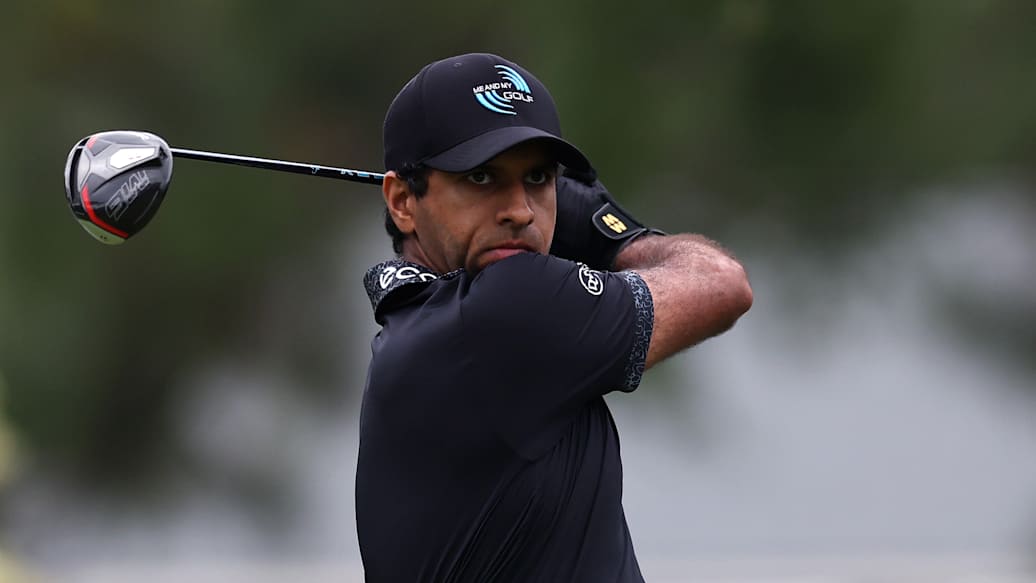
Aaron Rai's win percentage when he stood on the ninth tee at Aronimink on Sunday was 1.9 percent. By the time he was on the 17th green, fans were already crowning him as the next PGA Champion. The numbers behind the swing in fortune were brutal in their clarity.
"Aaron Rai didn't miss a shot," Golf Channel's Gary Williams said on Monday morning's Five Clubs. "14 putts on the last 10 holes, which included an eagle on the ninth, four birdies, no bogeys, and a strokes gained of 6.1, which also mirrored his six under par for that stretch."
For Rai's analysts and rivals, two shots in the heart of the back nine separated his closing run from the chasing pack. Both were dissected on the Monday post-mortem shows, both with Rai's own thinking captured at the trophy presentation.
The first was a 40-yard bunker shot at the par-four 13th. Most of the field who found that bunker all week had under-clubbed their recoveries by 20 feet. Rai did the opposite. He flew it all the way to the back ridge.
"The bunker shot on 13 was on a slight upslope, which in a way helped to stay really aggressive on it," Rai said. "But the upslope also made it difficult because it was such a long bunker shot. It was probably 40 yards or so. I just stayed really committed with that and really tried to trust the strike, and it came out extremely well. I was actually trying to hit that probably 12 feet short, and it came out probably a little fast, but worked out extremely well."
The Fried Egg's Brendan Porath, speaking on Five Clubs, called that shot the moment he became convinced Rai would win the major.
"He flew it to the hole," Porath said. "We saw a lot of guys sort of running it up there, sort of dying it towards the hole, chunking it, running it in. He flew it to the hole. At 13, he's in the front bunker. He sends it all the way to that sort of tabletop back tier. Stops it pin high from a few feet. Makes the birdie. That particular shot, in that moment, suggested this guy is not playing conservatively. He's not on the back foot. That bunker shot, when he threw it all the way, kind of said the hell with it on the potential death that was over the green and stopped it right there, was the one for me that this guy is probably going to win this major."
"Hit a great tee shot to hold the fairway there. That was a really hard fairway to hit," Rai said. "It was a great number for a five iron. The wind was off the left. The ball was slightly below, so it kind of just suited a shot that was falling off the wind. Hit it very well. Started a great strike and kind of worked its way down there to 15, 18 feet."
Porath argued the approach into 16 would have been pantheon material with a different name on the bag.
"If the second shot on 16 is hit by Rory, Rahm, we're putting that in the pantheon of the great long iron shots of their major championship careers," Porath said. "This guy is hitting full-on bullets under the most heat imaginable. The approach into 16 certainly. Trevor was great on the broadcast sort of, he talked about how he kind of guided it in with his hands. He took a three-wood off the tee there, and nuked the ball. He's one of the shorter hitters in the field, but he was exceptionally accurate."
The 17 putt that everybody saw, the curling 22-foot dagger that turned the leaderboard board black, was for Porath and the man himself a coronation, not a winning blow.
"That putt on 17 was incredible," Rai said. "Was just trying to focus on speed and get it close. It started to look really good line-wise with probably about 15 feet to go. Slowed up really nicely as well, so it just kind of conspired all together for that ball to go in the hole. An incredible putt and a real bonus to see that one go in."
The statistical anatomy was just as decisive. ESPN's Andy North singled out two numbers that explained Rai's edge over the closing 18 holes.
"He was great chipping, approach shots number two, putting number five, and that's a great combination," North said on SportsCenter. "You're going to have a great chance. He drove it in the fairway. He hit it on the greens. One of the only fairways he missed, he drove it in the greenside bunker at the drivable 13th. That is a fairway as far as I'm concerned. He just played beautiful golf. Didn't make mistakes and looked like he never got out of his comfort zone playing. 23 birdies for the week. That's the most in the field by three. That's how you earn it. You outplay everybody over the course of four days."
Rai's closing 65 was the lowest round of his major career. It was also, as Gary Williams pointed out on Monday morning, the kind of improving daily score that wins majors only in select company.
"70, 69, 67, 65, improving his score every day," Williams said. "You know who are the others who've done that to win majors? Hogan, Nicklaus, Mark O'Meara in 1998 at the Masters. And now Aaron Rai."