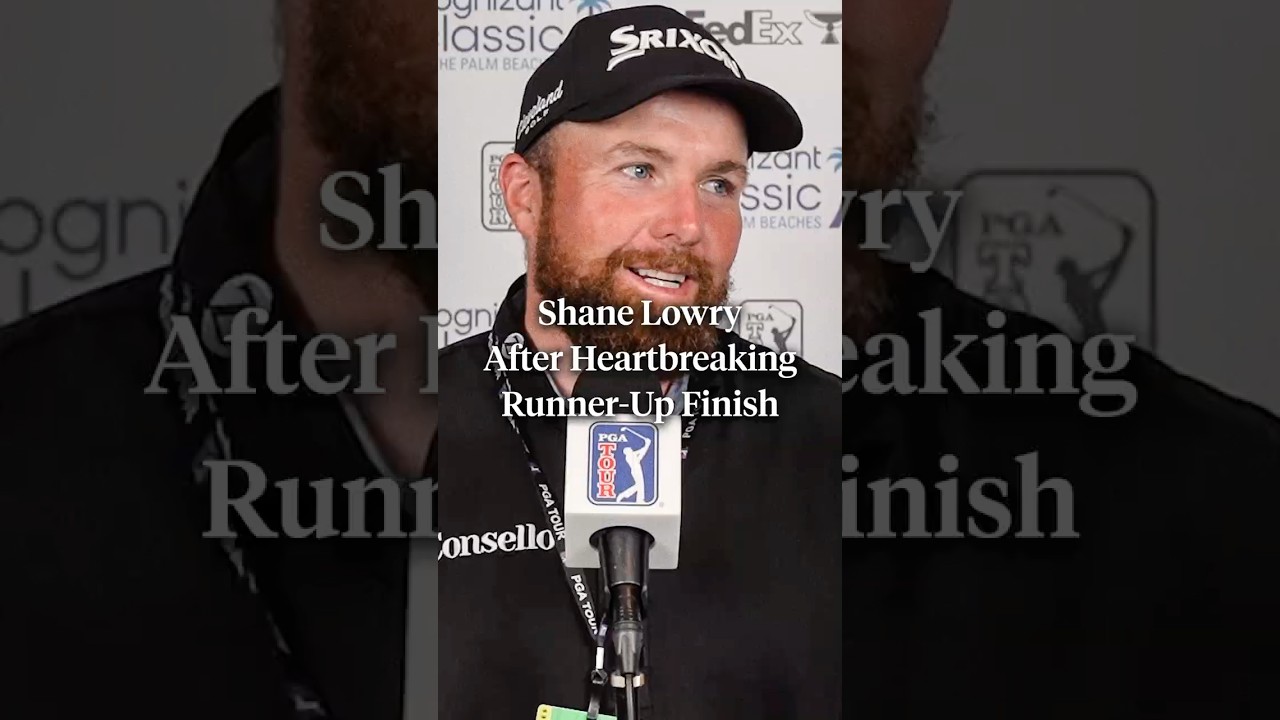
Shane Lowry has never struggled to share emotion with a press room. At the Cognizant Classic in the Palm Beaches, after a runner-up finish that left him looking for words, the former Open champion delivered one of his rawest interviews in years.
The 2019 Open champion opened the press conference by acknowledging the only realistic way to process the defeat was to book the next flight out and focus on the following week's start.
"Yeah, you have no choice, do you?" Lowry said. "Like I have a tea time next Thursday in Beill and I have no choice but to move on."
Lowry's disappointment, though, was not really about trophies or FedEx Cup points. His voice began to crack as he explained why the week had meant so much more than the scoreboard suggested.
"Um the hardest thing about today is I've never won in front of my four-year-old and she was there waiting for me," Lowry said. "And yeah, it's that that's I only wanted it for her today. I didn't want it for I didn't I don't care about anything else. Like I wanted it so bad. Just to see her little ginger head running out in the alien green would have been the most special thing in the world."
The 38-year-old has long spoken about how his role as a husband and father reshapes the significance of any competitive result. A win at PGA National, with his daughter waiting beside the 18th, had become the kind of career milestone Lowry rarely bothers advertising — the type that does not appear on anyone's ranking list but sits permanently on the mantelpiece at home.
A runner-up cheque on tour remains a very good week for almost every player in the field. For Lowry, though, the disappointment that day wasn't measured in money or world-ranking points. It was measured in the face of a four-year-old waiting on the alien green for a hug her father had to deliver a week later than he had planned.
The Irishman moved on as promised, teeing it up again in Bay Hill the following Thursday. But the line about his daughter's ginger head running onto the green captured something more enduring than one lost tournament: it underlined why, for all the years of major preparation and tour grind, the most meaningful rounds on the PGA Tour are increasingly the ones a player's children get to see.