Ted Scott has looped for a Masters winner in 2012 and is currently on Scottie Scheffler's bag for a second run at world number one. In a long Golf Digest Q&A filmed in late March, Scheffler's caddie gave one of the most entertaining interviews a top-tier caddie has given in years — starting with a single sentence of self-deprecation about how he got into the job.
"I failed as a professional golfer."
Scott is not alone in that. He pointed out, without naming everyone, that the modern PGA Tour caddie corps is full of players who were very good at the game but not quite good enough to make it pay.
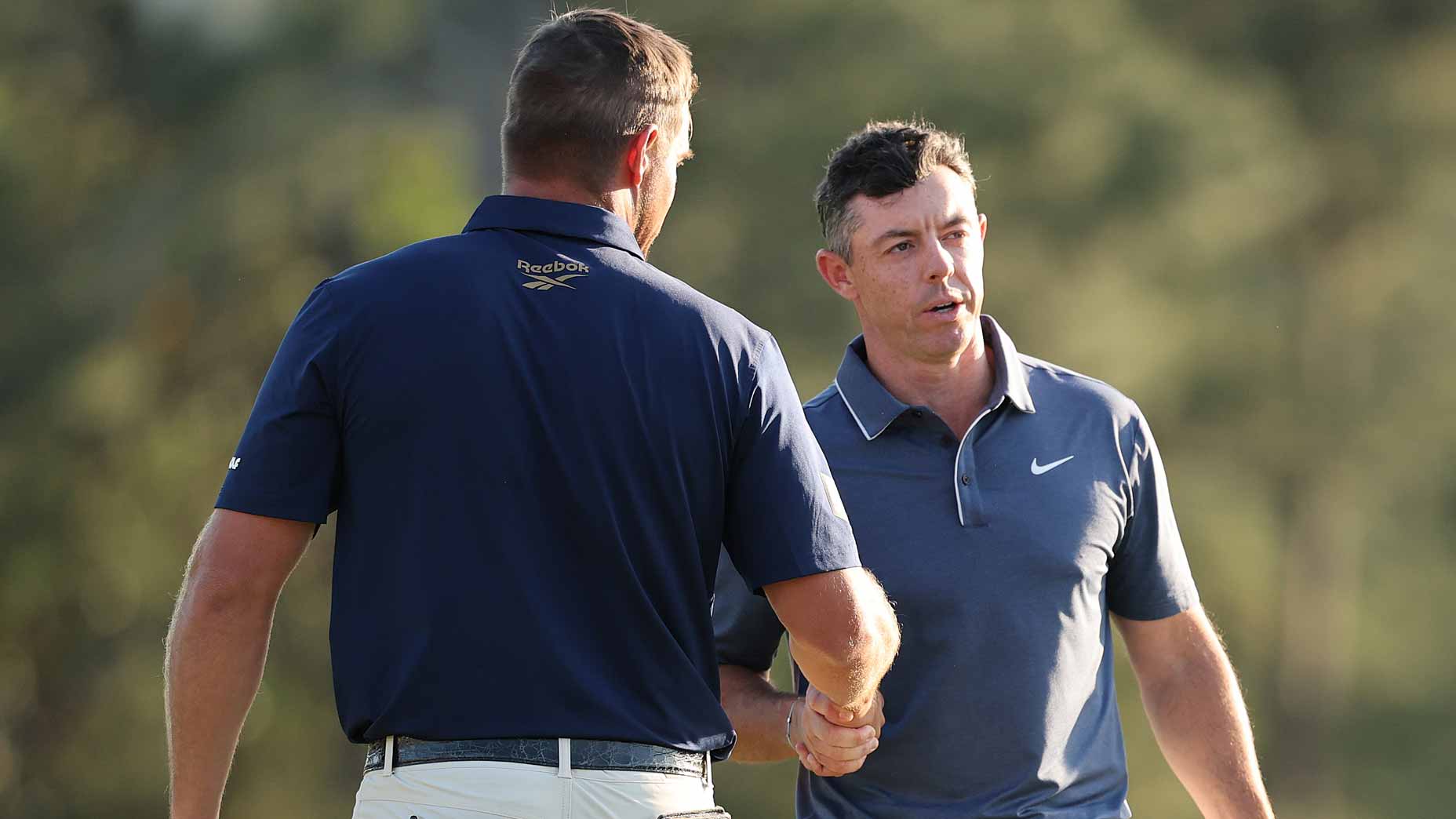
"Damon Green that used to caddyy for Zach Johnson in his reign probably won 70s something mini tour events. Paul Tasori who won the US Open with Web Simpson and I think he's won a lot of tournaments with BJ Singh played the PGA Tour. Currently Sam Burns caddy Travis Perkins played the PGA Tour."
That list is part of a broader argument Scott was making about the nature of the job. A PGA Tour caddie is not carrying a bag. A PGA Tour caddie is managing a human being through the most stressful working conditions in professional sport. Scott said it plainly when he was asked about the hardest part of the job.
"Uh dealing with a person. You know, human beings are difficult and stressful situations. So, as a caddy, uh you're there during someone's most stressful times and you typically are listening and trying to solve that problem and sometimes we we are the problem."
One mechanism he described as a managing tool was more specific than any public-facing comment about the caddie-player relationship had been before. Some players — he named two — give their caddie a single veto for a full season.

"If it's Jordan Speed or Phil Mixon, they give their their caddy a veto for the year. So, you can really only stop him one time per year depending on your player."
That is a piece of working insight most fans never hear. Spieth is known for his conversational on-course dynamic with long-time caddie Michael Greller. Mickelson's shot selection is — famously — his own. In both cases, Scott's description explains why. A caddie on either bag can override one decision per year. Use the veto early, and he is along for the ride on everything else.
The player Scott currently works for, Scheffler, sits at the other end of the decision-making spectrum.
"If it's someone like Scotty Sheffller, probably could stop him a lot, but he doesn't really make bad decisions. I mean, he chose me as a caddy. That's the best decision he ever made, right? Kidding, guys. These are jokes."
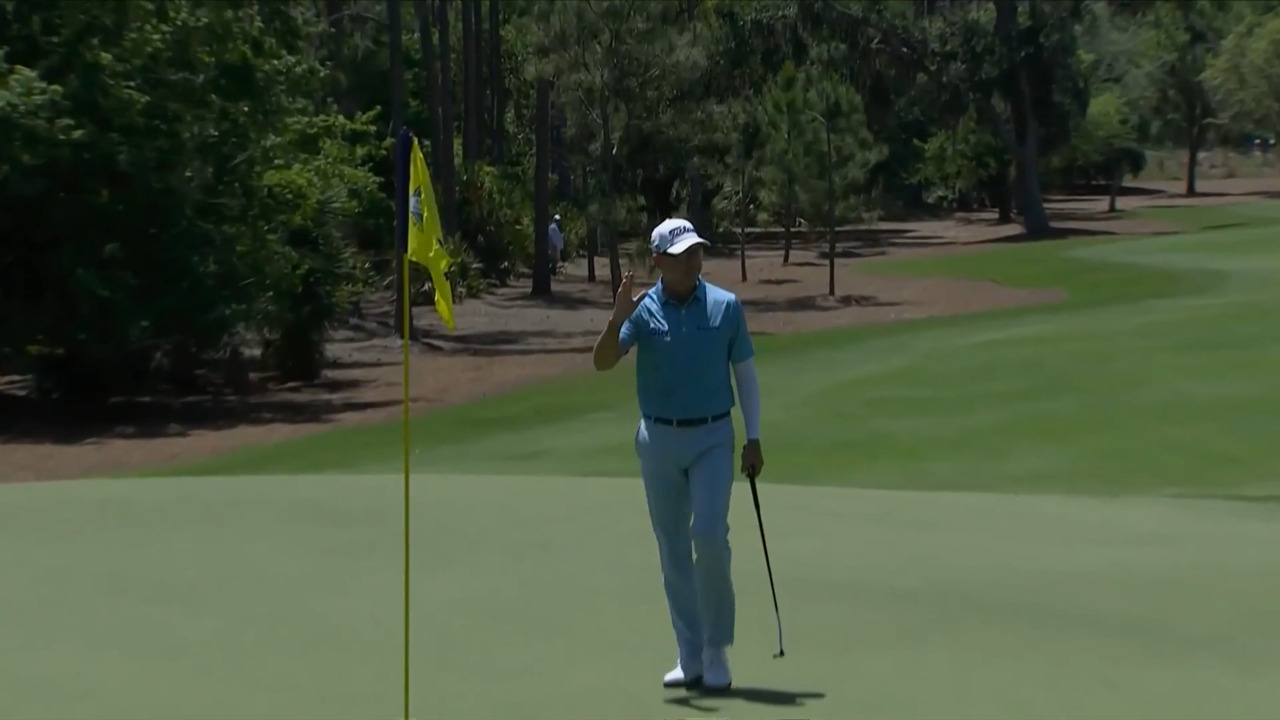
The self-effacing joke aside, the substantive point lands. One reason Scheffler has been the world's most consistent player is that his decision tree is unusually clean. His caddie is not spending mental energy heading off bad ideas.
Scott also addressed a question that most tour caddies dodge — whose bag makes the most financial sense to carry? His answer was intentionally over-the-top, but the underlying point was serious.
"Uh work for a great player is number one. Work for a great player is number two. And did I mention working for a great player is number three? I've had some really great caddies who have made zero dollars. I mean, they were really good. They they got the right wind. They got the right club. And they were catting for me when I was trying to play as a pro. And poor people are probably living on the streets right now."
On who the best caddie on tour would be if he had to pick a player to loop for, he went with a choice that said more about personality than skill.
"Probably Web Simpson. That guy, every PGA Tour player that plays around with him shoots a 65. Like in my mind, if you're paired with Web, your guys shooting 65s. He's so positive. He's so funny. He's so fun. He's very encouraging."
"I would say the majors are the most difficult. The masters not as difficult because we see it every year, but typically a new golf course, you know, uh the PGA Championship, the US Open, the Open Championship are very difficult to prepare for because we don't see those courses year in and year out."
That answer is a clean piece of technical context for the next two months of the major season. Scott, like every top caddie, will spend the two weeks before Aronimink walking a course he has not looped in recent memory.
The most memorable piece of the interview, though, was a revision to a piece of Masters folklore. Most golf fans will tell you that Bubba Watson's hooked wedge from the pine straw on the 10th hole in the 2012 playoff — the shot that won him his first green jacket — is the most spectacular shot ever hit at Augusta. Scott, who was on Watson's bag that week, disagreed.
"Many people think that Bubba Watson shot on 10 in 2012 was the greatest shot at Augusta. It was not. In fact, it was on hole 11 on Friday. He was 300 par um right in the mix of it. He hit it in the right trees and we got in there and that ball was in what seemed to me like a bird had decided, you know what? and I'm going to build a nest."
"And he got over it and he goes, 'Get out of my way. You know I'm known for hooking it.' I said, 'Yes, you are, sir.' is what I said. But what I was thinking was, 'You freaking idiot. We're going to make a triple. Now we're not going to make the cut.' And he got in there and hit the sickest low duck hook 9 iron. It overhooked, ran down, caught the slope, and ran onto the front of the green. He put it for par. And to this day, that's the craziest shot I think I've ever seen in my entire life."
The caddie thought triple bogey and missed cut. The player hit a low duck hook 9 iron off a bed of pine needles, rode the slope, and made the par save that kept the week alive — the par save that, in Scott's account, is actually the shot that let the 10th-hole moment on Sunday happen at all.
Scott is still on the bag at Augusta every spring. That continuity — from the 2012 playoff hook to Scheffler's 2022 and 2024 green jackets — is its own piece of Masters history, even if it rarely lands as a headline.
"For me, you know, growing up and watching golf as a kid, every Easter Sunday or whenever the Masters was on, watching it with my grandfather, my dad, it's just it's such a special place and it's so prestigious and so wonderful and so exciting and the thinking about the back nine roars on Sunday, you know, it's it's a very unique event in that way."