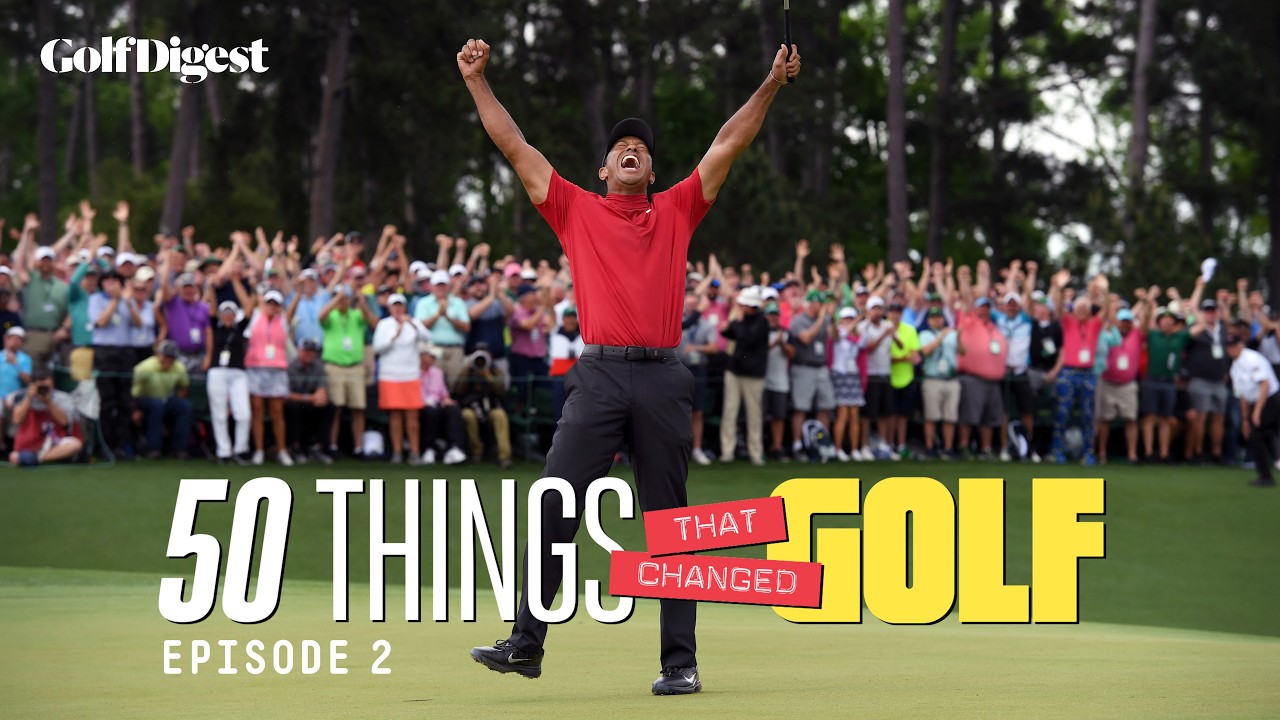
A new episode of Golf Digest's 50 Things That Changed Golf series has returned to the 2019 Masters, arguing that Tiger Woods' fifth green jacket did more than end an eleven-year major drought. It rewrote the rules for how the sport's media would cover the player who had dominated their careers.
The retrospective centres on the memories and miscalculations of the journalists and broadcasters who found themselves on the wrong side of history that Sunday at Augusta.
Writer Shane Ryan recalled a 2015 article he had published during a low ebb in Woods' career that would, four years later, be resurfaced at the worst possible time.
"I wrote a piece called Tiger Woods is totally, irrevocably, unequivocally done. And this was like, you know, again, I dashed it off in 30 minutes. It was nothing. In my head, it was nothing, but it made this huge splash," Ryan said. "And then the minute this Masters tournament was over, Sam Weinman, our editor, retweeted my story."
The retweet, intentional or otherwise, became the unofficial epitaph for a cottage industry of Tiger-is-done takes that had accumulated through years of back surgeries and personal turmoil.
"My thought going in and taking the job was that I would be able to tell the story of his, the end of his career. I'd always really liked this documentary that Steve Nash did called The Finish Line. And I thought maybe this will be my version of The Finish Line. I can sort of tell the story of him sort of going off into the sunset," Kennedy said. "Little idea I had that this was going to happen."

Instead of a quiet fade, Kennedy's first week in the role produced one of the most commercially valuable storylines in modern golf.
The Golf Digest series pushes back, however, on the popular recollection that the 2019 Masters was a pure bolt from the blue. Ryan argued that the narrative of total surprise has flattened what was, in reality, a methodical rebuild already in progress.
"The narrative of the 2019 Masters is a comeback, which is true, but I think we have maybe some false memories of it being like this surprise win. In fact, Tiger was in a pretty good place. His comeback had been enacted already. The previous year he had won the Tour Championship," Ryan said.
The retrospective also places the win within a specific generational context that has since shifted again. Kennedy described 2019 as a transitional period where the new wave of dominant players was still finding its footing against an older champion refusing to step aside.
"I would say it's an interesting time in golf. I think the young bucks that we think of as sort of the peak of golf now. The Brooks, the Rories, the Xanders, the Speeds, the Thomas's maybe were early in their sort of dominance and obviously Tiger was beyond it," Kennedy said.
Woods himself, speaking on the Saturday night of that tournament, framed the competitive urgency in a line that has aged into one of his most quoted.
"There's still pressure. The day I don't feel pressure is the day I quit. At least if you care about something, obviously you're going to feel pressure. And I've always felt it from the first time I remember ever playing a golf tournament to now. That hasn't changed," Woods said.
Seven years on, with Woods again weighing his participation in majors and a new generation of stars now established, the 2019 Masters lands in the retrospective less as an ending than as a correction, to his career, to the critics who prematurely ended it, and to the way golf stories are now pitched.