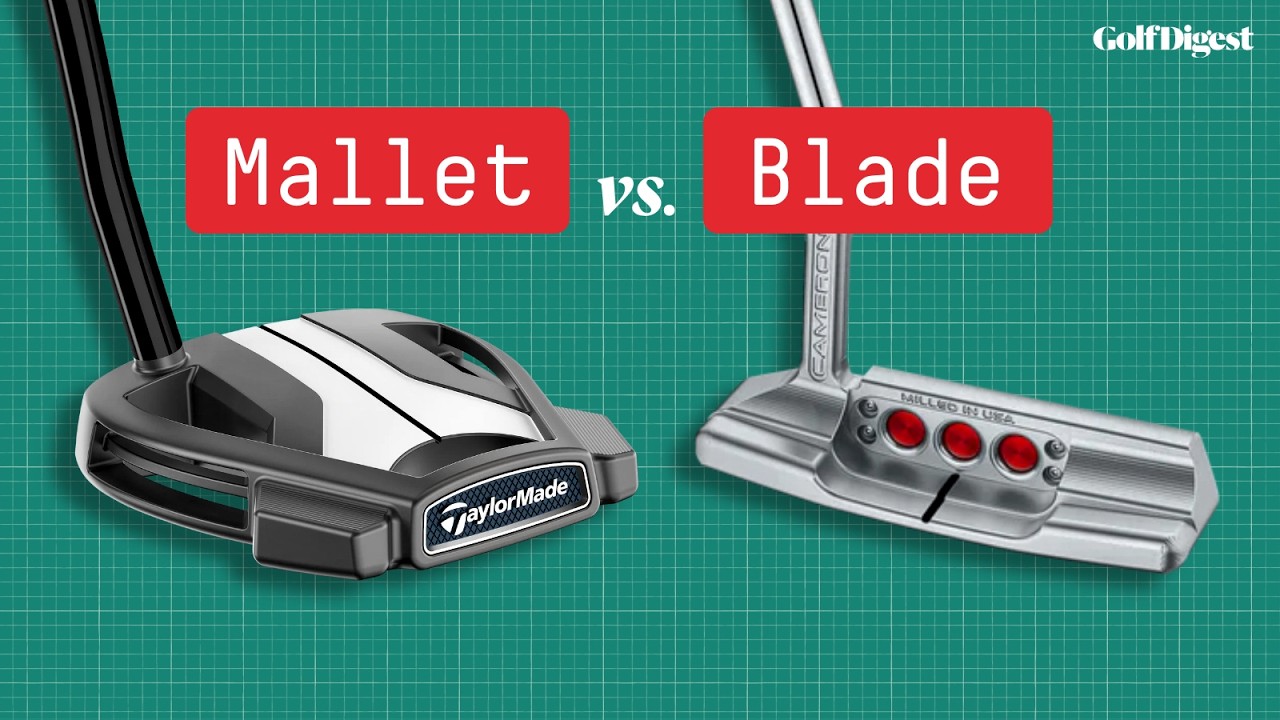
Walk down a practice green at any 2026 PGA Tour event and the most striking thing isn't who's putting — it's what they're putting with. The blade putter, for half a century the default tool of every tour professional with classical taste, is in retreat. According to a Golf Digest equipment study released this week, every player in the current Official World Golf Ranking top 10 is now gaming a mallet design.
That list includes the two most influential ball-strikers of the era: Rory McIlroy, who finally surrendered to the mallet last year, and Scottie Scheffler, whose 2024 switch reshaped his entire scoring profile.
For McIlroy, the move came after years of stubborn loyalty to a blade.

"For me, going to a mallet was a big change," he said. "I really persisted with the blade putter for a long time, but I just feel like your stroke has to be so perfect to start the ball online. The mallet just gives you a little bit more margin for error, and that, to me, gave me confidence."
Scheffler's reasoning was different. For the world No. 1, the appeal was visual.
"This week in '24 I believe I was still using a blade with the line on the ball," Scheffler explained. "And so going to that mallet — where I don't have to line the ball up, and it kind of gave me just a better visual for what I wanted to see — really just freed me up."
The physics behind the trend are well established. Mallet heads carry more mass around the perimeter, which raises moment of inertia (MOI). Higher MOI means the head twists less on off-centre strikes, which means more consistent ball speed, which means more predictable distance — particularly on lag putts. None of this is news to club designers. What is new is how completely the elite end of the tour has accepted the trade-off.

Not everyone has gone along, however. The same Golf Digest piece included a holdout — an unnamed tour pro who said he had no intention of changing.
"A blade is sort of all I know — it's all I've ever known," he said. "So for me, as long as the ball comes out the way I want to, that's the most important thing."
There was also a moment of dark comedy on Scheffler's behalf. Asked whether the world No. 1 might one day add a mallet to his arsenal at every event, one analyst was visibly conflicted.
"I'd love to see Scotty try a mallet, but selfishly for me, you know, Scotty does everything else so well that he's given the rest of us a chance," the analyst joked.

The broader takeaway, the Golf Digest narrator argued, is that the shift is not about fashion. The names switching are too good, and the data they have access to too granular, for that.
"Tour pros aren't choosing mallets because they look cool," the narrator said. "They're choosing them because they tighten dispersion. They reduce variability. Putting isn't about numbers on a screen — it's played between the ears. If you aim a blade better, if you control speed better, if you like what you see, stay with it. But if you're a recreational player and you've been loyal to a blade for sentimental reasons, the tour's behaviour is at least worth paying attention to."
For the recreational golfer, the practical implication is simple. The world's best players, who rely on the most precise putting data ever collected, have largely concluded that forgiveness matters more than tradition. McIlroy and Scheffler — two players who built reputations on technical purity — have signed off on it. Even the holdouts now have to explain themselves.