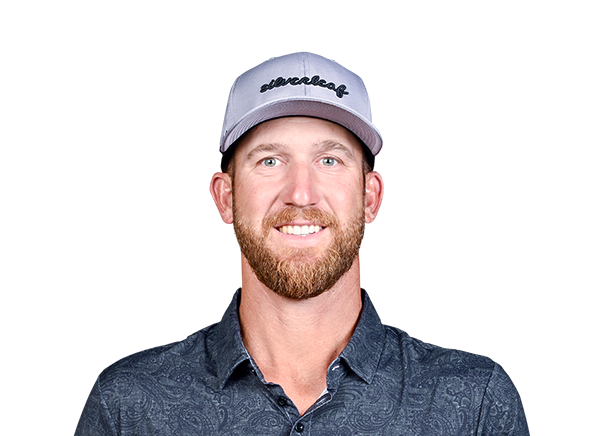
Kevin Chappell
Early Life & Background
Kevin Chappell was born on July 8, 1986, in the United States. Growing up in a country with a rich golf tradition, Chappell developed his game during the Tiger Woods-era boom that inspired many American juniors. He played collegiate golf at UCLA, where he distinguished himself as one of the top amateur players in the nation.
Career Highlights
Chappell turned professional in 2008 and earned his PGA Tour card through qualifying school in 2010. His breakthrough victory came at the 2017 Valero Texas Open, where he secured his first and only PGA Tour win to date. Known for his consistency, Chappell has recorded multiple top-10 finishes in major championships, including a T3 at the 2017 PGA Championship and a T7 at the 2016 U.S. Open.
Throughout his career, Chappell has demonstrated an ability to compete at golf's highest level, with additional notable performances including runner-up finishes at the 2011 Texas Open and 2016 Tour Championship. His steady play has kept him competitive on the PGA Tour for over a decade.
Playing Style
Chappell is recognized for his solid ball-striking and strategic course management. While not among the longest hitters on tour, he compensates with accuracy off the tee and a reliable short game. His putting has been inconsistent at times, but when his flatstick is working, he's proven capable of contending in strong fields.
Current Form
In recent years, Chappell has battled injuries that have impacted his performance and limited his tournament schedule. After undergoing back surgery in 2019, he's worked to regain his form on the PGA Tour. While no longer consistently in contention, he remains a respected veteran presence when healthy.
Legacy & Outlook
Though not among the most decorated American players of his generation, Chappell has carved out a respectable PGA Tour career highlighted by his Texas Open victory and strong major championship showings. As he enters his late 30s, his future prospects depend on maintaining health and consistency. His experience and ball-striking ability suggest he could still contend in select events when at full strength.