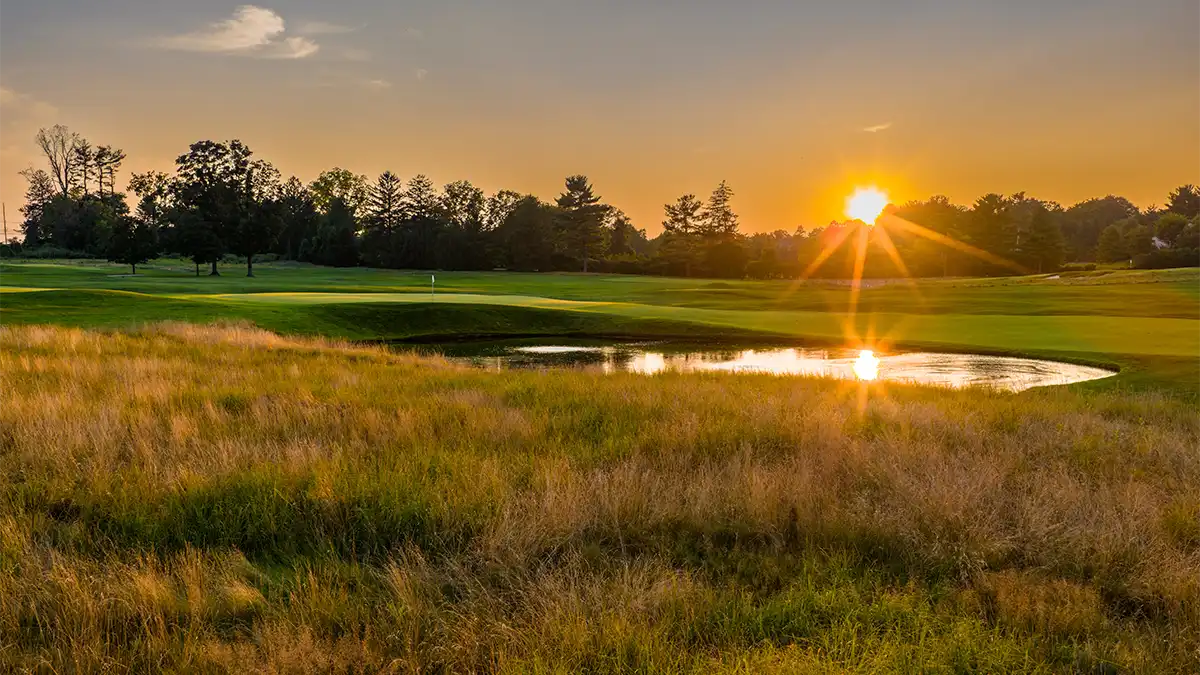
Aronimink Golf Club, located in Newtown Square, Pennsylvania, is on the cusp of a significant spotlight as it gears up to host the 2026 PGA Championship. The course, designed by Donald Ross in the 1920s, has undergone extensive renovations by acclaimed architects Gil Hanse and Jim Wagner, enhancing its historic essence and architectural integrity.
Ross, who created nearly 400 golf courses, famously reflected on Aronimink in 1948, stating, “I intended to make this course my masterpiece, but not until today did I realise I built better than I knew.” This sentiment highlights the unique character of Aronimink, which Ross completed two decades prior to his revelation. The club’s history includes a series of relocations before it established its current site on rugged farmland, which provided Ross with the space to create a challenging 6,619-yard layout.
The course is known for its muscular design, featuring engaging elevation changes and clever bunkering strategies that challenge golfers at every turn. In recent years, however, overzealous tree planting had overshadowed its architectural beauty. This has changed dramatically thanks to the precise removal of trees over the past two decades, allowing the course’s distinct features to shine once again.


Hanse and Wagner's remodel in 2017 proved pivotal in returning the course to its original glory, restoring essential design elements while boosting its yardage to over 7,300 yards. Today, Aronimink stands proudly alongside other prestigious Pennsylvania courses like Merion and Oakmont, having hosted notable events including the 1977 US Amateur and the upcoming 2026 PGA Championship.
The course features a striking par-3 fifth hole, which is encircled by sand, a hallmark of Ross’s designs that can be admired at other esteemed clubs like Seminole and Oakland Hills. This standout feature also demonstrates the intricate planning and execution that Hanse and Wagner put into the renovation.
Beginning with the par-4 first hole, Ross designed the course to provide a warm-up opportunity, featuring a fairway that captures drives but presents challenges on the uphill approach to a semi-blind green, bordered by deep bunkers on either side. The first putting surface is also unique as it showcases defined upper and lower tiers, forcing golfers to navigate the slopes skillfully.


The fifth hole, a par-3 measuring 156 metres, exemplifies Ross's artistic approach. Surrounded by bunkers, it can stretch beyond 170 yards but presents a unique challenge when played from the front tee, encouraging aggressive play and even the potential for birdies.
Bunkering at Aronimink has evolved since its initial construction. Initially, Ross's blueprints indicated larger bunkers that were ultimately clustered into smaller groups, leading to a more visually crowded landscape. The decision to alter the original plan may have come from Ross's associate J.B. McGovern, who was involved throughout the project. Over the years, other renovations changed the bunkering dynamics further, but Hanse and Wagner’s recent renovations have restored more than 100 bunkers to recapture the course's original style, drawn from aerial photos dating back to the late 1920s.
One of the more challenging holes is the par-4 seventh, where strategic bunkers replace traditional doglegs. The tricky tee shot demands precision as golfers face a blind shot over directional bunkers to hit the fairway, showcasing Ross's clever use of design to navigate movement and elevate the challenge.


As the 2026 PGA Championship approaches, Aronimink Golf Club stands poised not only as a historical site but as a modern gem inviting golfers to appreciate its restored landscape and vivid architectural details. For golf enthusiasts and competitors alike, this storied course promises to be a thrilling venue in the years to come.