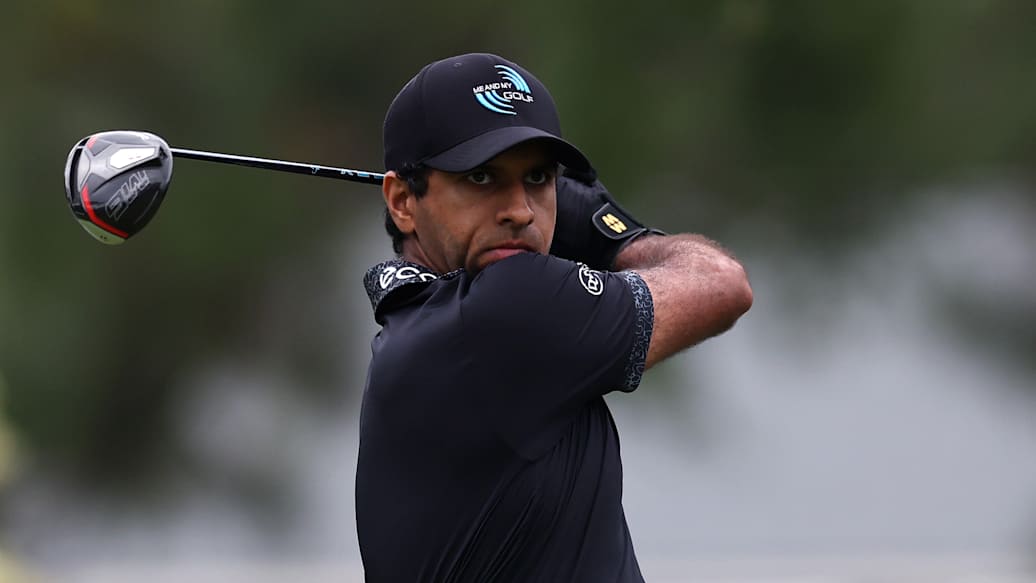
The headline number on Ben Griffin's 2025 PGA Tour season is the one fans saw: nearly $12 million in official prize money, three trophies and a place inside the world's top fifteen. The number Griffin himself talks about, in a new Golf Digest interview that has been working its way around player WhatsApp groups this week, is the one that doesn't make the leaderboard. About $50,000 of it left his account every week.
"You could argue my average spend per week this year was probably $50,000," Griffin said.
That is roughly $1.5 million across a typical 30-event PGA Tour calendar — close to 13 per cent of what Griffin earned on the course in 2025 — and it does not include federal tax, the state taxes he pays event by event, or the quarterly tax instalments the IRS requires from a self-employed earner at that level. It is also, Griffin made clear, not the same number for every player on Tour. The figure depends on the entourage, the schedule and how much of it gets travelled by private jet.
"I would say this question kind of ranges very far across all PGA Tour players," Griffin said. "There are definitely going to be some base fees that you're going to have to pay when you get to a tournament. So, obviously travel costs, all hotel costs are on the players or Airbnbs, rental homes — those costs. Everyone has a caddie."
The caddie is the line item every fan understands and underestimates. The standard arrangement on Tour is a base salary plus a percentage of prize money — typically eight per cent for a win, seven per cent for a top-ten and five per cent for a made cut. On a $3 million winner's cheque, that is $240,000 from a single Sunday afternoon. Griffin won three times in 2025.
The rest of the team is not so visible.
"Additionally, coaches will come to events, trainers, physios — all of these costs come out of the pocket of the PGA Tour player," Griffin said. "I pay my caddie, my coach, and my trainer based on my performance, as well as base salaries."
That performance-linked structure is one Tour insiders say is becoming more common as players try to keep fixed monthly costs down in lean weeks. The coach and the trainer take a smaller guaranteed retainer and a bonus pegged to finishing position; the caddie's deal is the closest thing to an employee contract any of them have.
The other number Griffin volunteered, in a reply to a finance commentator on X, is the one most players try not to talk about: tax.
"We pay taxes based on where we earn, so if I play well in an event in California I'm going to pay federal tax and also the state tax there," Griffin wrote. "If I play well at an event in Texas, I'm going to pay significantly less tax there. Also, what a lot of people might not know is I pay quarterly taxes as well, which is based off the previous year's income."
The quarterly cash-flow problem is the part Tour pros say catches them out first. A self-employed earner at Griffin's bracket has to send the IRS an estimated cheque every three months based on the prior year's income — meaning a player who breaks out the way Griffin did in 2025 will spend 2026 writing quarterly tax cheques sized for a $12 million season, even if the second-year form does not arrive.

Why does Griffin's number matter? It matters because the LIV Golf pitch to PGA Tour stars has always been built on the certainty side of the ledger — guaranteed contracts, paid-up travel, team uniforms, sometimes a chartered plane. The Tour's pitch back is freedom and the chance at the bigger purse. Griffin's $50,000 a week is the price of that freedom for one of the better-paid players in the world. The next twenty-five names on the FedEx Cup list, the ones with a single career win and no equipment endorsement to match, are paying roughly the same bill on less than half the prize money. The Tour's middle class is run on margin.