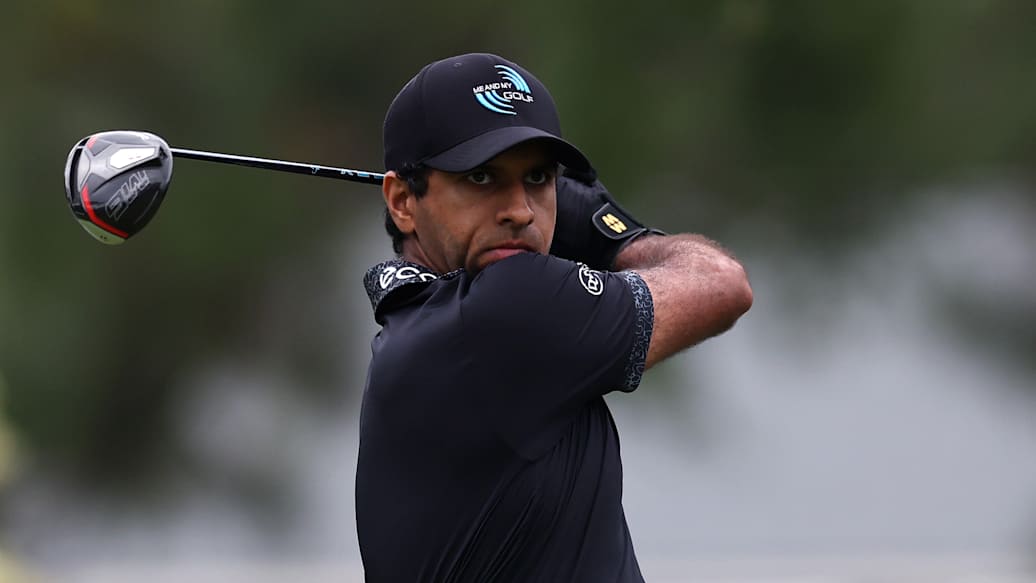
The PGA Tour has put the distance debate to its members. A 13-question survey has gone out to players on the PGA Tour and the Korn Ferry Tour, asking — in plain language — what kind of golf they want to play, whether the Tour should write its own rules and whether they have already started swinging the ball the rest of the world is meant to be swinging in 2030.
The first question on the survey is the one that has been the unspoken question for fifteen years: "What skill should be tested more on the PGA Tour than it currently is?" Players are given seven choices — driving accuracy, driving distance, long approach shots, putting, scrambling, short iron and wedge play, and shot shaping. The form makes clear there is no preferred answer. The Tour wants the data.
The survey arrives a little over four years out from the USGA and R&A's planned 2030 introduction of a tighter golf-ball testing standard, the so-called rollback that is projected to take three to five per cent off the longest hitters on Tour and slightly less off everyone else. The Tour has been openly cool on the timetable; its former commissioner Jay Monahan called the rollback proposal "not warranted and is not in the best interest of the game" when it was first put forward.
The more interesting answer in 2026 is the one coming from Augusta. Masters chairman Fred Ridley, speaking earlier this spring, made clear which side of the argument the most powerful private clubhouse in golf sits on.
"Until recent years golf has been a game of imagination, creativity and variety," Ridley said. "The game has become much more one-dimensional."
"It's not going to be up to us, I don't think," Young said.
What Young could do, and did, was put a conforming ball into play. He used one at the 2026 PGA Championship, telling reporters he had chosen it not as a statement but because, in his hands, "it was easier to control with his irons." The detail is more interesting than the politics. The argument the manufacturers and a slice of the players have been making for a decade — that taking distance off elite golfers will simply gut a generation of approach play — is being quietly contradicted by one of the best young drivers of the ball on Tour, in a major, on volition.
The survey also asks two questions that put the Tour itself in the picture. One is whether the PGA Tour should have its own rule-making process — in effect, whether the league should bifurcate from the governing bodies and write its own equipment standards for its own product. The other is a transition-timeline question that asks players when, in their own view, a rollback could realistically be absorbed without distorting the calendar of qualifying events, the lifespan of existing ball SKUs and the contracts that bind players to manufacturers.
The Tour has not said when the results will be tabulated or published. The shape of the questions, though, suggests an organisation trying to do two things at once. It wants a position it can carry into the next room with the USGA, the R&A and the Masters. And it wants a position it can carry into the room with its own players, who in 2030 will be the ones picking up the new ball, hitting it from the same tees, and trying to convince a network audience that golf, in fact, is not one-dimensional.