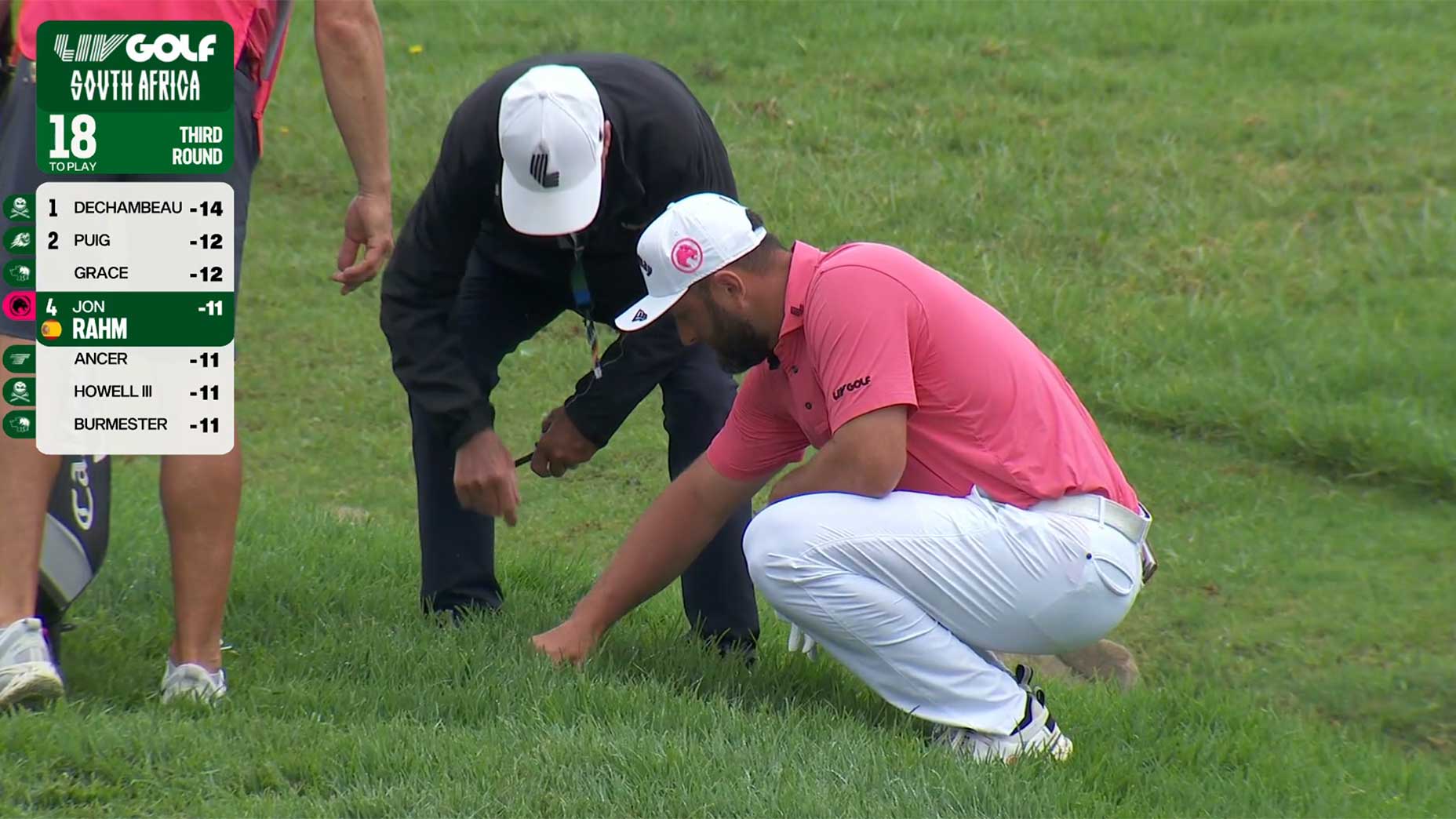
A controversial embedded ball ruling involving Jon Rahm during the third round of LIV South Africa has highlighted the challenging gray areas that golf officials must navigate during tournament play.
Rahm found his opening tee shot in the left rough at The Club at Steyn City and immediately called for a rules official to assess whether his ball had embedded in its own pitch mark. Rules official Grover Walker, who brings three decades of USGA refereeing experience, quickly arrived on scene.
After consultation with Rahm and his caddie Adam Hayes, Walker agreed the ball was embedded. "Down past the root system," Hayes noted, describing the ball's position in the thick Kikuyu rough.


The embedded ball came as little surprise given the conditions. The course had been saturated by rain throughout the week, and Rahm had attempted to drive the 330-yard green on a hole featuring more than 100 feet of vertical drop. His ball landed in a low area near a creek bed, shortly after playing partner Dean Burmester's ball had also plugged in the fairway.
However, the LIV broadcast appeared to tell a different story. Television footage showed Rahm's drive hitting the ground and bouncing approximately two feet in the air before disappearing into the rough. This raised questions about whether the ball had truly embedded in its own pitch mark, as required by the rules for relief.
LIV Golf addressed the situation in an official statement: "At the start of Round 3, Jon Rahm's tee shot on Hole 1 came to rest in the rough. Rahm sought the advice of a referee to see if his ball was embedded. After consulting with the referee, it was determined that the ball was embedded and he received relief before hitting the second shot."


The organization emphasized that "Per Rule 16.3, a ball that bounces can still be embedded in its own pitch mark and does not automatically negate the possibility of relief."
LIV commentator David Feherty offered his assessment while reviewing the replay during the broadcast. "Ah, no, that didn't bury," Feherty said to his booth mate Nico Colsaerts. "Interesting, Nico, that he's getting a drop there. That ball obviously looked like it had buried, and it can do that in this Kikuyu grass."
"Yes, but the referee stands," Colsaerts responded. "He's the one giving the ruling."

The situation was complicated by several factors. Rahm's obscured view from the tee meant he couldn't see where his ball landed, leaving him to assess the lie as he found it. The ball could have potentially landed in another player's unmarked pitch mark, or theoretically created a second embedded mark after bouncing.
LIV's rules officials draw from extensive experience across the golf industry, including USGA, LPGA and state golf association events. They have access to "Any Shot, Any Time" replay technology but typically only consult it when uncertainty exists about a ruling.
After taking his relief, Rahm capitalized on the situation by pitching to three feet and converting the birdie putt. "Took advantage of a good break," Feherty observed.
The ruling proved beneficial for Rahm's round, as he went on to card seven-under 64 on Saturday, moving to 18-under for the tournament. He trails leader Bryson DeChambeau by three shots heading into the final round.
This incident highlights the ongoing challenges officials face in making split-second decisions, particularly on wet courses where embedded balls become more common but determining the exact circumstances can be difficult with limited eyewitness accounts and challenging sightlines.