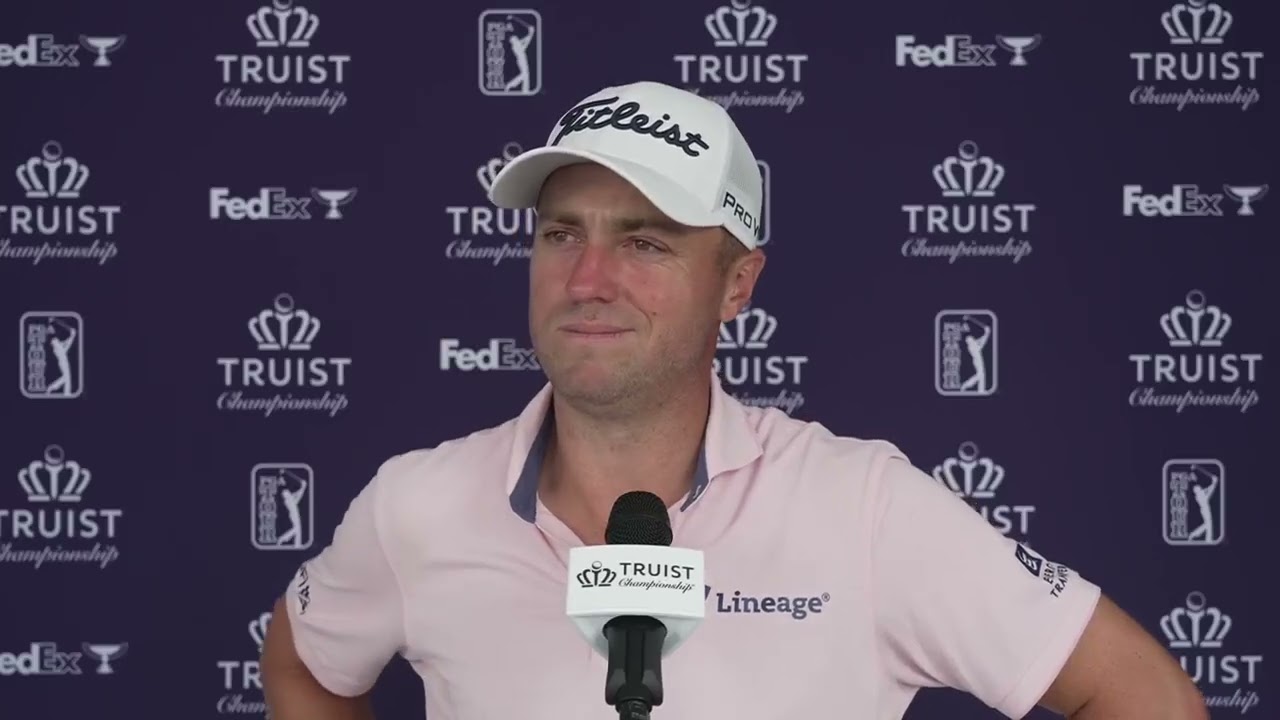
Justin Thomas has not spent the past month doing victory laps. The Saudi Public Investment Fund confirmed in late April that it was withdrawing its backing of LIV Golf after the 2026 season. By the time Axios reported this week that the league has been instructed to raise up to $250 million from new investors with an early-October deadline to remain solvent, the broader narrative had already moved on. But the structure of the PGA Tour's 2026 returning member program looks remarkably like the kind of accountability Thomas had been arguing for in public since the summer of 2022.
His original line had landed in July of that year, a few weeks after Phil Mickelson, Dustin Johnson, Sergio Garcia and others had broken cover for the new Saudi-funded breakaway. Asked about the wave of departures, Thomas refused to accept the family-and-lifestyle answers his peers were giving. The PGA Tour player's complaint was not that anyone was free to take the money. It was that nobody was prepared to call it that. Reporters at the time noted his frustration that LIV defectors would not, in his phrase, simply have the balls to say it was about the money.
The line bought him an enemies list that quickly extended beyond the locker room. Critics inside golf media accused him of being obsessed, bitter, sanctimonious. His on-course form collapsed for the better part of two seasons. He missed the 2023 Ryder Cup. The opinion pieces wrote themselves: live by the sound bite, die by the sound bite.
If his focus had wandered, his message had not. By March 2023, with the PGA Tour rolling out limited fields, no-cut events and elevated purses that looked suspiciously like LIV's own format, Thomas was asked at the Players Championship to draw a line between the new tour and the league he had been criticising for nine months.
"Well, we have an astronomically higher amount of quality players than they do in their events," Thomas said. "I think all of us have not been shy to say it that this is stuff that we've been trying to do and have worked on. Obviously got sped up a crazy amount due to what was going on in the outside."
The framework agreement of June 2023, which announced a deal in principle between the PGA Tour and the Saudi PIF, was supposed to render that argument irrelevant. For a stretch, it did. Rory McIlroy, who had been the most consistent McIlroy-loud defender of the PGA Tour, eventually softened his position and by early 2025 was saying that players still aggrieved by the prospect of LIV returnees were, in his term, butt hurt. Thomas refused to follow him there.
At the WM Phoenix Open in February 2024, Thomas was direct. "I would have a hard time with it, and I think a lot of guys would have a hard time with it, and I'm sure we don't need to convince you why we would have a hard time with it." He acknowledged some LIV players would make the PGA Tour better. He acknowledged that things were changing. He insisted that loyalty had a price and that any settlement that erased that price was a betrayal of the players who had paid it.
A Netflix Full Swing appearance later that year placed Thomas's position in human rather than political terms. "The relationship between Tour guys and LIV guys is weird," he said. "It has got a little chippier and chippier. There are plenty of guys that have gone to that tour that I didn't talk to before and I still have no desire to talk to." The sport had cracked socially as well as structurally, and he was one of the few willing to say so on camera.
The 2026 returning member program now reads as a quiet vindication of his position. The terms set by the PGA Tour for LIV players seeking to come back are not soft. A $5 million charitable contribution is required. The returnees receive no equity in the PGA Tour's player equity program for five years, a stake worth somewhere between 50 and 85 million dollars. There is no eligibility for signature events. There is no FedEx Cup bonus money. The structure is, in effect, the penalty Thomas had insisted upon when his peers had stopped finding the word useful.
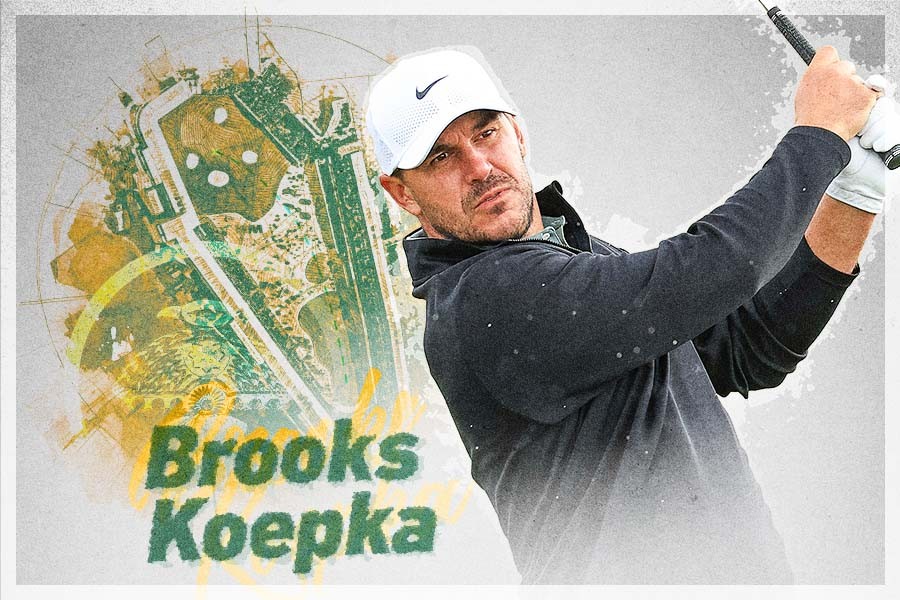
Only Brooks Koepka accepted those terms. Jon Rahm, Bryson DeChambeau and Cameron Smith declined. Then the Saudi PIF withdrew, the league's primary funding evaporated and the door behind them effectively closed. At Aronimink last week, Rahm publicly admitted there was no way out of his LIV contract. At TPC Craig Ranch this week, Koepka described his return as a penalty he was happy to serve. Both statements would have read as fiction to anyone listening to Thomas in 2022.
Thomas has not won a major since 2022. His critics in the media cited that drought as evidence that his off-course commentary had been a distraction. The same writers who spent two years calling him obsessed have shown little interest in revisiting the question of whether obsession and accuracy can co-exist. The settlement that proved his case has been read, in much of the coverage, as a piece of clever PGA Tour negotiation rather than as the position one player had been demanding in public since 2022.

There is a version of this story where Justin Thomas wins a third major in 2024 and is celebrated as the prophet of the LIV era. That version did not happen. The version that did is harder. He said the true thing early. He paid for saying it. He kept saying it after it stopped being fashionable. And when the tour finally drew up the terms that proved he had been right all along, almost no one bothered to credit him for the four years he had spent holding that position in public.