Golf course architecture legend Alister MacKenzie never lived to witness the inaugural Augusta National Invitation Tournament in 1934, robbing him of the chance to see his masterpiece come to life on golf's grandest stage.
The Scottish architect's tragic early death meant he missed the rave reviews his creation received from the tournament's first participants. Yet before his passing, MacKenzie had already recognized the brilliance of what he and Bobby Jones had accomplished together in Augusta, Georgia.
MacKenzie's partnership with Jones began when the golf legend noticed the architect's work at two California courses - Pasatiempo and Cypress Point. Jones had studied MacKenzie's 1920 book "Golf Architecture" and various magazine articles, familiarizing himself with the designer's revolutionary philosophies.

Their collaboration was built on a shared belief that golf course design should emphasize strategy over punishment. Rather than creating a penal layout that severely punished mistakes, they envisioned a course offering multiple options for players across all skill levels.
"There was a great debate going on during this time, just before Augusta opened, over what the ideal golf course was comprised of," said Sid Matthew, a lawyer and golf historian. "The penal golf course school debated the strategic golf course school."
The strategic principles MacKenzie and Jones championed remain evident today at Augusta National and The Masters Tournament. The course's par-5 holes perfectly illustrate their vision - each can be played conservatively as three-shot holes requiring layups, as Zach Johnson demonstrated during his 2007 Masters victory, or as high-risk, high-reward opportunities for aggressive players.
Tiger Woods exemplified the latter approach in 1997, when he dominated Augusta's par-5s en route to setting the tournament record at 18-under-par 270. His performance showcased exactly the kind of strategic options MacKenzie and Jones had envisioned.

While some suggest Jones deserves equal credit for Augusta National's design, historical evidence indicates MacKenzie served as the primary architect. According to David Owen's club-authorized book "The Making of the Masters," MacKenzie developed the course routing and positioned the bunkers and greens.
"Jones is sometimes given equal billing, or even first billing, but his role was more nearly that of a junior associate," Owen wrote.
Club co-founder Clifford Roberts documented MacKenzie's pride in his Augusta creation, noting that the architect frequently referred to it as the "World's Wonder Inland Golf Course." Despite not seeing the finished product, MacKenzie recognized its potential for greatness.
"He was quite ready, however, to declare the course to be his best, and he did so a number of times," Roberts wrote in "The Story of the Augusta National Golf Club." "What a pity Mackenzie did not come to this country earlier or did not live for another ten years!"
Augusta National has undergone significant modifications since MacKenzie's original design, drawing criticism from purists in recent years. The most notable changes include added length and extensive tree planting, which some argue have altered the course's strategic character.

However, Augusta National was always intended as an evolving masterpiece. The course underwent its first major change after the inaugural 1934 tournament when officials reversed the nines because Amen Corner, located in the lowest part of the property, was slow to thaw on cold mornings.
Nearly every hole has experienced some modification over the decades, with particularly significant changes made to the 6th, 7th, 10th, 11th, 16th, and 18th holes. These alterations reflect the club's ongoing commitment to maintaining competitive relevance while preserving MacKenzie's strategic foundation.
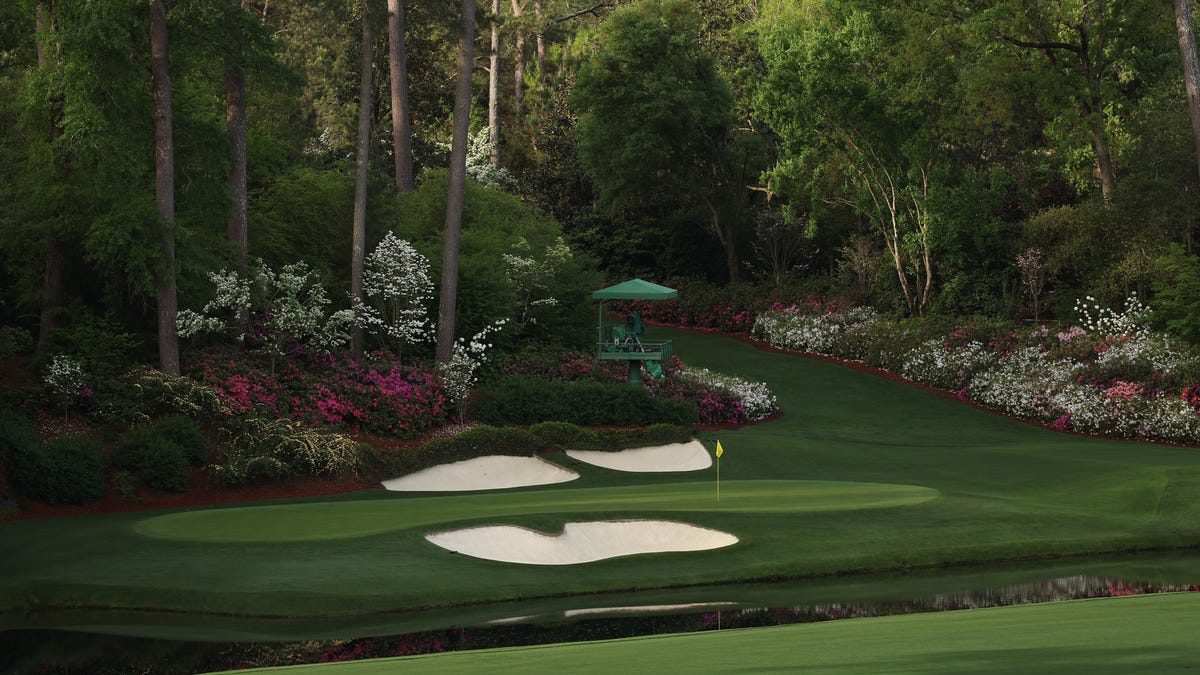
"The majestic beauty of Augusta is so breathtaking, the elevations defy descriptions," said Matthew, comparing the course to natural wonders such as the Grand Canyon and Niagara Falls. "Photographs don't convey the majesty of detail."
MacKenzie's legacy at Augusta National extends far beyond his architectural contributions. His philosophy of strategic design influenced generations of golf course architects and helped establish principles that continue shaping modern course design today.
As The Masters approaches each April, golf fans worldwide witness MacKenzie's genius through the strategic decisions players must make on every hole. The course remains a testament to his belief that great architecture should reward thoughtful play while offering redemption for those willing to take calculated risks.
Though MacKenzie never saw his masterpiece host its first major championship, his declaration that Augusta National was his finest work has been validated by nearly nine decades of memorable golf moments and universal acclaim from players and fans alike.