
The stage is set for the 90th Masters Tournament at Augusta National Golf Club, where the world's elite golfers will navigate one of the sport's most revered courses from April 9-12. Each hole at the Georgia venue tells its own story through decades of championship golf, combining strategic design with natural beauty that has captivated players and fans alike.
The opening hole immediately tests competitors with its uphill challenge. The 445-yard par-4 Tea Olive hole features a demanding tee shot requiring a 317-yard carry over a deep bunker that extends into the fairway with a troublesome tongue on the left side. Players who find this hazard often face blocked approach shots due to the bunker's steep lip.
The green complex presents additional challenges, with a bunker guarding the left side and severe slopes that fall away sharply at the back and right. This hole has witnessed remarkable moments, including Charl Schwartzel's extraordinary recovery shot during his 2011 victory. Using a 6-iron, Schwartzel pitched a low-running shot from the right mounds across the green that found the bottom of the cup for birdie to start his final round charge. The hole averages 4.236 strokes and ranks as the sixth most difficult on the course.

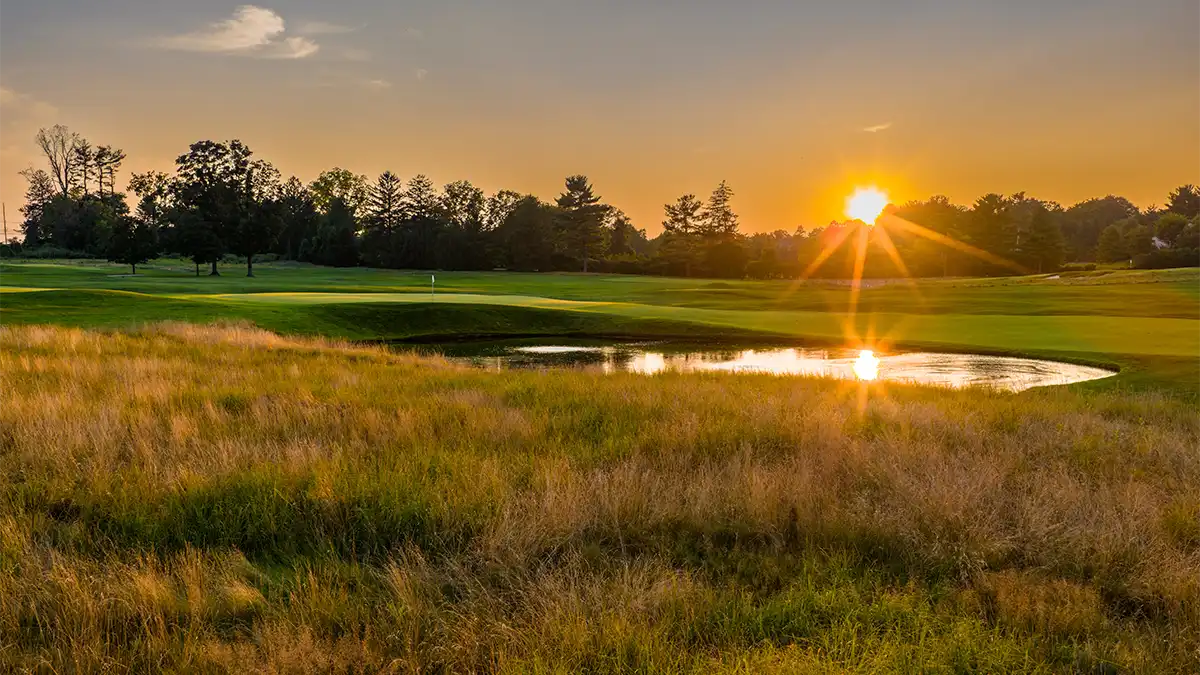
The par-5 second hole, Pink Dogwood, stretches 585 yards and offers the first realistic birdie opportunity of the round. This dogleg left can be reached in two shots with a quality drive, though a fairway bunker on the right side lurks for aggressive tee shots. Strategic positioning down the left side shortens the approach but leaves players with a downhill lie to a green protected by two deep frontal bunkers.
This hole entered Masters lore in 2012 when Louis Oosthuizen produced one of the tournament's most spectacular shots. The South African struck a 4-iron from 253 yards in the final round that landed on the front of the green and rolled approximately 90 feet into the cup for the first albatross in the hole's Masters history. Despite offering scoring opportunities, the second hole averages 4.770 strokes and ranks as the easiest on the course.
The third hole represents one of golf's premier short par-4s at just 350 yards. Unchanged since 1982, Flowering Peach presents a classic risk-reward scenario that has evolved with modern equipment and player athleticism. Longer hitters now attempt to drive near the green, though this aggressive strategy brings four left-side bunkers into play.

The L-shaped green slopes dramatically from right to left, creating challenging short-game scenarios for players who miss their targets. Conservative players often choose irons off the tee to avoid the bunkers and leave a more manageable approach shot.
Scottie Scheffler experienced both the peril and promise of this hole during his 2022 Masters victory. Holding a three-shot lead in the final round, Scheffler watched his advantage shrink to one after driving left and coming up short of the green. However, he responded with a chip-shot that found the cup for birdie, restoring his three-shot cushion when Cameron Smith made bogey. "It's always nice. It's nice finishing that way versus the other way," Scheffler said about finishing strong after tough situations. The hole averages 4.071 strokes and ranks 14th in difficulty.
The par-3 fourth hole, Flowering Crab Apple, demands precision with its 240-yard length typically requiring long irons or fairway metals for most players. A deep bunker guards the right side of the green, with another hazard positioned left. The putting surface slopes toward the front, and the hole features Augusta National's only palm tree.

This hole witnessed one of the Masters' most dramatic collapses in 2012 when Phil Mickelson, trailing by just one shot in the final round, saw his chances evaporate in spectacular fashion. Mickelson's tee shot struck the grandstand and ricocheted into the woods, leading to an extraordinary sequence where he played two right-handed shots to extract his ball, hit his fourth shot into a bunker, and ultimately carded a triple-bogey seven that effectively ended his championship hopes. He finished two shots behind the eventual winner. The hole averages 3.282 strokes and ranks as the third most difficult.
As players prepare for this year's tournament, recent form suggests several contenders worth monitoring. The momentum from spring events, including Gary Woodland's victory at the Texas Children's Houston Open, will carry into Augusta National as players fine-tune their games for golf's most prestigious stage.
The opening four holes set the tone for each round at Augusta National, demanding both strategic thinking and precise execution. Players who navigate these early challenges successfully often position themselves for strong finishes on the back nine, where the tournament's most dramatic moments typically unfold. With the 90th Masters approaching, these iconic holes will once again serve as the stage for golf history.