Traditional golf instruction has long preached a simple mantra for fairway woods: sweep through impact and let the loft do the work. However, groundbreaking robot testing conducted by Golf Laboratories is challenging this conventional wisdom with data that could reshape how golfers approach their long game.
The comprehensive study examined Ping's latest equipment lineup, including G440 fairway woods, G440 hybrids, iDi utility irons, and G440 long irons. Each club was tested at swing speeds of 85 and 95 mph using both neutral and negative three-degree attack angles to measure the impact on launch conditions, spin rates, and carry distance.
The results reveal a more nuanced approach than the traditional sweep-everything philosophy that has dominated instruction for generations.


**Fairway Woods Show Dramatic Differences**
The most striking findings emerged from the higher-lofted fairway woods. The 9-wood demonstrated remarkable improvement with a descending strike, dropping from 6,300 rpm to 5,835 rpm in spin rate while gaining nearly seven yards of carry at 95 mph and four yards at 85 mph.
Similar patterns appeared across the fairway wood range. The 5-wood shed almost 700 rpm of spin at 95 mph while gaining nearly five yards of carry distance. This spin reduction allows the ball to maintain a more penetrating flight path rather than climbing too high and losing distance.

The 7-wood showed more modest but still meaningful improvements, gaining approximately two yards of carry at both swing speeds when struck with a steeper angle of attack.
However, the 3-wood emerged as the notable exception to this trend. Unlike its higher-lofted counterparts, the 3-wood actually lost carry distance with a steeper attack angle—dropping two yards at 95 mph and five yards at 85 mph. At 15 degrees of loft, this club already produces lower spin numbers and a more efficient ball flight, making the traditional sweeping motion the optimal approach.
**Hybrid Performance Splits Along Loft Lines**

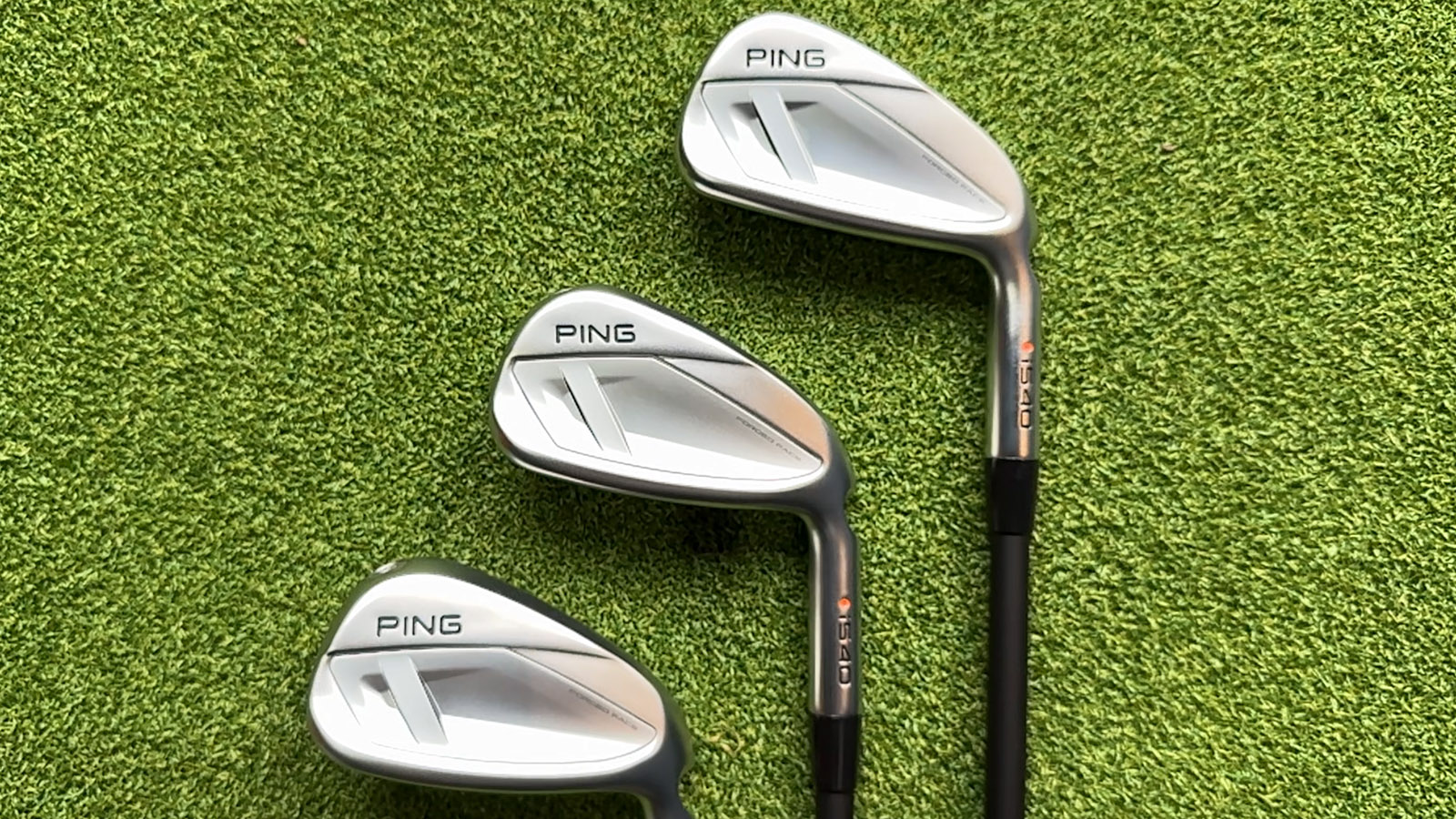
The hybrid testing revealed an interesting division based on loft. The 5-hybrid responded exceptionally well to a steeper attack angle, gaining nearly six yards of carry at 95 mph while reducing spin by over 400 rpm. This significant response mirrors the behavior of higher-lofted fairway woods.
Conversely, the 3-hybrid showed minimal response to attack angle changes, producing only marginal carry gains at higher speeds and slight losses at lower speeds. Both hybrids were naturally delivered with slightly positive attack angles during testing, reflecting typical player tendencies with these versatile clubs.
**Long Irons Present Mixed Results**
At the iron end of the spectrum, the testing revealed varied responses that depend heavily on club design and swing speed. The iDi 3 utility iron showed relative indifference to attack angle changes, producing barely a yard of carry gain at 95 mph and slight losses at 85 mph, despite notable spin reductions at slower speeds.
The G440 4-iron, designed as a game-improvement option with enhanced forgiveness, emerged as the biggest beneficiary for moderate swing speeds. Players swinging at 85 mph gained 5.6 yards of carry with a steeper attack angle—a substantial improvement driven by spin reduction of over 400 rpm without sacrificing launch angle.
**Practical Applications for Golfers**
The data establishes a framework that moves beyond one-size-fits-all instruction. While the 3-wood continues to reward the traditional sweeping motion, most other clubs in this range—particularly 5-woods, 7-woods, 9-woods, and higher-lofted hybrids—benefit from a more descending strike.
For equipment fitting and on-course strategy, these findings suggest golfers should consider their natural attack angle tendencies when selecting clubs for the gap between driver and mid-irons. Players who naturally sweep may find success with lower-lofted options, while those who naturally hit down could optimize performance with higher-lofted alternatives.
The testing also highlights the importance of understanding individual club characteristics rather than applying blanket swing thoughts across all long clubs. Each loft and design responds differently to attack angle variations, suggesting that personalized instruction and fitting become even more crucial for optimizing performance.
As golf technology continues advancing and robot testing provides increasingly sophisticated data, golfers may need to reconsider long-held assumptions about their technique and equipment choices to maximize distance and accuracy in their long games.