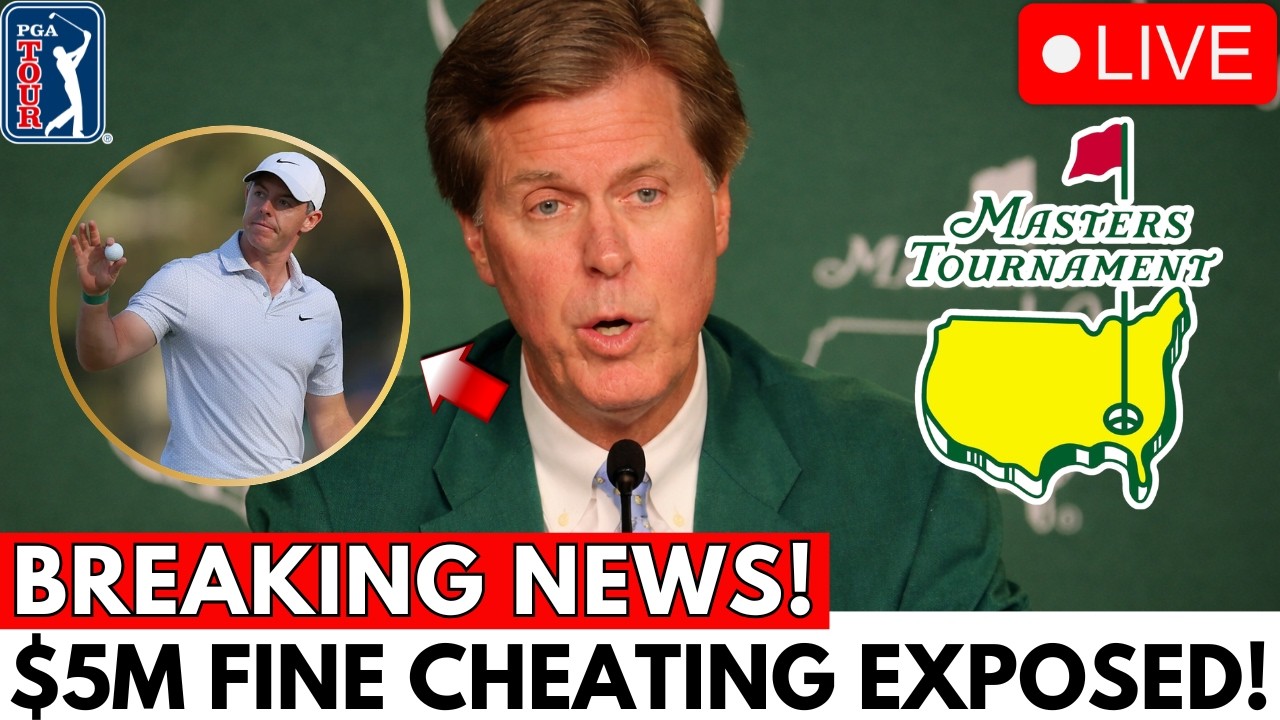
Rory McIlroy's decision to skip the 2026 RBC Heritage immediately after winning back-to-back Masters titles has resurfaced an uncomfortable question on the PGA Tour: how much is the world's most marketable player willing to leave on the table to control his own schedule?
According to multiple analysts familiar with the Tour's incentive structure, McIlroy's absence from the Hilton Head signature event could cost him as much as $5 million in withheld Player Impact Program and signature-event bonuses across the season — a figure significantly higher than the roughly $3 million in bonuses he forfeited under the previous version of the system.
This is not a fine. There is no formal disciplinary process tied to the decision. But the PGA Tour has spent the past two years restructuring its rewards so that participation in signature events, sponsor commitments and broadcast availability all feed back into a player's eligibility for the largest bonus pools. Skipping an event the Tour has built its post-Masters week around carries a real, if indirect, financial cost.
McIlroy is no stranger to that cost. He withdrew from the same Hilton Head event a few seasons ago and was hit with a fine reportedly worth around 2.2 million pounds — a penalty that existed because, at the time, Tour rules did not allow players to miss multiple signature events in a single season. He skipped the RBC Heritage again in 2025 after winning the Masters, and now in 2026 he has done it for a third post-Augusta cycle in a row.
The Northern Irishman has been candid about why. He has told reporters that he prefers the schedule lull before Augusta to be quiet, with day trips that allow him to drop daughter Poppy at school, fly to practice rounds at Augusta National, and be home for dinner with his wife Erica. He has also pointed directly to the practical results: skipping events such as Houston and the Valero Texas Open and laser-focusing on Augusta is, in his telling, a meaningful part of why he is now the back-to-back Masters champion.
It is hard to argue with the on-course evidence. After sharing the lead early at Augusta, McIlroy opened a six-shot cushion in the second round and held off late charges from Justin Rose, Cameron Young and world No. 1 Scottie Scheffler. A final-round 71 sealed his second straight green jacket — the first repeat winner since Tiger Woods in 2002.
But the Tour's commercial side wants its biggest stars in the field at signature events, and the Player Impact Program has been re-engineered to make that preference explicit. Where the PIP once rewarded raw popularity and engagement, the latest version weights participation, broadcast presence and sponsor activations alongside name recognition. McIlroy will still register near the top in attention metrics. He will not register at all in the participation column for Hilton Head.

Neither McIlroy nor the PGA Tour has confirmed an exact dollar figure on what the absence will cost. Sources cited in coverage of the decision suggest the final number depends on how the rest of his season plays out — particularly whether he attends remaining signature events and how visible he stays at flagship stops.
The broader picture is the more interesting one. McIlroy is openly drawing his own line between major-championship preparation and Tour expectations, and so far the math of his calendar has pointed in the same direction as the green jackets in his closet. If the structural cost rises from $3 million to closer to $5 million, the Tour will have its answer about how persuasive the new incentives really are.