
The PGA Tour's developmental circuit has taken the boldest step yet in the long-running battle against slow play. The Korn Ferry Tour confirmed on Tuesday that it will publish every player's pace-of-play data publicly for the first time, with rankings refreshed each week alongside the regular statistics tables.
Average Stroke Time, or AST, is the metric at the centre of the rollout. It records the number of seconds a player takes from being clear to play to making the stroke, broken down into four categories: Off the Tee, Approach, Around the Green and On the Green. Rankings show where each player sits relative to the field average across the season and at each individual event.
Korn Ferry Tour president Alex Baldwin framed the decision as one about visibility rather than punishment. "The publishing of the AST data on the Korn Ferry Tour is an opportunity to provide greater context around a player's pace of play," she said in the tour's announcement.

Baldwin added that the data is intended to help players audit their own habits and bring fans closer to the rhythm of a round. The metric, she said, "allows our fans to feel more connected to what occurs inside the ropes each and every week."
The implementation began at the Colonial Life Charity Classic at The Woodcreek Club, where the AST numbers told a story that the leaderboard did not. Cole Sherwood lifted the trophy, but the data revealed he played +5.5 seconds slower than the field average across the week and currently ranks 129th in Speed of Play for the 2026 season. Runner-up Zac Blair, by contrast, sat seventh in Speed of Play for the event. Mac Meissner, one of the season's more consistent performers, comes into the summer ranked 17th overall.
The juxtaposition of Sherwood's win with his AST ranking captures exactly why the tour believes the metric matters. For years the public conversation about slow play has been dominated by anecdote — a name floated in a press conference, a viewer complaint on social media — without an underlying number to test the perception. Publishing AST puts a figure on a debate that previously ran on vibes alone.
The PGA Tour Policy Board approved the public release last November, and the Korn Ferry Tour was tagged as the testing ground. The rationale, according to people familiar with the discussion, was that the developmental tour is a controlled environment with closer field sizes and fewer commercial sensitivities than the main tour. If the experiment lands cleanly with players and broadcasters, the next step is rolling it out on the PGA Tour itself.
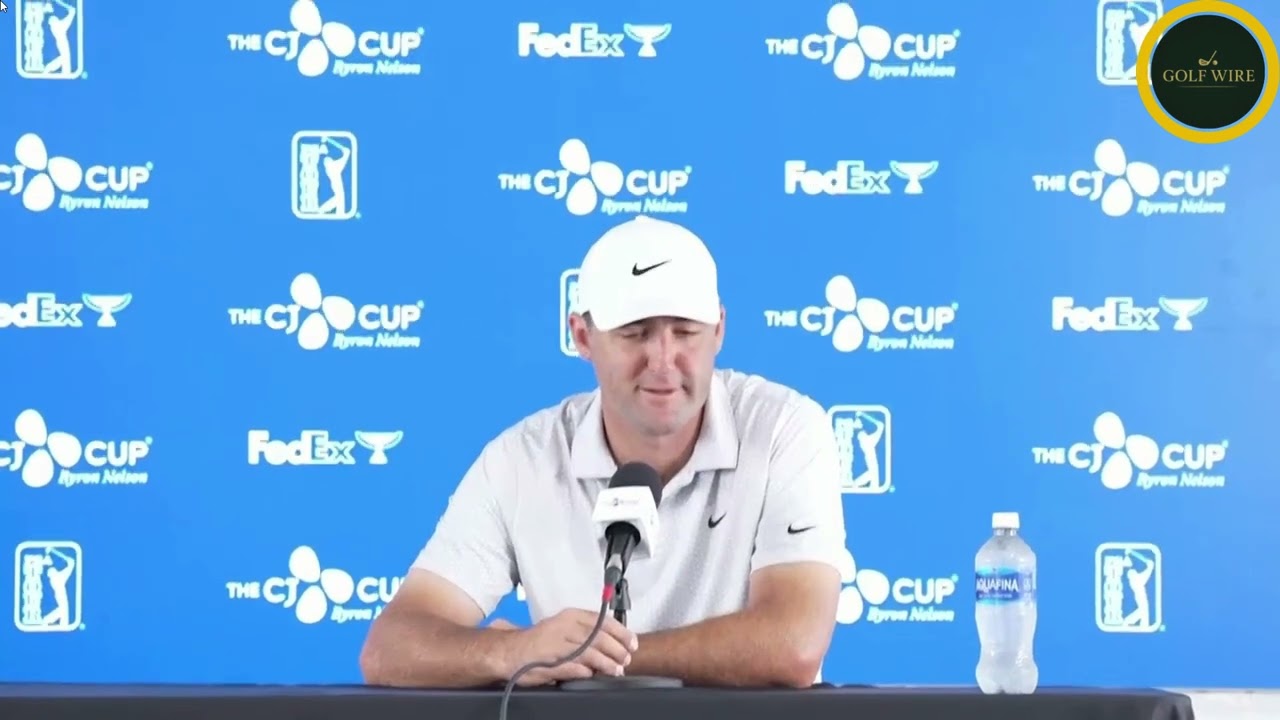
That second step is not guaranteed. Several PGA Tour stars have spent the spring pushing back against any expansion of pace-of-play enforcement. Justin Thomas disputed his own warning at Aronimink at this month's PGA Championship, and Scottie Scheffler called the Saturday pin positions a "dice roll" rather than a paceable test. Public AST numbers would arrive against that mood music.
For now, the Korn Ferry Tour data will be visible to anyone who wants to find it. Players who routinely sit at the wrong end of the table will discover that fans, agents and broadcasters can quote chapter and verse on it. Players who play quickly will get a public scoreboard for an attribute that has, until now, been impossible to monetise.