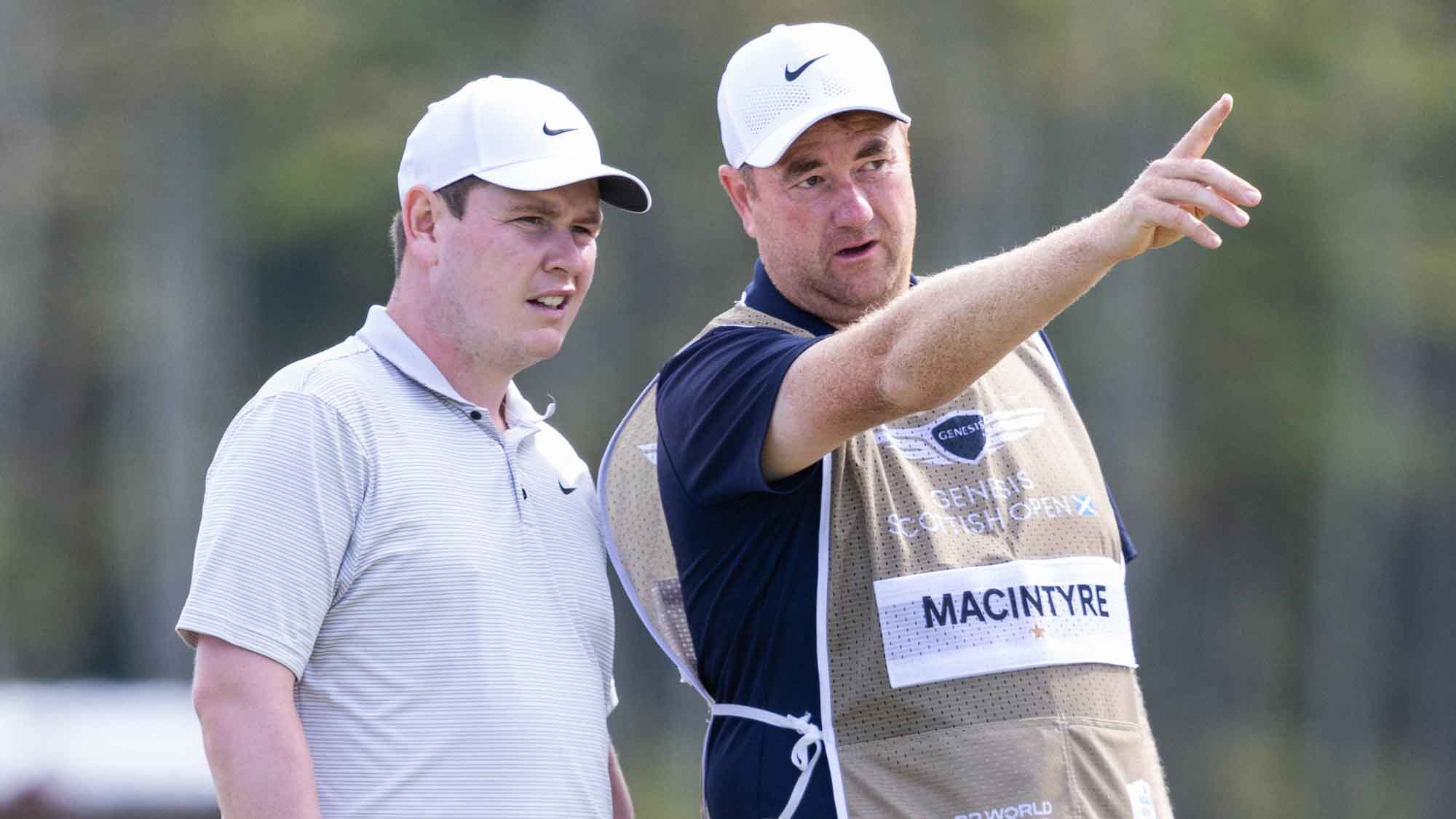
A curious scene unfolded on the 18th hole of the Valero Texas Open when Robert McIntyre's caddie Mike Burrows reached for his cellphone mid-round, sparking immediate debate on social media about PGA Tour regulations.
McIntyre was in contention, needing a birdie to tie eventual winner J.J. Spaun when the incident occurred on the par-5 finishing hole. As the Scottish golfer weighed his options, Burrows consulted his phone, drawing attention from eagle-eyed viewers.
The action prompted questions on social media, with one user posting: "Hi @BobHarig, would you be able to shed some light on a question. Did I miss a local rule, or something? Why did Bobby Mac's caddy pull out a cell phone on 18 to check the wind direction??"
The answer lies in the PGA Tour's specific cellphone regulations, which are more nuanced than a blanket ban. While phones are heavily restricted during competition, certain uses remain permissible.
Tour rules explicitly prohibit players and caddies from using phones for communication purposes, including calls, texts, or emails. Additionally, phones cannot be used to capture content, measure wind or elevation, or access applications that assist with club selection or swing tempo.
However, several functions are allowed under current regulations. Players and caddies may check the time, access leaderboard information, and track physiological data like heart rate, though the latter can only be reviewed after the round concludes.
Most relevantly to Burrows' situation, phones may be used as a compass, provided no elevation features are activated. This exception proved crucial in validating the caddie's actions.
Ken Tackett, the chief referee at the Valero Texas Open, confirmed through a Tour spokesman that Burrows used his phone solely as a compass, making the action completely legal under current regulations.
The stakes for violations are significant under Rule 4.3 of the Rules of Golf. A first offense for using a phone to access prohibited information results in a two-stroke penalty, while a second violation leads to disqualification from the tournament.
The incident highlights the complexity of modern golf regulations as technology becomes increasingly integrated into the sport. While the PGA Tour maintains strict guidelines about electronic device usage, the rules must balance competitive integrity with practical applications.
For recreational golfers, cellphone policies vary significantly from course to course, creating an inconsistent landscape of regulations. However, at professional golf's highest level, these rules remain fixed and clearly defined.
The Burrows incident serves as an educational moment for both players and fans about what constitutes legal phone usage during PGA Tour events. As technology continues evolving, these regulations may require further refinement to address new capabilities and applications.
McIntyre's near-miss at the Valero Texas Open demonstrates that even with all available legal tools at their disposal, players must still execute under pressure to claim victory on the PGA Tour.