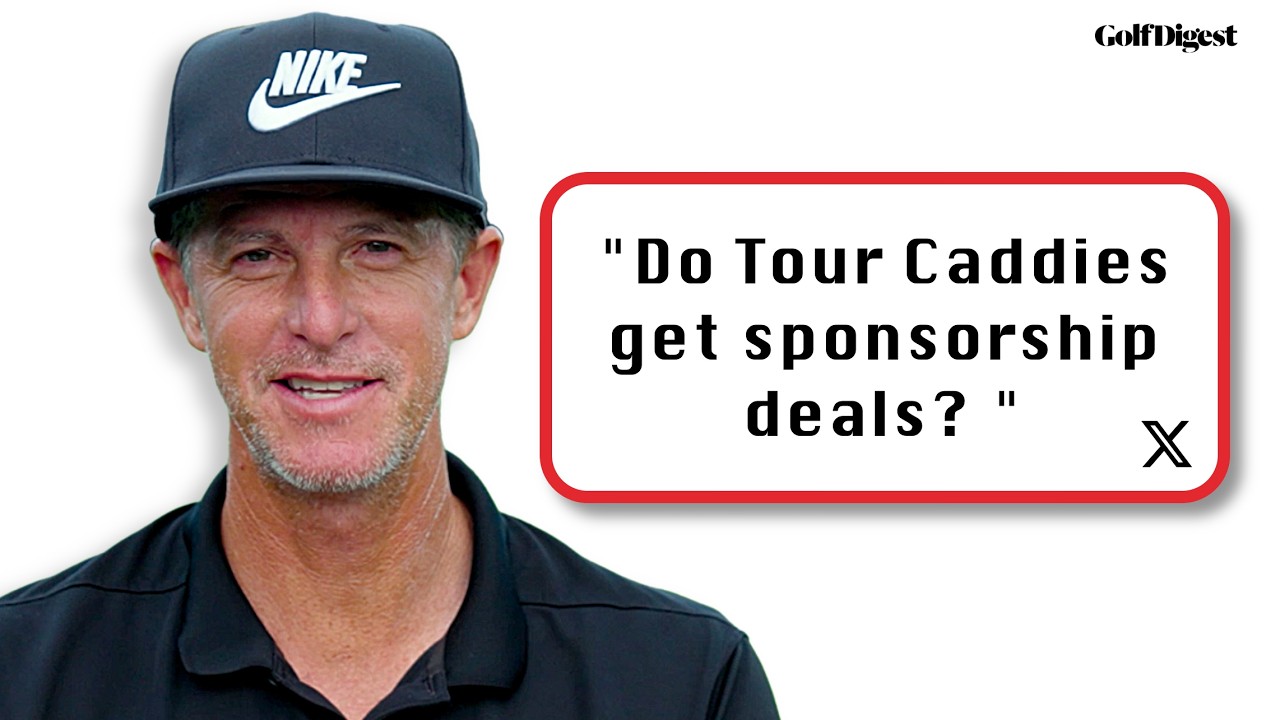
Ted Scott, the long-time caddie now looping for world No. 1 Scottie Scheffler, took an extended Q&A with Golf Digest that lifted the lid on the rarely-glimpsed mechanics of being a tour bagman. The headline takeaway: some of the game's most successful players have built a formal override into their decision-making, but they hand it out sparingly.
Asked how a caddie stops a player from making a poor call, Scott was matter-of-fact about how it works at the elite end. "If it's Jordan Spieth or Phil Mickelson, they give their caddie a veto for the year. So you can really only stop him one time per year depending on your player."
His current boss, Scott joked, rarely needs the help. "If it's someone like Scottie Scheffler, probably could stop him a lot, but he doesn't really make bad decisions. I mean, he chose me as a caddie. That's the best decision he ever made, right? Kidding, guys. These are jokes."
Scott was disarmingly blunt about how he ended up on a tour bag in the first place. Asked how he became a PGA Tour caddie, he replied with five words: "I failed as a professional golfer." It is, he noted, a common path. He rattled off names of caddies who could play. "Damon Green that used to caddy for Zach Johnson in his reign probably won 70-something mini tour events. Paul Tesori who won the US Open with Webb Simpson and I think he's won a lot of tournaments with Vijay Singh played the PGA Tour. Currently Sam Burns' caddy Travis Perkins played the PGA Tour."
If he had to pick a current pro who would make the perfect caddie, Scott did not hesitate. "Probably Webb Simpson. That guy, every PGA Tour player that plays around with him shoots a 65. Like in my mind, if you're paired with Webb, your guys shooting 65s. He's so positive. He's so funny. He's so fun. He's very encouraging."
The toughest part of the job, Scott said, is not the yardage book or the wind. It is the human being beside you. "Dealing with a person. Human beings are difficult and stressful situations. So as a caddy, you're there during someone's most stressful times and you typically are listening and trying to solve that problem and sometimes we are the problem."
Major championship weeks add another layer. "I would say the majors are the most difficult. The Masters not as difficult because we see it every year, but typically a new golf course, you know, the PGA Championship, the US Open, the Open Championship are very difficult to prepare for because we don't see those courses year in and year out."
Scott reserved his most reverent words for Augusta itself. "For me, growing up and watching golf as a kid, every Easter Sunday or whenever the Masters was on, watching it with my grandfather, my dad, it's just it's such a special place and it's so prestigious and so wonderful and so exciting and the thinking about the back nine roars on Sunday, you know, it's a very unique event in that way."
Pushed for the three keys to a successful caddie career, Scott landed on the same answer three times. "Work for a great player is number one. Work for a great player is number two. And did I mention working for a great player is number three? I've had some really great caddies who have made zero dollars. They were really good. They got the right wind. They got the right club. And they were caddying for me when I was trying to play as a pro. And those poor people are probably living on the streets right now."